- Course overview
- Search within this course
- Introduction
- Real-time PCR
- Microarrays
- What is Next Generation DNA Sequencing?
- Biological interpretation of gene expression data
- Genotyping, epigenetic and DNA/RNA-protein interaction methods
- DNA/RNA-protein interactions
- Summary
- Quiz: Check your learning
- Your feedback
- Learn more
- References

All materials are free cultural works licensed under a Creative Commons Attribution 4.0 International (CC BY 4.0) license, except where further licensing details are provided.
Number of replicates
The number of replicates in an RNA-seq experiment depends on:
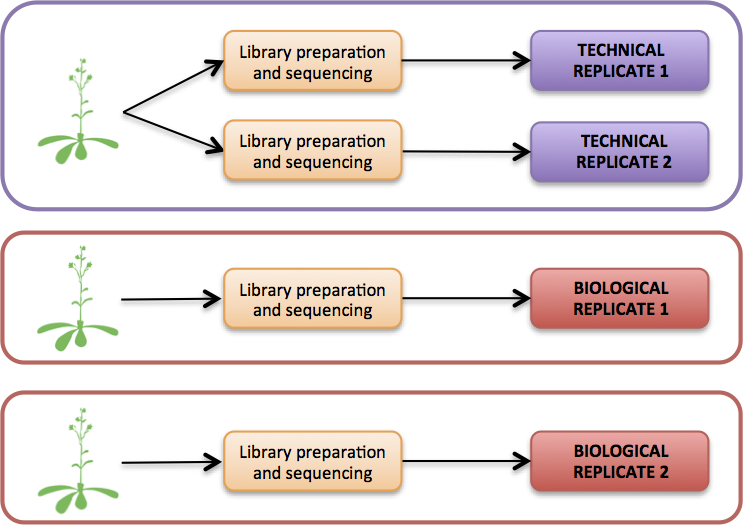
- Technical variability in the RNA-procedures. Technical replicates are replicates where the biological material is the same but the technical steps used to measure gene expression are repeated (Figure 14). Technical reproducibility in RNA-seq is usually high at the level of sequencing but RNA-seq library preparation includes a number of steps (RNA fragmentation, cDNA synthesis, adapter ligation and PCR amplification) that may introduce biases in the data.
- Biological variability of the system under study. Biological replicates consist of different biological samples that are processed separately (Figure 14). Biological replicates are required if inference on the population is to be made, with three biological replicates being the minimum for any inferential analysis.
- Desired statistical power, that is the capacity for detecting statistically significant differences in gene expression between experimental groups.