Submit spatial transcriptomics data

The submission path depends on the primary modality. If your submission is related to a sequencing-based experiment, all data, including images, should be deposited to ArrayExpress. If you are submitting an imaging-based experiment, please deposit all data types to the BioImage Archive. Follow the route below and include clear spatial metadata and sample descriptions.

Sequencing-based spatial transcriptomics example.

Sequencing-based ST

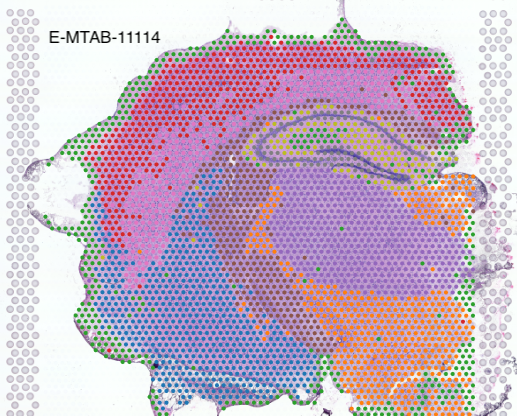
e.g. GeoMx or Visium technologies

  1. Prepare raw data files (unprocessed sequencing files as fastq or unaligned bam files compressed by gzip/bzip2 + corresponding tissue images).
  2. Prepare experiment and sample metadata (background/experiment description, sample attributes, wet-lab and analysis protocols).
  3. *Optional. Prepare processed data files - we encourage submission of any processed and supporting data that would ease interpretation and reuse of the dataset.
  4. Submit through Annotare.
Imaging-based spatial transcriptomics example.

Imaging-based ST

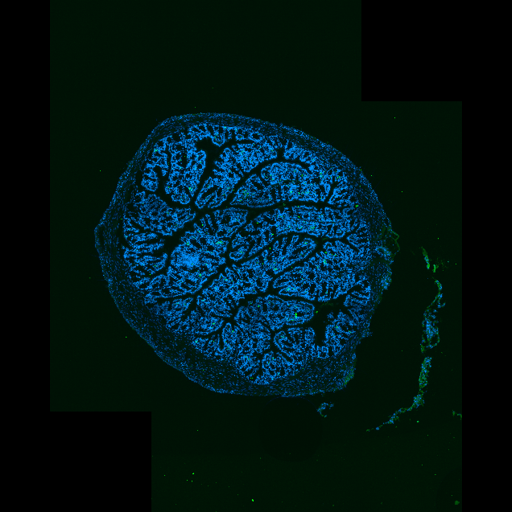
e.g. CosMx, MERSCOPE, or Xenium technologies

  1. Prepare data files: images, labels (such as segmentation masks), points (such as molecular probes), shapes (for example polygon regions of interests), and tables (such as molecular quantifications and annotations).
  2. Prepare necessary metadata describing spatial assays and tissue context.
  3. Submit via BioStudies to the BioImage Archive.
For imaging-based submissions, reviewers will route data into the BioImage Archive during curation. For sequencing submissions, ensure that spatial metadata is captured in the sample and experiment descriptions.