DECIPHER v11.31 released
DECIPHER v11.31 introduces new data visualisations for Human Developmental Cell Atlas expression, cancer case frequency data, and curated ear disorder information

Human Developmental Cell Atlas expression data
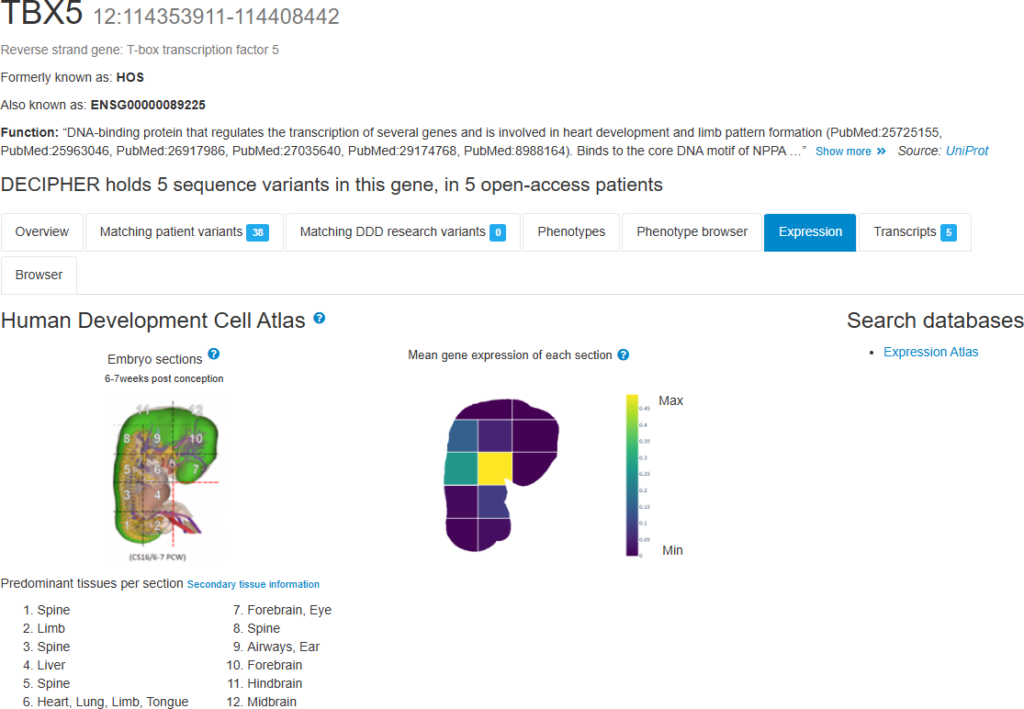
Human Developmental Cell Atlas expression (HDCA) data is now displayed on an Expression tab. The Human Developmental Cell Atlas uses single-cell RNA sequencing to characterise late human embryogenesis. Expression is displayed in 12 sections of a 6-7 post-conception week human embryo, alongside a sagittal view which displays the region of the embryo represented by each section.
In the example below, the expression data shows high TBX5 expression in the segment of the embryo related to the heart and limbs; it is known that haploinsufficiency of TBX5 causes Holt-Oram syndrome, a hand-heart syndrome. The Expression tab is available from gene pages, and from the Gene tab when viewing a patient record.
Cancer case frequency data from the National Disease Registration Service
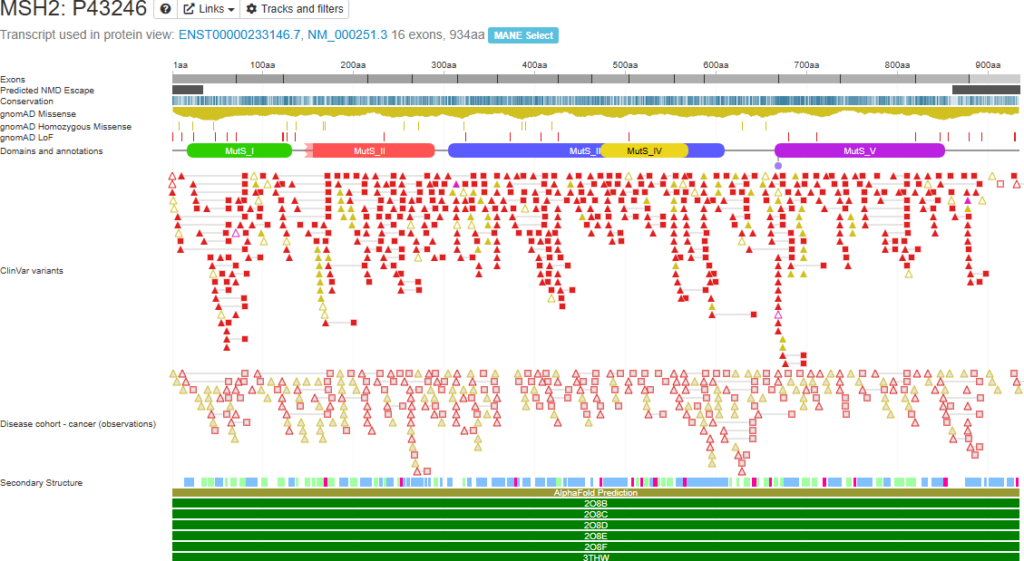
Cancer case frequency data compiled by the National Disease Registration Service (NDRS) from diagnostic laboratories in England is now displayed on the protein browser. This dataset indicates if a variant has been observed in probands with a high risk of carrying a pathogenic variant due to a personal and/or family history of cancer. Data is available for nearly 4,500 variants in 13 cancer susceptibility genes including BRCA1, BRCA2, MSH2, PTEN and SMAD4.
Curated ear disorder data by Gene2Phenotype
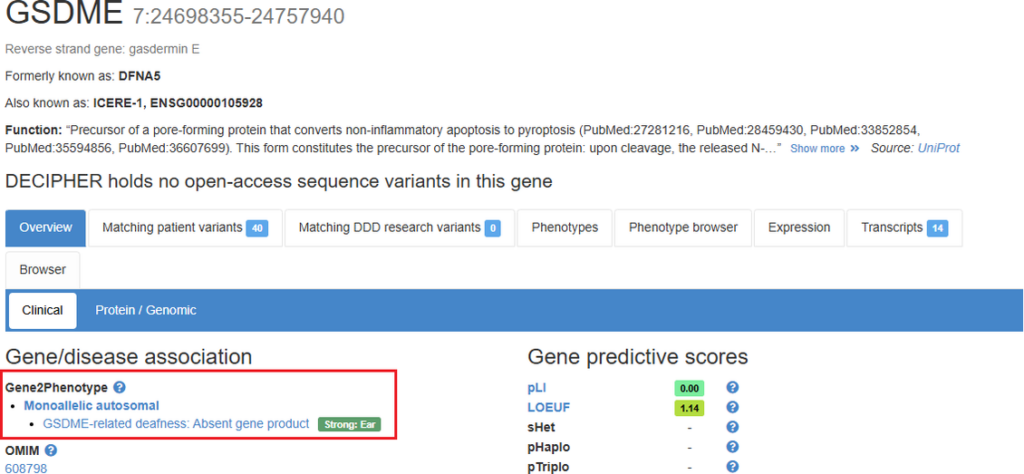
Ear disorders curated by Gene2Phenotype (G2P) are now displayed on gene pages, in genes tables and in the genome browser genes track. G2P curates Locus-Genotype-Mechanism-Disease-Evidence (LGMDE) threads which allow for precise definition of the clinical phenotype and molecular basis of a given condition. The ear disorders panel currently includes 87 genes and 97 LGMDE records.