AlphaFold database empowers researchers with enhanced structural search via Foldseek integration
Traditional sequence search methods are fast and efficient but rely solely on comparing amino acid sequences. This approach can miss crucial insights because proteins with similar functions can have vastly different sequences. Although their sequences have diverged, these proteins often retain 3D…

Traditional sequence search methods are fast and efficient but rely solely on comparing amino acid sequences. This approach can miss crucial insights because proteins with similar functions can have vastly different sequences. Although their sequences have diverged, these proteins often retain 3D structural similarities, which may hold the key to understanding their functional relationships.
Structure-based search methods like Foldseek address this limitation. Foldseek was developed by the Steinegger lab at Seoul National University in collaboration with the Johannes lab at the Max Planck Institute for Multidisciplinary Sciences. Structure-based search methods focus on similar structures rather than sequences, enabling the discovery of distant evolutionary connections and functional parallels that sequence alone might overlook.
Foldseek: Rapid and accurate structural search
Comparing intricate 3D objects is computationally intensive, making structure-based searches significantly slower than sequence comparisons. Foldseek overcomes this challenge and provides rapid and accurate protein structure search capabilities.
Foldseek’s innovation lies in its ability to transform complex 3D structures into simpler 1D sequence representation using a unique ‘3Di alphabet’. This alphabet essentially translates the intricate local interactions within protein structures using the pre-trained 3Di substitution matrix. This process allows for rapid scanning of vast databases using MMseqs2, a highly sensitive and efficient sequence search tool, to pinpoint potential matches.
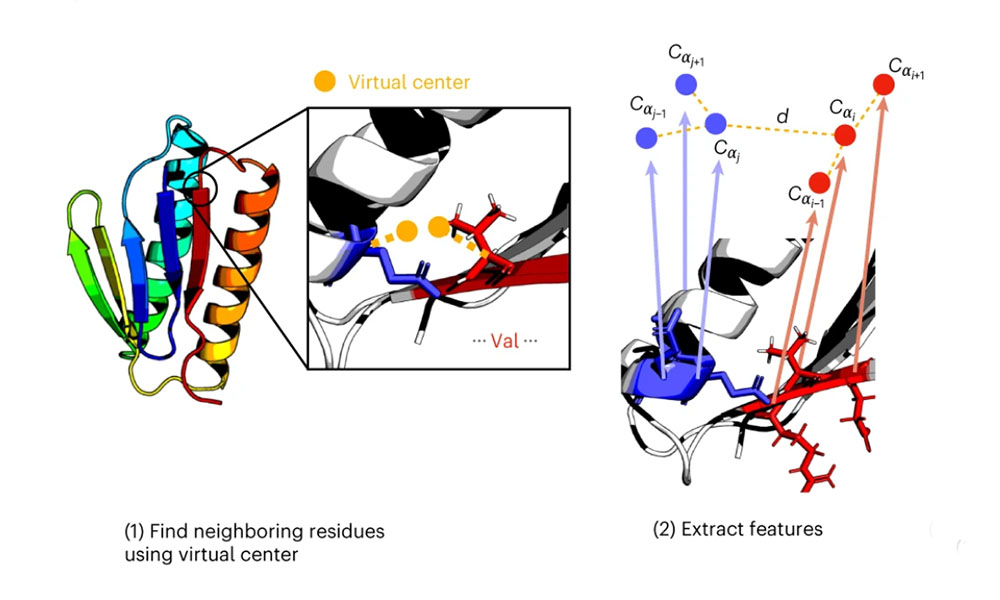
By identifying unexpected structural similarities between seemingly unrelated proteins, Foldseek can reveal previously hidden evolutionary links, shedding light on the origins and diversification of protein families.
Intuitive access to structural information
The AlphaFold Protein Structure Database (AFDB), co-developed by Google DeepMind and EMBL-EBI, has significantly enhanced its search capabilities by integrating Foldseek into all its entries. Users can now perform structure-based searches against the Protein Data Bank (PDB), which houses experimentally determined structures, and the AlphaFold Database.
The PDB collection is updated weekly to incorporate the latest releases from the Worldwide Protein Data Bank, ensuring users can always access the most current entries for their searches. Additionally, searching against AlphaFold models involves using a curated AFDB collection clustered at 50% sequence identity, termed AFDB50. This optimisation reduces redundancy in the searches by focusing on searching against representatives of clusters with homologous proteins.
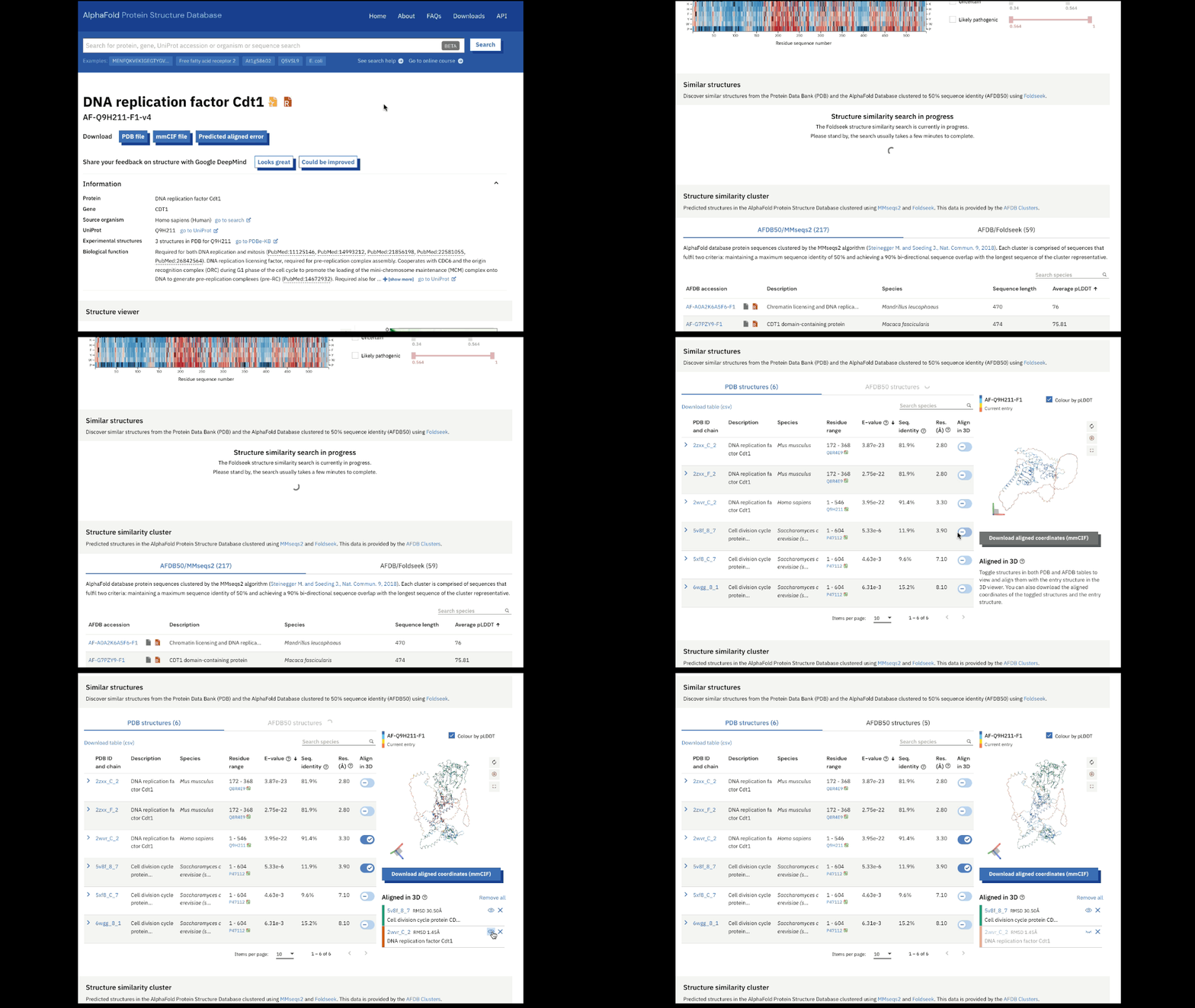
Users can efficiently view and sort search results by criteria such as hit significance i.e. E-value and sequence identity. Filtering by taxonomy is also available for more focused results. Once organised, the results can be downloaded for offline use.
Additionally, users can align selected target proteins with their query to assess the match quality. Visualisation options include toggling between full-chain colouring and pLDDT-based colouring of the query. The aligned structures can also be downloaded for further analysis.
With Foldseek now readily available within the AFDB, users can efficiently search protein structures of interest against the vast AFDB50 and PDB collections. The integration provides a seamless and user-friendly experience, allowing for smooth navigation between sequence and structural data. This empowers researchers to gain a deeper understanding of protein architecture and its implications for biological function.

Integrating Foldseek into AFDB will allow researchers to identify proteins with similar structures more efficiently, even in the absence of clear sequence similarities. Having this powerful search capability readily accessible to researchers worldwide is likely to support scientific progress across many fields, including drug discovery.
However, it’s important to remember that structural similarity doesn’t necessarily imply functional similarity. This new structure-based search capability will allow users to create testable hypotheses. Therefore, further investigation will be needed to determine if there’s any functional connection between these two proteins based on structural homology.
Edit