
AlphaFold Database launches custom annotations feature
The AlphaFold Database (AlphaFold DB) has introduced a new functionality that enables users to integrate and visualise custom sequence annotations. These annotations are processed in the browser for the current session only. The new functionality is made possible through the integration of the PDBe…
The AlphaFold Database (AlphaFold DB) has introduced a new functionality that enables users to integrate and visualise custom sequence annotations. These annotations are processed in the browser for the current session only.
The new functionality is made possible through the integration of the PDBe ProtVista, built on Nightingale, a protein feature web visualisation components library.
This enhancement extends the utility of AlphaFold DB – a vital open data resource that provides over 241 million predicted protein structures – and establishes it as a more interactive and personalised platform for structural bioinformatics analysis.
The AlphaFold Database is a collaboration between EMBL’s European Bioinformatics Institute (EMBL-EBI) and Google DeepMind.
Core functionality
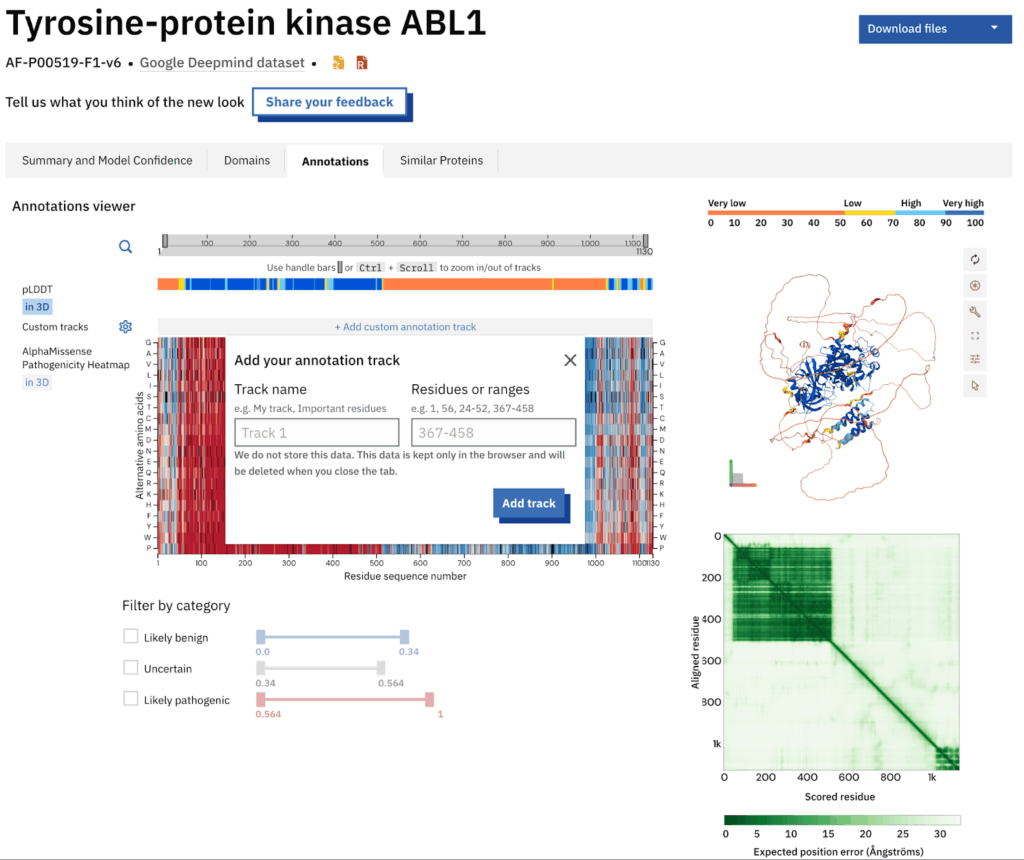
The new feature, located on the “Annotations” tab, allows researchers to add their own residue-based data, such as functional sites, variant data, binding regions, or post-translational modification sites. Users can input single-residue annotations and region annotations.
Key enhancements
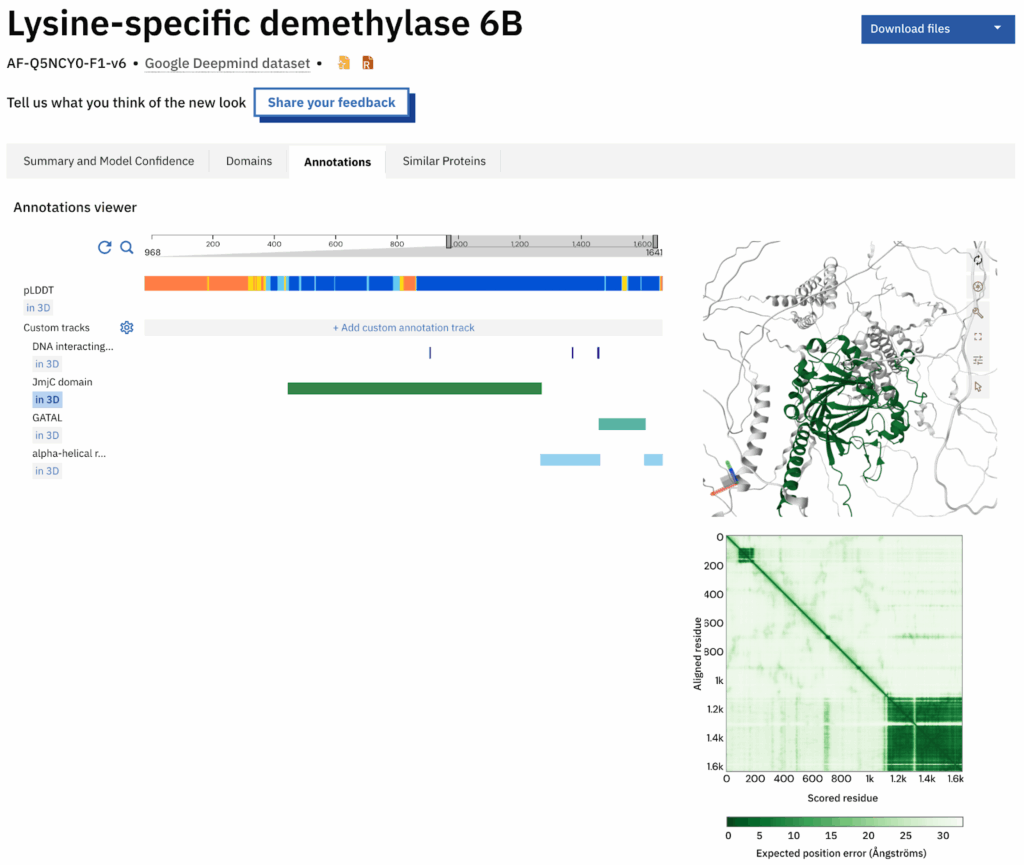
- Custom annotations are visible on the 2D sequence track and the 3D protein structure viewer, allowing for spatial context.
- To improve analysis, all custom annotations are displayed directly alongside the predicted Local Distance Difference Test (pLDDT) score track. This integration allows researchers to instantly correlate their data with the model’s per-residue confidence score.
- If available, the annotation tracks for human protein entries include AlphaMissense heatmap and average predicted pathogenicity.
Users retain control over the visualisation, with the ability to name these custom tracks for clarity and easily navigate or zoom into specific protein regions of interest, providing a tailored and comprehensive view of their data in context.
Privacy and data security
User annotations are temporary visualisations applied only for the duration of the user session, meaning they are not saved to the public database. This ensures user privacy and data security, while facilitating flexible data exploration and the visualising of specific regions without permanently submitting data.
The AlphaFold DB team encourages users to explore this powerful new tool and share their feedback using the ‘Provide feedback’ button available on every entry page.
Edit