 |
CoFactor: BiotinGeneral information2D representation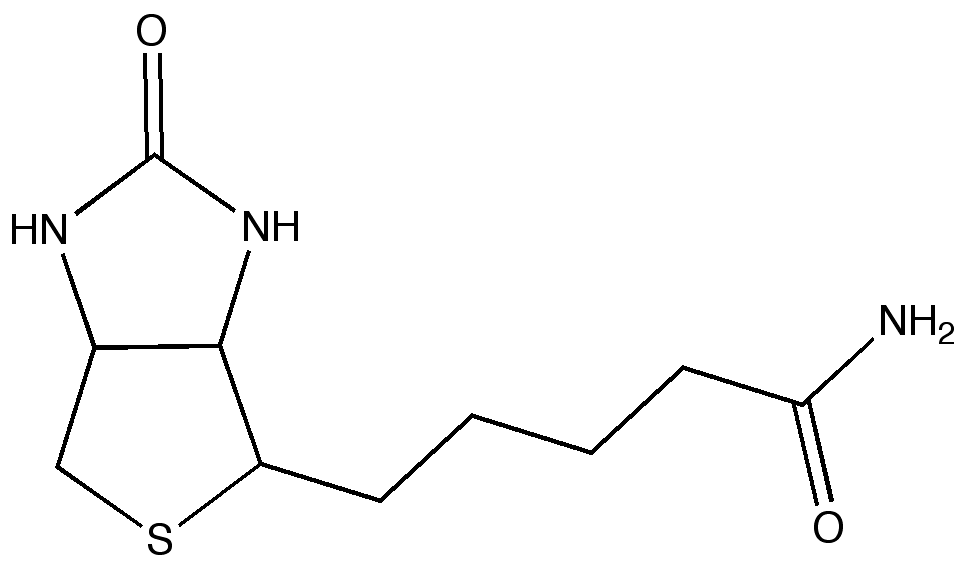
Key facts
TagsMolecular functionBiotin's main function as a cofactor is to transfer CO2 from one active site of an enzyme complex to another. It can also transfer C2-units [1]. Biotin further regulates gene expression, for instance by biotinylation of histones [1]. Chemical propertiesIn all cases, biotin is covalently bound to its partner enzyme and serves as a CO2-carrier between bicarbonate and the acceptor substrate [1]. PathwaysThe cofactor is essential for fatty acid biosynthesis [1]. CommentThe biotin requirement is very low, so the only nutritional deficiency is found in patients with a diet rich in raw egg-white (avidin from raw egg white has a high affinity to biotin). Otherwise there are mainly genetic disorders, resulting from a loss of function of biotinidase (the recycling enzyme) or holocarboxylase sythetase (the biotin inserting enzyme) [1]. Part of the required biotin is produced by the intestinal flora [1]. Biotinidase recycles biotin from enzymes gained from food sources [1]. Organic acideria can result from multi-carboxylase deficiency [1]. Other resulting diseases include neurological disorders and developmental delay [1]. References
 |
|

