Dihydrofolate reductase (type II)
R67-plasmid encoded dihydrofolate reductase (R67-DHFR) from Escherichia coli catalyses the reduction of 7,8-dihydrofolate (DHF) to 5,6,7,8-tetrahydrofolate (THF) in the presence of NADPH. It is one of the smallest enzymes known to self-assemble into an active quaternary structure. The tetramer has an unusual pore, 25 angstroms in length that passes through the middle of the molecule and out the other side. R67-DHFR has 222 symmetry, and has a distinctive 'one site fits both' substrate and cofactor.
Reference Protein and Structure
- Sequence
-
P00383
 (1.5.1.3)
 (Sequence Homologues)
(PDB Homologues)
(Sequence Homologues)
(PDB Homologues)
- Biological species
-
Escherichia coli (Bacteria)
- PDB
-
1vie
- STRUCTURE OF DIHYDROFOLATE REDUCTASE
(1.7 Å)



- Catalytic CATH Domains
-
2.30.30.60
 (see all for 1vie)
Enzyme Reaction (EC:1.5.1.3)




Enzyme Mechanism
Introduction
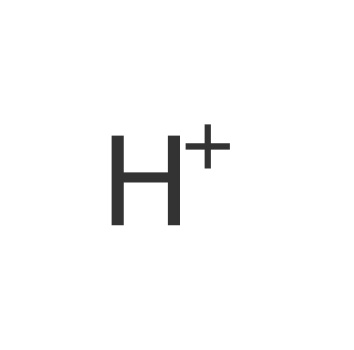
The mechanism of R67-DHFR relies on a pre-protonated form of DHF being the substrate. The substrate then accepts a hydride from NADPH to form the product, THF. The catalytic residues Tyr 69, Ile 68 and Gln 67 destabilise the ground state. Lys 32 is involved in stabilising the transition state.
Catalytic Residues Roles
| UniProt | PDB* (1vie) | ||
| Lys32 | Lys32(16)A | The positively charged sidechain of Lys 32 helps to stabilise the negatively charged intermediate. | electrostatic stabiliser |
| Gln67 | Gln67(51)A | Gln 67 acts to destabilise the ground state of the substrate. | electrostatic stabiliser |
| Ile68 | Ile68(52)A | Ile 68 acts to destabilise the ground state. | electrostatic stabiliser |
| Tyr69 | Tyr69(53)A | Tyr 69 acts to destabilise the ground state. | electrostatic stabiliser |
Chemical Components
hydride transfer, aromatic unimolecular elimination by the conjugate base, overall product formed, overall reactant used, bimolecular nucleophilic addition, cofactor usedReferences
- Strader MB et al. (2001), Biochemistry, 40, 11344-11352. Role of S65, Q67, I68, and Y69 Residues in Homotetrameric R67 Dihydrofolate Reductase†. DOI:10.1021/bi0110544. PMID:11560482.
- Timson MJ et al. (2013), Biochemistry, 52, 2118-2127. Further studies on the role of water in R67 dihydrofolate reductase. DOI:10.1021/bi301544k. PMID:23458706.
- Krahn JM et al. (2007), Biochemistry, 46, 14878-14888. Crystal structure of a type II dihydrofolate reductase catalytic ternary complex. DOI:10.1021/bi701532r. PMID:18052202.
- Howell EE (2005), Chembiochem, 6, 590-600. Searching Sequence Space: Two Different Approaches to Dihydrofolate Reductase Catalysis. DOI:10.1002/cbic.200400237. PMID:15812782.

Step 1. A hydride is transferred from NADPH to the protonated form of DHF, forming the product and NADP.
Download: Image, Marvin FileCatalytic Residues Roles
| Residue | Roles |
|---|---|
| Ile68(52)A | electrostatic stabiliser |
| Lys32(16)A | electrostatic stabiliser |
| Tyr69(53)A | electrostatic stabiliser |
| Gln67(51)A | electrostatic stabiliser |
 Download: