Phospholipase A2 (group group IVA)
Cytosolic phospholipases A2 (cPLA2) are hydrolytic enzymes which catalyse the cleavage of the ester bond at the sn-2 position of phospholipid membranes to generate arachidonic acid, which is the precursor in the metabolic pathway of several lipid messengers, for instance, it is metabolised to prostaglandins by the cyclooxygenase pathway and to leukotrienes by the 5-lipooxygenase pathway. In addition, platelet-activating factor (PAF) can also be generated from a subset of the lysophospholipid produced.
Reference Protein and Structure
- Sequence
-
P47712
 (3.1.1.4, 3.1.1.5)
 (Sequence Homologues)
(PDB Homologues)
(Sequence Homologues)
(PDB Homologues)
- Biological species
-
Homo sapiens (Human)
- PDB
-
1cjy
- HUMAN CYTOSOLIC PHOSPHOLIPASE A2
(2.5 Å)



- Catalytic CATH Domains
-
3.40.1090.10
 (see all for 1cjy)
Enzyme Reaction (EC:3.1.1.4)


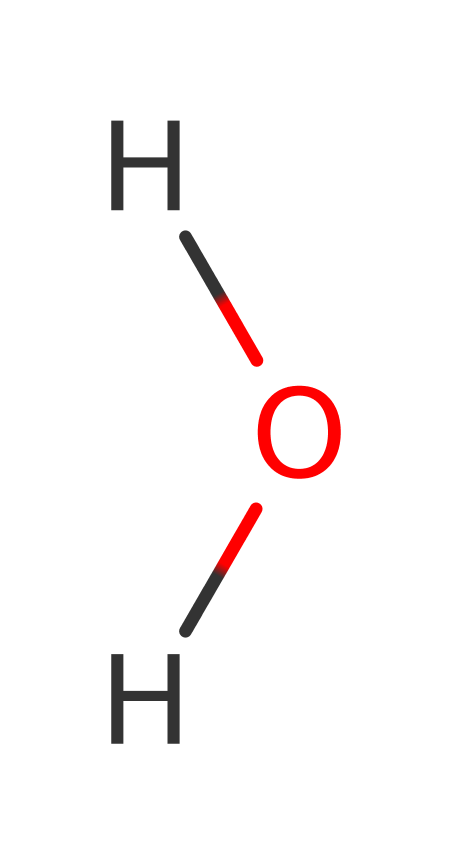
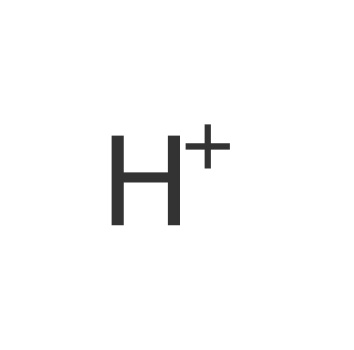


Enzyme Mechanism
Introduction
Asp549 acts as a general base, directly activating Ser228. Ser228 acts as a nucleophile to attack the ester bond to form an acyl-enzyme. The developing tetrahedral transition state is stabilised by backbone amide of Gly197 and 198. Arg200 stabilizes the phosphate group. Hydrolysis of the intermediate occurs through an analogous mechanism.
Catalytic Residues Roles
| UniProt | PDB* (1cjy) | ||
| Arg200 | Arg200A | Stabilizes the phosphate group. | electrostatic stabiliser |
| Ser228 | Ser228A | It acts as a nucleophile to attack the ester bond to form an acylenzyme intermediate. | covalently attached, nucleofuge, nucleophile, proton acceptor, proton donor |
| Gly197 (main-N), Gly198 (main-N) | Gly197A (main-N), Gly198A (main-N) | It forms an oxyanion hole to stabilise the developing transition state. | electrostatic stabiliser |
| Asp549 | Asp549A | It acts as a base to activate Ser 228 and a water molecule for nucleophilic attacks. | proton acceptor, proton donor |
Chemical Components
bimolecular nucleophilic addition, intermediate formation, overall reactant used, proton transfer, overall product formed, unimolecular elimination by the conjugate base, native state of enzyme regenerated, intermediate terminatedReferences
- Dessen A (2000), Biochim Biophys Acta, 1488, 40-47. Structure and mechanism of human cytosolic phospholipase A2. DOI:10.1016/s1388-1981(00)00108-6. PMID:11080675.
- Wang H et al. (2016), J Mol Biol, 428, 2769-2779. Structure of Human GIVD Cytosolic Phospholipase A2 Reveals Insights into Substrate Recognition. DOI:10.1016/j.jmb.2016.05.012. PMID:27220631.
- Grandits M et al. (2015), J Mol Recognit, 28, 447-457. Selectivity of cytosolic phospholipase A2 type IV toward arachidonyl phospholipids. DOI:10.1002/jmr.2462. PMID:25703463.
- Dessen A et al. (1999), Cell, 97, 349-360. Crystal Structure of Human Cytosolic Phospholipase A2 Reveals a Novel Topology and Catalytic Mechanism. DOI:10.1016/s0092-8674(00)80744-8. PMID:10319815.
- Huang Z et al. (1996), Biochemistry, 35, 3712-3721. Functional Identification of the Active-Site Nucleophile of the Human 85-kDa Cytosolic Phospholipase A2. DOI:10.1021/bi952541k. PMID:8619991.
- Pickard RT et al. (1996), J Biol Chem, 271, 19225-19231. Identification of Essential Residues for the Catalytic Function of 85-kDa Cytosolic Phospholipase A2: PROBING THE ROLE OF HISTIDINE, ASPARTIC ACID, CYSTEINE, AND ARGININE. DOI:10.1074/jbc.271.32.19225. PMID:8702602.

Step 1. Asp549 acts as a general base activating the Ser228 hydroxyl group for nucleophilic attack on the carbonyl carbon of the ester bond. The oxyanion intermediate formed is stabilized by the amide groups of Gly197 and Gly198. Arg200 stabilizes the phosphate group.
Download: Image, Marvin FileCatalytic Residues Roles
| Residue | Roles |
|---|---|
| Ser228A | covalently attached |
| Gly198A (main-N) | electrostatic stabiliser |
| Gly197A (main-N) | electrostatic stabiliser |
| Arg200A | electrostatic stabiliser |
| Asp549A | proton acceptor |
| Ser228A | proton donor, nucleophile |
Chemical Components
ingold: bimolecular nucleophilic addition, intermediate formation, overall reactant used, proton transfer
Step 2. The tetrahedral intermediate collapses and 1-acyl-sn-glycero-3-phosphocholine is eliminated.
Download: Image, Marvin FileCatalytic Residues Roles
| Residue | Roles |
|---|---|
| Ser228A | covalently attached |
| Gly197A (main-N) | electrostatic stabiliser |
| Gly198A (main-N) | electrostatic stabiliser |
| Arg200A | electrostatic stabiliser |
| Asp549A | proton donor |
Chemical Components
overall product formed, proton transfer, ingold: unimolecular elimination by the conjugate base
Step 3. Asp549 activates water for nucleophilic attack and another oxyanion intermediate is formed.
Download: Image, Marvin FileCatalytic Residues Roles
| Residue | Roles |
|---|---|
| Ser228A | covalently attached |
| Gly197A (main-N) | electrostatic stabiliser |
| Gly198A (main-N) | electrostatic stabiliser |
| Asp549A | proton acceptor |
Chemical Components
ingold: bimolecular nucleophilic addition, proton transfer
Step 4. The tetrahedral intermediate collapses and Ser228 is eliminated.
Download: Image, Marvin FileCatalytic Residues Roles
| Residue | Roles |
|---|---|
| Gly197A (main-N) | electrostatic stabiliser |
| Gly198A (main-N) | electrostatic stabiliser |
| Ser228A | proton acceptor, nucleofuge |
| Asp549A | proton donor |
 Download: