Enoyl-CoA hydratase
Mammalian peroxisomal multifunctional enzyme type 2 (MFE-2) is important in the beta-oxidation of very-long-chain and alpha-methyl-branched fatty acids as well as the synthesis of bile acids. It has three units: a dehydrogenase unit, an sterol carrier protein (SCP)-like unit and a central hydratase unit.
This entry represents the hydratase function, which reversibly catalyses the addition of water to the beta-carbon of trans-2-enoyl-CoAs with (R) specificity (the opposite to MFE-1).
Reference Protein and Structure
- Sequence
-
P51659
 (4.2.1.107, 4.2.1.119, 1.1.1.n12)
 (Sequence Homologues)
(PDB Homologues)
(Sequence Homologues)
(PDB Homologues)
- Biological species
-
Homo sapiens (Human)
- PDB
-
1s9c
- Crystal structure analysis of the 2-enoyl-CoA hydratase 2 domain of human peroxisomal multifunctional enzyme type 2
(3.0 Å)



- Catalytic CATH Domains
-
3.10.129.10
 (see all for 1s9c)
Enzyme Reaction (EC:4.2.1.119)




Enzyme Mechanism
Introduction
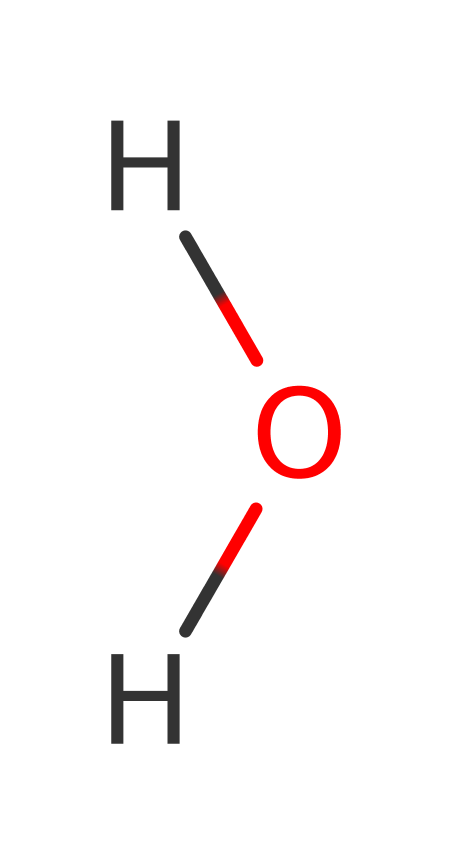
The water residue is activated as a nucleophile by the side chains of Asp 193 and His 198 (both are deprotonated, and coordinate the protons on water, with the carbonyl of Ile 213 reducing the pKa of His 198).
A lone pair on water attacks C3 of the enoyl substrate (the electrophilic alkene). The reaction is proposed to have a concerted transition state, where the water proton coordinated to His 813 is delivered to C2 of the substrate, and the bond between that proton and the oxygen of water begins to break.
The partial negative charge on the thioester oxygen in the transition state is stabilised by the backbone amide of Gly 216.
Thus, the overall reaction adds hydroxide from water to the C3 carbon of the substrate, and the proton from the same water molecule to the C2 carbon.
Catalytic Residues Roles
| UniProt | PDB* (1s9c) | ||
| Gly533 (main-N) | Gly216A (main-N) | The main chain amide group of Gly 216 hydrogen bonds to the carbonyl group of the substrate and stabilises the build up of negative charge in the transition state. | electrostatic stabiliser |
| Asp510 | Asp193A | Asp 193 coordinates and activates a water molecule using its side chain. | proton shuttle (general acid/base), electrostatic stabiliser |
| His515 | His198A | His 198 is deprotonated and coordinates the water molecule via the proton, activating water as a nucleophile. This proton is delivered to the substrate. | proton shuttle (general acid/base), electrostatic stabiliser |
| Ile530 (main-C) | Ile213A (main-C) | The main chain carbonyl group of Ile 213 hydrogen bonds to His 198, thus lowering the pKa of His 198. | electrostatic stabiliser |
Chemical Components
References
- Qin YM et al. (2000), J Biol Chem, 275, 4965-4972. Human Peroxisomal Multifunctional Enzyme Type 2. SITE-DIRECTED MUTAGENESIS STUDIES SHOW THE IMPORTANCE OF TWO PROTIC RESIDUES FOR 2-ENOYL-CoA HYDRATASE 2 ACTIVITY. DOI:10.1074/jbc.275.7.4965. PMID:10671535.
- Koski KM et al. (2005), J Mol Biol, 345, 1157-1169. Crystal Structure of 2-Enoyl-CoA Hydratase 2 from Human Peroxisomal Multifunctional Enzyme Type 2. DOI:10.1016/j.jmb.2004.11.009. PMID:15644212.
- Koski MK et al. (2004), J Biol Chem, 279, 24666-24672. A Two-domain Structure of One Subunit Explains Unique Features of Eukaryotic Hydratase 2. DOI:10.1074/jbc.m400293200. PMID:15051722.

Catalytic Residues Roles
| Residue | Roles |
|---|---|
| Asp193A | electrostatic stabiliser |
| His198A | electrostatic stabiliser |
| Ile213A (main-C) | electrostatic stabiliser |
| Gly216A (main-N) | electrostatic stabiliser |
| His198A | proton shuttle (general acid/base) |
| Asp193A | proton shuttle (general acid/base) |