High molecular weight acid phosphatase
High molecular weight acid phosphatases (HAPs) form a subclass of phosphomonoesterases which are found in locations as diverse as wheat germ, mammalian prostate tissue, and as extracellular or periplasmic enzymes in fungi and bacteria.
These proteins act as non-specific tyrosine phosphatase that dephosphorylate a diverse number of substrates under acidic conditions (pH 4-6) including alkyl, aryl, and acyl orthophosphate monoesters and phosphorylated proteins. They have also been shown to have lipid phosphatase activity. In mammals they have been shown to inactivate lysophosphatidic acid in seminal plasma. In the fungus Aspergillus ficuum the homologous phytase is essential in metabolising phytate, the major phosphorous storage form in plant seeds.
The HAPs have a distinct mechanism from other acid phosphatases; they retain the configuration of the substrate phosphorous atom while the purple acid phosphatases reverse it, and use a phospho-histidine intermediate. Evidently nature has 'discovered' multiple ways of catalysing this important reaction.
Reference Protein and Structure
- Sequence
-
P20646
 (3.1.3.2, 3.1.3.5, 3.1.3.48)
 (Sequence Homologues)
(PDB Homologues)
(Sequence Homologues)
(PDB Homologues)
- Biological species
-
Rattus norvegicus (Norway rat)
- PDB
-
1rpt
- CRYSTAL STRUCTURES OF RAT ACID PHOSPHATASE COMPLEXED WITH THE TRANSITIONS STATE ANALOGS VANADATE AND MOLYBDATE: IMPLICATIONS FOR THE REACTION MECHANISM
(3.0 Å)



- Catalytic CATH Domains
-
3.40.50.1240
 (see all for 1rpt)
Enzyme Reaction (EC:3.1.3.2)


Enzyme Mechanism
Introduction
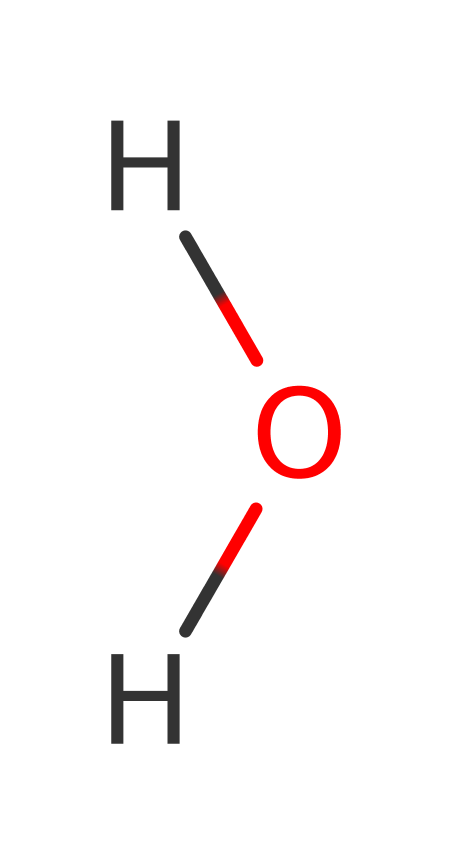
Hydrolysis is effected in two steps, starting with a nucleophilic attack of the enzyme on the phosphate group of the substrate to produce an enzyme-phosphate adduct. The phosphorylated residue has been identified as His12 (numbering from rat enzyme) and Asp258 protonates the leaving group of the substrate. The second step involves the attack of water on the phosphorous atom to release inorganic phosphate from the enzyme, in such a way as to return to the original configuration of the phosphorous atom. Crystal structures with vanadate, a believed transition state analogue, indicate that positively charged His and Arg residues in the active site are involved in correctly orientating the phosphate group and transition state stabilisation.
Catalytic Residues Roles
| UniProt | PDB* (1rpt) | ||
| His43 | His12A | This is the catalytic nucleophile. It is kept in the neutral state, even at low pH, in the active site by the large number of positively charged groups surrounding it. | covalent catalysis |
| Asp289 | Asp258A | General acid/base | proton shuttle (general acid/base), electrostatic stabiliser |
| Arg42, Arg46, Arg110, Tyr288, Asp289 | Arg11A, Arg15A, Arg79A, His257A, Asp258A | Stabilise the negatively charged intermediates and transition states. | electrostatic stabiliser |
Chemical Components
References
- Lindqvist Y et al. (1994), Eur J Biochem, 221, 139-142. Crystal structures of rat acid phosphatase complexed with the transition-state analogs vanadate and molybdate. Implications for the reaction mechanism. DOI:10.1111/j.1432-1033.1994.tb18722.x. PMID:8168503.
- San Luis B et al. (2013), Biochem J, 453, 27-35. New insights into the catalytic mechanism of histidine phosphatases revealed by a functionally essential arginine residue within the active site of the Sts phosphatases. DOI:10.1042/bj20121769. PMID:23565972.
- Singh H et al. (2009), J Mol Biol, 394, 893-904. Crystal Structures of the Histidine Acid Phosphatase from Francisella tularensis Provide Insight into Substrate Recognition. DOI:10.1016/j.jmb.2009.10.009. PMID:19836403.
- Kostrewa D et al. (1997), Nat Struct Biol, 4, 185-190. Crystal structure of phytase from Aspergillus ficuum at 2.5 Å resolution. DOI:10.1038/nsb0397-185. PMID:9164457.
- Porvari KS et al. (1994), J Biol Chem, 269, 22642-22646. Site-directed mutagenesis of prostatic acid phosphatase. Catalytically important aspartic acid 258, substrate specificity, and oligomerization. PMID:8077215.
- Schneider G et al. (1993), EMBO J, 12, 2609-2615. Three-dimensional structure of rat acid phosphatase. PMID:8334986.
- Lindqvist Y et al. (1993), J Biol Chem, 268, 20744-20746. Three-dimensional structure of rat acid phosphatase in complex with L(+)-tartrate. PMID:8407898.

Catalytic Residues Roles
| Residue | Roles |
|---|---|
| Asp258A | proton shuttle (general acid/base) |
| Arg11A | electrostatic stabiliser |
| Arg15A | electrostatic stabiliser |
| Arg79A | electrostatic stabiliser |
| His257A | electrostatic stabiliser |
| Asp258A | electrostatic stabiliser |
| His12A | covalent catalysis |