2,6-dioxo-6-phenylhexa-3-enoate hydrolase
2-Hydroxyl-6-oxo-6-phenylhexa-2,4-dienoic acid hydrolase (BphD) hydrolyses an unusual C-C bond of 2-hydroxy-6-oxo-6-phenylhexa-2,4-dienoic acid (HOPDA) to produce benzoic acid and 2-hydroxy-2,4-pentadienoic acid (HPD). HOPDA is an aromatic compound generated in a biphenyl/polychlorinated biphenyl (PCB) degradation pathway of bacteria.
It is a member of the alpha/beta hydrolase superfamily and has the canonical Ser-His-Asp triad. There has been a lot of debate as to the exact mechanism of this enzyme.
Reference Protein and Structure
- Sequence
-
Q75WN8
 (3.7.1.8)
 (Sequence Homologues)
(PDB Homologues)
(Sequence Homologues)
(PDB Homologues)
- Biological species
-
Rhodococcus jostii RHA1 (Bacteria)
- PDB
-
1c4x
- 2-HYDROXY-6-OXO-6-PHENYLHEXA-2,4-DIENOATE HYDROLASE (BPHD) FROM RHODOCOCCUS SP. STRAIN RHA1
(2.4 Å)



- Catalytic CATH Domains
-
3.40.50.1820
 (see all for 1c4x)




Enzyme Mechanism
Introduction
The exact mechanism is currently unclear and two proposals have been put forward.
The first (shown here) suggests that the Ser-His-Asp triad of the alpha/beta hydrolase fold superfamily members performs in the traditional way, with a covalent intermediate being formed between the serine and substrate.
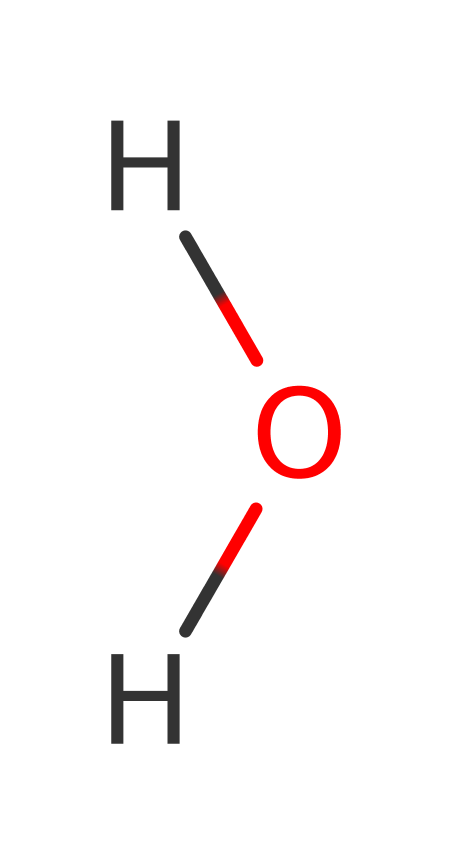
In this mechanism, the free enzyme (E) binds and the 2-hydroxy-6-oxo-6-phenylhexa-2,4-dienoic acid substrate undergoes keto-enol tautomerisation (via His263-catalysed transfer of a proton to the proS position at C-5), generating the first intermediate. Nucleophilic attack of Ser110 on this intermediate generates the first tetrahedral (covalently bound) intermediate, the negative charge of which is stabilised by the main chain amide protons of the 'oxyanion hole' residues, Met111 and Gly40. Collapse of this intermediate involves C-C fragmentation onto the re face of the double bond, generating the acyl-enzyme intermediate, and releasing 2-hydroxy-penta-2,4-dienoic acid with the inserted proton at the H-5E position. His263 activates water to attack at the acyl-enzyme carbonyl, generating the second tetrahedral intermediate, collapse of which releases benzoate and regenerates free enzyme.
Catalytic Residues Roles
| UniProt | PDB* (1c4x) | ||
| Asn110, Trp265 | Asn109(110)A, Trp264(265)A | Acts as an electrostatic stabiliser, activating the hydroxyl group for the initial tautomerisation reaction. | electrostatic stabiliser |
| Asp236 | Asp235(236)A | Activates and stabilises the histidine general acid/base. | modifies pKa |
| Ser111 | Ser110(111)A | Acts as a catalytic nucleophile. | covalent catalysis, proton shuttle (general acid/base) |
| His264 | His263(264)A | Acts as a general acid/base. | proton shuttle (general acid/base) |
| Gly41 (main-N), Met112 (main-N) | Gly40(41)A (main-N), Met111(112)A (main-N) | Forms the oxyanion hole. | electrostatic stabiliser |
| Arg187 | Arg186(187)A | Responsible for binding the substrate dienol in a twisted, nonplanar conformation. This increases its reactivity toward ketonization. | steric role |
Chemical Components
References
- Rauwerdink A et al. (2015), ACS Catal, 5, 6153-6176. How the Same Core Catalytic Machinery Catalyzes 17 Different Reactions: the Serine-Histidine-Aspartate Catalytic Triad of α/β-Hydrolase Fold Enzymes. DOI:10.1021/acscatal.5b01539.
- Li Y et al. (2015), RSC Adv, 5, 66591-66597. Insight into the catalytic mechanism of meta-cleavage product hydrolase BphD: a quantum mechanics/molecular mechanics study. DOI:10.1039/c5ra09939k.
- Ruzzini AC et al. (2013), Biochemistry, 52, 7428-7438. A Substrate-Assisted Mechanism of Nucleophile Activation in a Ser–His–Asp Containing C–C Bond Hydrolase. DOI:10.1021/bi401156a. PMID:24067021.
- Ruzzini AC et al. (2012), Biochemistry, 51, 5831-5840. The Catalytic Serine ofmeta-Cleavage Product Hydrolases Is Activated Differently for C–O Bond Cleavage Than for C–C Bond Cleavage. DOI:10.1021/bi300663r. PMID:22747426.
- Ruzzini AC et al. (2012), J Am Chem Soc, 134, 4615-4624. Identification of an Acyl-Enzyme Intermediate in ameta-Cleavage Product Hydrolase Reveals the Versatility of the Catalytic Triad. DOI:10.1021/ja208544g. PMID:22339283.
- Bhowmik S et al. (2007), J Biol Chem, 282, 36377-36385. The Molecular Basis for Inhibition of BphD, a C-C Bond Hydrolase Involved in Polychlorinated Biphenyls Degradation: LARGE 3-SUBSTITUENTS PREVENT TAUTOMERIZATION. DOI:10.1074/jbc.m707035200. PMID:17932031.
- Horsman GP et al. (2007), J Biol Chem, 282, 19894-19904. The Tautomeric Half-reaction of BphD, a C-C Bond Hydrolase: KINETIC AND STRUCTURAL EVIDENCE SUPPORTING A KEY ROLE FOR HISTIDINE 265 OF THE CATALYTIC TRIAD. DOI:10.1074/jbc.m702237200. PMID:17442675.
- Horsman GP et al. (2006), Biochemistry, 45, 11071-11086. Kinetic and Structural Insight into the Mechanism of BphD, a C−C Bond Hydrolase from the Biphenyl Degradation Pathway†. DOI:10.1021/bi0611098. PMID:16964968.
- Nandhagopal N et al. (2001), J Mol Biol, 309, 1139-1151. Crystal structure of 2-hydroxyl-6-oxo-6-phenylhexa-2,4-dienoic acid (HPDA) hydrolase (BphD enzyme) from the Rhodococcus sp. strain RHA1 of the PCB degradation pathway. DOI:10.1006/jmbi.2001.4737. PMID:11399084.

Catalytic Residues Roles
| Residue | Roles |
|---|---|
| Gly40(41)A (main-N) | electrostatic stabiliser |
| Met111(112)A (main-N) | electrostatic stabiliser |
| Ser110(111)A | covalent catalysis, proton shuttle (general acid/base) |
| His263(264)A | proton shuttle (general acid/base) |
| Trp264(265)A | electrostatic stabiliser |
| Asn109(110)A | electrostatic stabiliser |
| Arg186(187)A | steric role |
| Asp235(236)A | modifies pKa |
Chemical Components
Introduction
The exact mechanism is currently unclear and two proposals have been put forward. This second mechanism proposal involves the formation of a gem-diolate intermediate. In this mechanism, the histidine of the Ser-His-Asp triad acts as a general acid/base and the serine acts to stabilise the reactive intermediates.
In this mechanism, the substrate is bound as the dienol form and deprotonated initially by His263. After a fast ketonization step, the C-6 ketone is twisted towards Ser110 and positioned for the nucleophilic attack of the catalytic water molecule, which is deprotonated by His263 and positioned by Ser110 through a strong hydrogen bond.
Catalytic Residues Roles
| UniProt | PDB* (1c4x) | ||
| Asn110, Trp265 | Asn109(110)A, Trp264(265)A | Acts as an electrostatic stabiliser, activating the hydroxyl group for the initial tautomerisation reaction. | electrostatic stabiliser |
| Asp236 | Asp235(236)A | Activates the general acid/base histidine (His263). | modifies pKa |
| Ser111 | Ser110(111)A | Has an important role in stabilising the oxyanion intermediate that is formed. | electrostatic stabiliser |
| His264 | His263(264)A | Acts as a general acid/base. | proton shuttle (general acid/base) |
| Gly41 (main-N), Met112 (main-N) | Gly40(41)A (main-N), Met111(112)A (main-N) | Forms the oxyanion hole. | electrostatic stabiliser |
| Arg187 | Arg186(187)A | Arg188 is responsible for binding the substrate dienol in a twisted, nonplanar conformation. This increases its reactivity toward ketonization. | electrostatic destabiliser |
Chemical Components
References
- Li JJ et al. (2007), Org Biomol Chem, 5, 507-513. Investigation of a general base mechanism for esterhydrolysis in C–C hydrolase enzymes of the α/β-hydrolase superfamily: a novel mechanism for the serine catalytic triad. DOI:10.1039/b615605c. PMID:17252134.
- Li C et al. (2006), Biochemistry, 45, 12470-12479. Catalytic Role for Arginine 188 in the C−C Hydrolase Catalytic Mechanism forEscherichia coliMhpC andBurkholderia xenovoransLB400 BphD†. DOI:10.1021/bi061253t. PMID:17029402.
- Li JJ et al. (2006), Biochemistry, 45, 12461-12469. Evidence for agem-Diol Reaction Intermediate in Bacterial C−C Hydrolase Enzymes BphD and MhpC from13C NMR Spectroscopy†. DOI:10.1021/bi0612519. PMID:17029401.
- Li C et al. (2005), J Mol Biol, 346, 241-251. Catalytic Mechanism of C–C Hydrolase MhpC from Escherichia coli: Kinetic Analysis of His263 and Ser110 Site-directed Mutants. DOI:10.1016/j.jmb.2004.11.032. PMID:15663941.
- Dunn G et al. (2005), J Mol Biol, 346, 253-265. The Structure of the C–C Bond Hydrolase MhpC Provides Insights into its Catalytic Mechanism. DOI:10.1016/j.jmb.2004.11.033. PMID:15663942.
- Speare DM et al. (2004), Org Biomol Chem, 2, 2942-2950. Synthetic 6-aryl-2-hydroxy-6-ketohexa-2,4-dienoic acid substrates for C–C hydrolase BphD: investigation of a general base catalytic mechanism. DOI:10.1039/b410322j. PMID:15480459.
- Fleming SM et al. (2000), Biochemistry, 39, 1522-1531. Catalytic Mechanism of a C−C Hydrolase Enzyme: Evidence for aGem-Diol Intermediate, Not an Acyl Enzyme†. DOI:10.1021/bi9923095.
Catalytic Residues Roles
| Residue | Roles |
|---|---|
| His263(264)A | proton shuttle (general acid/base) |
| Ser110(111)A | electrostatic stabiliser |
| Arg186(187)A | electrostatic destabiliser |
| Asp235(236)A | modifies pKa |
| Gly40(41)A (main-N) | electrostatic stabiliser |
| Asn109(110)A | electrostatic stabiliser |
| Met111(112)A (main-N) | electrostatic stabiliser |
| Trp264(265)A | electrostatic stabiliser |