Peptidoglycan-N-acetylglucosamine deacetylase Bc1960
Peptidoglycan N-acetylglucosamine (GlcNAc) deacetylase Bc1960 is a Bacillus cereus enzyme with backbone modifications is the Cα hydroxylation of a proline in the active site. Bc1960 is a polysaccharide deacetylase (PDA) that catalyzes the reaction of turning peptidoglycan-N-acetyl-D-glucosamine to peptidoglycan-D-glucosamine. Modification of peptidoglycan by N-deacetylation is an important factor in virulence of Helicobacter pylori, Listeria monocytogenes and Streptococcus suis.
Reference Protein and Structure
- Sequence
-
Q81EK9
 (3.5.1.104)
 (Sequence Homologues)
(PDB Homologues)
(Sequence Homologues)
(PDB Homologues)
- Biological species
-
Bacillus cereus ATCC 14579 (Bacteria)
- PDB
-
4l1g
- Crystal structure of the Bc1960 peptidoglycan N-acetylglucosamine deacetylase from Bacillus cereus
(2.336 Å)



- Catalytic CATH Domains
-
3.20.20.370
 (see all for 4l1g)
- Cofactors
- Zinc(2+) (1)
Enzyme Reaction (EC:3.5.1.104)



Enzyme Mechanism
Introduction
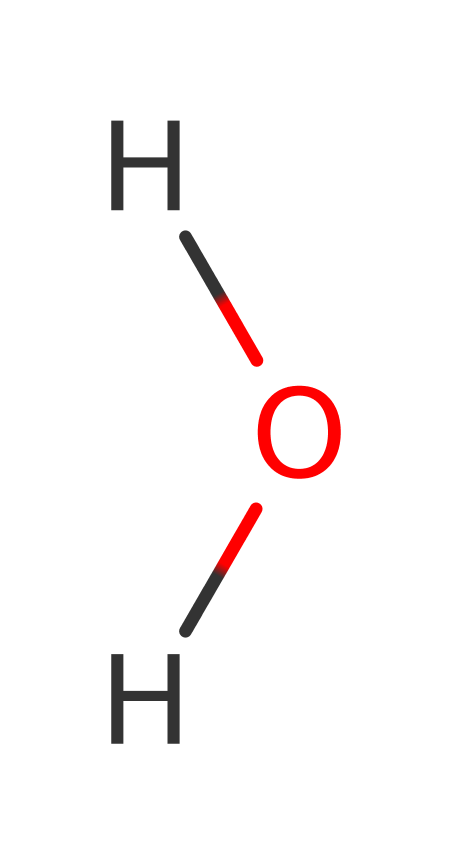
In this reaction Asp80 firstly deprotonates a water molecule coordinated to the Zn2+ ion which is coordinated to the active site by His131, His135 and Asp81. This creates a hydroxide which is stabilised by Hyp171 through a bridging water molecule. The hydroxide is a strong nucleophile and as such attacks the carbonyl carbon of the substrate. A tetrahedral intermediate is formed and stabilised by the carbonyl oxygen coordinating Zn2+. The overall substrate is further stabilised by the hydoxyl group of Hyp171. His225 then proceeds to protonate the substrates nitrogen bound to the attacked carbonyl carbon releasing the acetate leaving group.
Catalytic Residues Roles
| UniProt | PDB* (4l1g) | ||
| His139, His143, Asp89 | His131C, His135C, Asp81C | Asp81, His131, His135 coordinate the Zn2+ cation. | metal ligand |
| His233 | His225C | His225 protonates the nitrogen bound to the leaving group which collapses the intermediate and releases acetate from the substrate. | proton donor |
| Asp88 | Asp80C | Asp80 deprotonates the water molecule coordinated to the Zn2+, turning it into a hydroxide which reacts with the substrate. | proton acceptor |
| Pro179 | X171C | Hyp171 stabilises the reaction with its side chain hydroxide. It donates a hydrogen bond to the carbonyl oxygen from the substrate. It also accepts a hydrogen bond from a water molecule which interacts with the hydroxide bound to the active site Zn2+. This creates a hydrogen bond network stabilising the overall reaction. | hydrogen bond acceptor, hydrogen bond donor, electrostatic stabiliser |
Chemical Components
proton transfer, coordination to a metal ion, bimolecular nucleophilic addition, intermediate formation, overall reactant used, intermediate collapse, overall product formed, unimolecular elimination by the conjugate baseReferences
- Prejanò M et al. (2019), Phys Chem Chem Phys, 21, 23338-23345. Why hydroxy-proline improves the catalytic power of the peptidoglycan N-deacetylase enzyme: insight from theory. DOI:10.1039/c9cp03804c. PMID:31617504.
- Fadouloglou VE et al. (2017), J Am Chem Soc, 139, 5330-5337. Unusual α-Carbon Hydroxylation of Proline Promotes Active-Site Maturation. DOI:10.1021/jacs.6b12209. PMID:28333455.
- Boneca IG (2005), Curr Opin Microbiol, 8, 46-53. The role of peptidoglycan in pathogenesis. DOI:https://doi.org/10.1016/j.mib.2004.12.008.

Step 1. The first step is the deprotonation of Asp80 of the catalytic water. This creates a nucleophile hydroxide coordinated to a Zn2+ ion.
Download: Image, Marvin FileCatalytic Residues Roles
| Residue | Roles |
|---|---|
| X171C | hydrogen bond donor, hydrogen bond acceptor, electrostatic stabiliser |
| Asp81C | metal ligand |
| His135C | metal ligand |
| His131C | metal ligand |
| Asp80C | proton acceptor |
Chemical Components
proton transfer
Step 2. The hydroxide coordinated by the active site and Zn2+ cation performs nucleophilic attack on the carbonyl carbon of the substrate. This is stabilised by the carbonyl oxygen coordinating to the Zn2+.
Download: Image, Marvin FileCatalytic Residues Roles
| Residue | Roles |
|---|---|
| His131C | metal ligand |
| His135C | metal ligand |
| Asp81C | metal ligand |
| X171C | electrostatic stabiliser, hydrogen bond acceptor, hydrogen bond donor |
Chemical Components
coordination to a metal ion, ingold: bimolecular nucleophilic addition, intermediate formation, overall reactant used
Step 3. The His225 protonates the nitrogen atom of the substrate releasing the acetate leaving group.
Download: Image, Marvin FileCatalytic Residues Roles
| Residue | Roles |
|---|---|
| X171C | hydrogen bond donor, hydrogen bond acceptor, electrostatic stabiliser |
| Asp81C | metal ligand |
| His135C | metal ligand |
| His131C | metal ligand |
| His225C | proton donor |
 Download: