Ornithine decarboxylase
Ornithine decarboxylase is a PLP-dependent enzyme that catalyses the first and rate-limiting step of polyamine biosynthesis that converts ornithine into putrescine, which is the precursor for the polyamines, spermidine and spermine. Polyamines are essential for cell proliferation and are implicated in cellular processes, ranging from DNA replication to apoptosis.
Reference Protein and Structure
- Sequence
-
P00860
 (4.1.1.17)
 (Sequence Homologues)
(PDB Homologues)
(Sequence Homologues)
(PDB Homologues)
- Biological species
-
Mus musculus (house mouse)
- PDB
-
7odc
- CRYSTAL STRUCTURE ORNITHINE DECARBOXYLASE FROM MOUSE, TRUNCATED 37 RESIDUES FROM THE C-TERMINUS, TO 1.6 ANGSTROM RESOLUTION
(1.6 Å)



- Catalytic CATH Domains
-
3.20.20.10
 (see all for 7odc)
- Cofactors
- Pyridoxal 5'-phosphate(2-) (1)




Enzyme Mechanism
Introduction
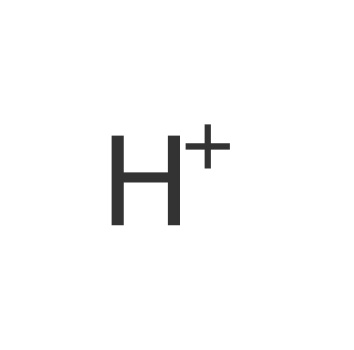
In this PLP-dependent reaction, lysine is displaced from the PLP cofactor by the substrate. The intermediate then undergoes double bond rearrangement and decarboxylation followed by a second transaldimination reaction in which the lysine displaces the product.
Catalytic Residues Roles
| UniProt | PDB* (7odc) | ||
| His197 | His197A | H197 sits at the si face of the PLP cofactor, nearly stacked against the pyridine ring. It helps stabilise the reactive intermediates and maintains the position of the pyridine ring once the cofactor has been cleaved from the enzyme. | |
| Lys69 | Lys69A | In the ground state of the protein, this residue is covalently attached to the PLP cofactor. It is displaced by the substrate and then acts as a general acid/base before displacing the final product to regenerate the active site. | |
| Glu274 | Glu274A | E274 pairs with the pyridine ring nitrogen N1, helping to stabilise the reactive intermediate formed during the course of the reaction and enabling the cofactor to act as an electron sink. |
*PDB label guide - RESx(y)B(C) - RES: Residue Name; x: Residue ID in PDB file;
y: Residue ID in PDB sequence if different from PDB file; B: PDB Chain;
C: Biological Assembly Chain if different from PDB. If label is "Not Found" it means this residue is not found in the reference PDB.
Chemical Components
References
- Kern AD et al. (1999), Structure, 7, 567-581. Structure of mammalian ornithine decarboxylase at 1.6 Å resolution: stereochemical implications of PLP-dependent amino acid decarboxylases. DOI:10.1016/s0969-2126(99)80073-2. PMID:10378276.
- Ramos-Molina B et al. (2013), Biochim Biophys Acta, 1830, 5157-5165. Mutational analysis of the antizyme-binding element reveals critical residues for the function of ornithine decarboxylase. DOI:10.1016/j.bbagen.2013.07.003. PMID:23872168.
- Tobias KE et al. (1993), Biochemistry, 32, 5842-5847. Intersubunit location of the active site of mammalian ornithine decarboxylase as determined by hybridization of site-directed mutants. PMID:8504104.
- Poulin R et al. (1992), J Biol Chem, 267, 150-158. Mechanism of the irreversible inactivation of mouse ornithine decarboxylase by alpha-difluoromethylornithine. Characterization of sequences at the inhibitor and coenzyme binding sites. PMID:1730582.