Polynucleotide adenylyltransferase
Poly(A) polymerase (PAP) catalyses the addition of a poly-adenosine tail to almost all eukaryotic mRNAs. This poly(A) tail has numerous functions in eukaryotes: it facilitates transport of the mRNA from the nucleus, regulates mRNA stability, and increases the efficiency of translation. Poly(A) tails are added to mRNA by a multiprotein complex that recognises the polyadenylation signal, cleaves the precursor mRNA, and adds the additional nucleotides. The poly(A) polymerase component retains its polymerase activity when isolated from the holoenzyme assembly and will progressively add long stretches of adenosine nucleotides to an RNA primer in vitro. Across eukaryotes, it appears the catalytic part of the enzyme resides in the NTD while regulation occurs in the CTD.
Reference Protein and Structure
- Sequence
-
P29468
 (2.7.7.19)
 (Sequence Homologues)
(PDB Homologues)
(Sequence Homologues)
(PDB Homologues)
- Biological species
-
Saccharomyces cerevisiae S288c (Baker's yeast)
- PDB
-
1fa0
- STRUCTURE OF YEAST POLY(A) POLYMERASE BOUND TO MANGANATE AND 3'-DATP
(2.6 Å)



- Catalytic CATH Domains
-
1.10.1410.10
 3.30.460.10
(see all for 1fa0)
3.30.460.10
(see all for 1fa0)
- Cofactors
- Magnesium(2+) (2)
Enzyme Reaction (EC:2.7.7.19)




Enzyme Mechanism
Introduction
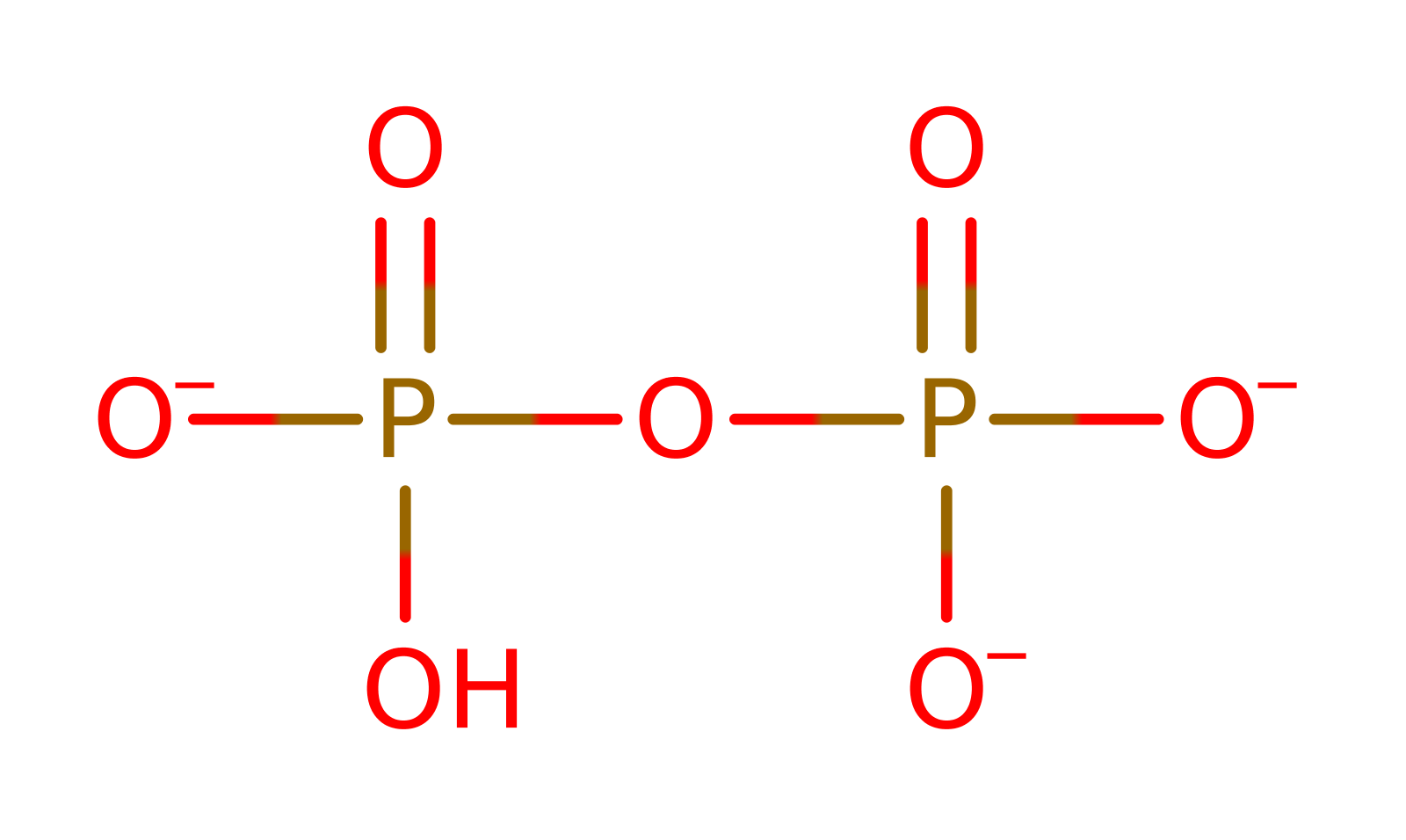
From it's crystal structures, Poly(A) polymerase is thought to use the two-metal-ion mechanism proposed for all nucleic acid polymerases. One magnesium ion contacts the 3' OH of the primer and lowers its pKa, activating it for in-line nucleophilic attack on the alpha phosphate of the incoming ATP. Accumulation of negative charge on the alpha phosphate in the pentacoordinate transition state is stabilised by both magnesium ions. The second magnesium ion additionally functions to stabilise accumulation of negative charge on the pyrophosphate leaving group alongside Lys 215.
Catalytic Residues Roles
| UniProt | PDB* (1fa0) | ||
| Asp154 | Asp154A | Coordinates to metal ion A, a magnesium cation which activates the 3' OH on the ribose sugar for nucleophilic attack. | metal ligand |
| Asp102, Asp100 | Asp102A, Asp100A | Coordinates to metal ion B, a magnesium cation which in turn stabilises the negative charges forming in the transition state of the reaction. | metal ligand |
| Tyr224, Ser89, Lys215 | Tyr224A, Ser89A, Lys215A | Form hydrogen bonds and salt bridge interactions with ATP's triphosphate group, helping stabilise the negatively charged transition state that forms in the reaction. | electrostatic stabiliser, polar interaction |
Chemical Components
bimolecular nucleophilic substitution, inferred reaction step, overall product formed, overall reactant usedReferences
- Bard J et al. (2000), Science, 289, 1346-1349. Structure of Yeast Poly(A) Polymerase Alone and in Complex with 3'-dATP. DOI:10.1126/science.289.5483.1346. PMID:10958780.
- Yang Q et al. (2014), J Mol Biol, 426, 43-50. Crystal structure of human poly(A) polymerase gamma reveals a conserved catalytic core for canonical poly(A) polymerases. DOI:10.1016/j.jmb.2013.09.025. PMID:24076191.
- Balbo PB et al. (2007), Structure, 15, 1117-1131. Mechanism of poly(A) polymerase: structure of the enzyme-MgATP-RNA ternary complex and kinetic analysis. DOI:10.1016/j.str.2007.07.010. PMID:17850751.
- Brautigam CA et al. (1998), Curr Opin Struct Biol, 8, 54-63. Structural and functional insights provided by crystal structures of DNA polymerases and their substrate complexes. DOI:10.1016/s0959-440x(98)80010-9. PMID:9519297.
- Doublié S et al. (1998), Curr Opin Struct Biol, 8, 704-712. The mechanism of action of T7 DNA polymerase. DOI:10.1016/s0959-440x(98)80089-4. PMID:9914251.

Step 1. Mg2+ coordinating to the 3' OH on the ribose sugar lowers the pka of the surrounding area, increasing it's nucleophilicity to attack the alpha phosphate on ATP.
Download: Image, Marvin FileCatalytic Residues Roles
| Residue | Roles |
|---|---|
| Lys215A | electrostatic stabiliser |
| Tyr224A | electrostatic stabiliser |
| Ser89A | electrostatic stabiliser |
| Asp100A | metal ligand |
| Asp102A | metal ligand |
| Asp154A | metal ligand |
| Ser89A | polar interaction |
| Lys215A | polar interaction |
| Tyr224A | polar interaction |
 Download: