CDP-diacylglycerol diphosphatase
5-aminoimidazole ribotide (AIR) is a branch point metabolite in the biosynthetic pathways of purines and thiamin. Although AIR cannot be efficiently taken up by most bacteria, 5-aminoimidazole riboside (AIRs) can. Aminoimidazole riboside kinase catalyses the phosphorylation of AIRs into AIR to feed into purine and thiamin biosynthesis pathways.
Reference Protein and Structure
- Sequence
-
Q8ZKR2
 (2.7.1.4, 3.6.1.26)
 (Sequence Homologues)
(PDB Homologues)
(Sequence Homologues)
(PDB Homologues)
- Biological species
-
Salmonella enterica subsp. enterica serovar Typhimurium str. LT2 (Bacteria)
- PDB
-
1tz3
- crystal structure of aminoimidazole riboside kinase complexed with aminoimidazole riboside
(2.9 Å)



- Catalytic CATH Domains
-
3.40.1190.20
 (see all for 1tz3)
Enzyme Reaction (EC:3.6.1.26)
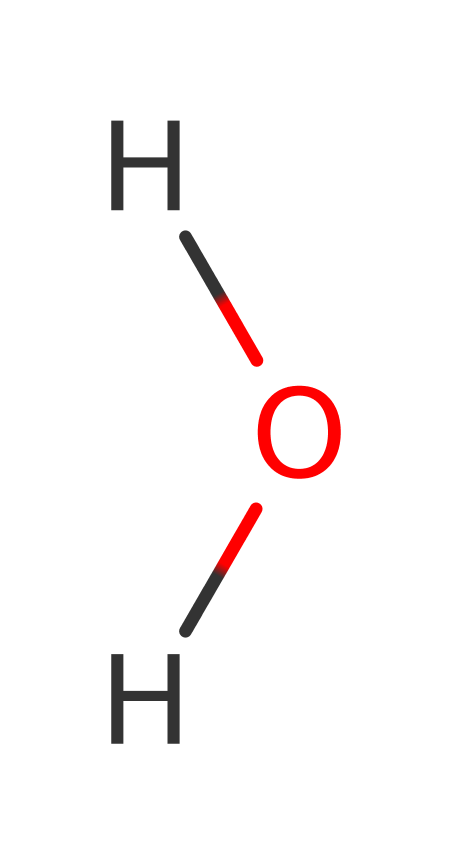


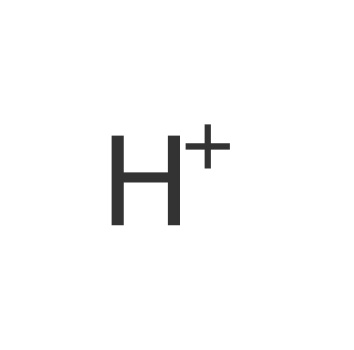


Enzyme Mechanism
Introduction
The mechanism proposed is mainly by homology to other ribokinases, such as human adenosine kinase. Asp 252 is a general base and deprotonates the 5' hydroxyl group of the ribose. The deprotonated hydroxyl attacks the gamma-phosphate of ATP in an inline displacement mechanism. The backbone amides of Gly 249, Ala 250, Gly 251 and Asp 252 act as an anion hole to stabilise negative charge build-up in the pentacovalent transition state. The products are AIR and ADP.
Catalytic Residues Roles
| UniProt | PDB* (1tz3) | ||
| Asp252 | Asp252(272)A | The side chain of Asp 252 deprotonates the 5' hydroxyl of the substrate, making it more nucleophilic. The main chain amide acts as an anion hole to stabilise charge build-up in the transition state. |
proton shuttle (general acid/base), electrostatic stabiliser |
| Gly249 (main-N) | Gly249(269)A (main-N) | The main chain amide of Gly 249 acts as an anion hole to stabilise charge build-up in the transition state. | electrostatic stabiliser |
| Ala250 (main-N) | Ala250(270)A (main-N) | The main chain amide of Ala 250 acts as an anion hole to stabilise charge build-up in the transition state. | electrostatic stabiliser |
| Gly251 (main-N) | Gly251(271)A (main-N) | The main chain amide of Gly 251 acts as an anion hole to stabilise charge build-up in the transition state. | electrostatic stabiliser |
Chemical Components
References
- Zhang Y et al. (2004), Structure, 12, 1809-1821. Crystal Structure of an Aminoimidazole Riboside Kinase from Salmonella enterica. DOI:10.1016/j.str.2004.07.020. PMID:15458630.

Catalytic Residues Roles
| Residue | Roles |
|---|---|
| Gly249(269)A (main-N) | electrostatic stabiliser |
| Gly251(271)A (main-N) | electrostatic stabiliser |
| Asp252(272)A | proton shuttle (general acid/base), electrostatic stabiliser |
| Ala250(270)A (main-N) | electrostatic stabiliser |