Cytochrome-c oxidase (BA3 type)
Cytochrome c oxidase (COX) is a multi-unit, membrane-bound enzyme, reducing molecular oxygen to water, coupling this to the creation of a proton and charge gradient across the membrane that is essential to respiratory pathways in mitochondria and aerobic bacteria. The exact catalytic mechanisms are not definitely known, and different COXs may or may not work via subtly different mechanisms, or via different combinations of several possible pathways. The ba3-type COX fromThermus thermophilus is a two subunit oxidase and expressed under limited oxygen supply; it shows similarity to archaeal oxidases (SoxB type) rather than most other eubacterial oxidases (SoxM type). Compared to other COXs it has reduced proton pumping efficiency.
Reference Protein and Structure
- Sequences
-
Q5SJ79
 (7.1.1.9)
Q5SJ80 (7.1.1.9)
P82543 (7.1.1.9)
 (Sequence Homologues)
(PDB Homologues)
(Sequence Homologues)
(PDB Homologues)
- Biological species
-
Thermus thermophilus HB8 (Bacteria)
- PDB
-
1ehk
- CRYSTAL STRUCTURE OF THE ABERRANT BA3-CYTOCHROME-C OXIDASE FROM THERMUS THERMOPHILUS
(2.4 Å)



- Catalytic CATH Domains
-
1.20.210.10
 2.60.40.420
(see all for 1ehk)
2.60.40.420
(see all for 1ehk)
- Cofactors
- Copper(2+) (1), Binuclear copper ion (1), Heme-as (1), Heme b (1)
Enzyme Reaction (EC:1.9.3.1)


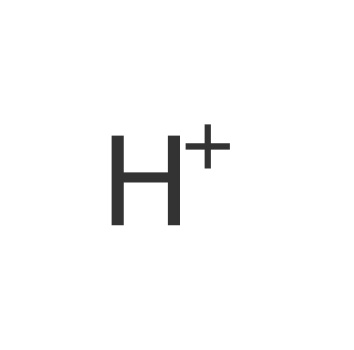


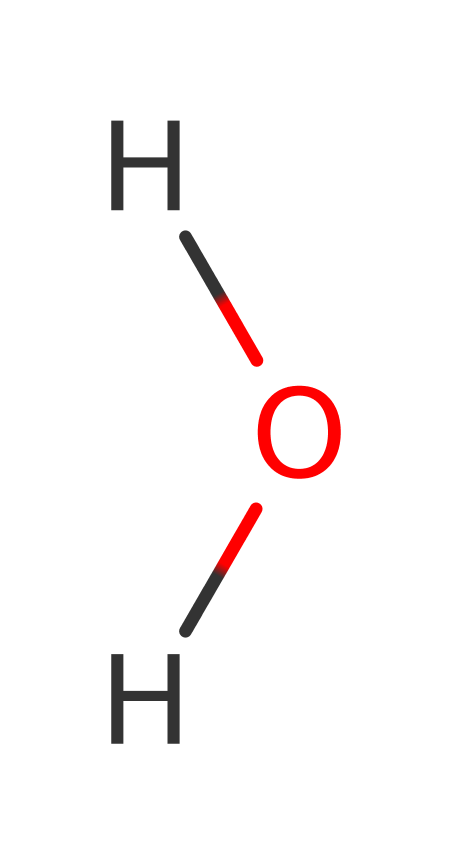


Enzyme Mechanism
Introduction
The ba3-type COX has a copper CuA centre (comprising two copper ions), a haem b, and a redox active binuclear centre comprising CuB and a haem As3 iron. Tyr 237 is near CuB and haem As3, and has a low pKa due to a covalent bond with His 233. In the resting (oxidised or O) state, the haem As3 contains Fe(III) and CuB is Cu(II). A hydroxide ion is bound by Fe and CuB. Cytochrome c docks, transferring an electron (via Phe 88 and Phe 86) to the CuA centre. From here the electron is transferred (via Arg 450, Arg 449, haem b, His 386, Phe 385 and His 384) to the binuclear centre, giving a semi-reduced E state. This occurs at the same time as a proton is accepted by the hydroxide to give a water, which leaves. A second cytochrome c delivers an electron (via the same route as the first) to give the fully reduced R state, in which the binuclear centre contains Fe(II) and Cu(I). Molecular oxygen then binds to Fe(II), giving a short-lived A state. The next intermediate depends on whether there is an electron available on haem b (which will be delivered by a third cytochrome c via the same route as before):
- If there is an electron available on haem b, four electrons (one from haem b, one from CuB, two from haem as3) reduce oxygen to yield a oxo-ferryl adduct with Fe(IV)=O and Cu(II) (the PR state). Water is produced, with the protons from a pool of water above the active site and/or Tyr 237.
- If there is no electron available on haem b, four electrons (one from CuB, two from haem as3, one from Tyr 237) reduce oxygen to yield a oxo-ferryl adduct with Fe(IV)=O, Cu(II) and a Tyr 237 radical (the PM state). Water is produced, with the protons from a pool of water above the active site and Tyr 237. Both the P states decay to the F state (by protonation of Tyr 237 for PR, and reduction and protonation for PM) which also has Fe(IV)=O and Cu(II) but a regenerated Tyr 237. An electron from a fourth cytochrome c is delivered to give the resting O state with Fe(III), Cu(II), hydroxide and protonated Tyr 237.
The route of proton transfer (either for water formation or the coupled proton pumping) is not exactly known. However, recent work has deomonstrated that this protein probably utilises the K-pathway. That being said, mutagensis of Asp372 (the Q-pathway) demonstrated a severe inhibition of proton transport. The three identified possible routes in ba3-type COX are known as the K-, D- and Q-pathways. The K- and D- pathways are thought to be the relevant routes in bovine mitochondrial COX, but ba3-type COX shows low homology for the residues involved, and it is possible for other pathways to be active in T. thermophilus. The three pathways are as follows:
- K-pathway: Glu 516, Asp 517, His 8 (subunit II), Ser 261, Glu 15 (subunit II), Thr 312, Ser 309, Tyr 237 and His 233.
- D-pathway: Glu 17, Tyr 91, Thr 21, two water molecules, then some or all of: Ser 109, Gln 86, Ser 155, Thr 156, Gln 82, then to a water-filled cavity; from there, directly to the binuclear centre, or via Ser 197 and Thr 231.
- Q-pathway: Gln 254, two water molecules, Thr 396, Leu 392 (main chain carbonyl), a water molecule, Ser 391, Gln 388, Leu 387 (main chain carbonyl), His 384, Asn 366, Asp 372, the haem as3 pyrole ring A, then to another water pool above the haem as3 propionates.
Catalytic Residues Roles
| UniProt | PDB* (1ehk) | ||
| His233 | His233A | His 233 is covalently bound to Tyr 237, lowering its pKa so that it can act as a proton donor. | covalently attached, modifies pKa |
| Tyr237 | Tyr237A | Tyr 237 acts as a proton and electron donor for the reduction of molecular oxygen. | covalently attached, proton shuttle (general acid/base), electron shuttle |
| His384 | His384A | His 384 is part of an electron transfer chain between cytochrome c and the binuclear CuB-haem a3 centre. It is a ligand to the iron in haem a3 and delivers electrons to it. | electron shuttle |
| Phe385 | Phe385A | Phe 385 is part of an electron transfer chain between cytochrome c and the binuclear CuB-haem a3 centre. | electron shuttle |
| His386 | His386A | His 386 is part of an electron transfer chain between cytochrome c and the binuclear CuB-haem a3 centre. | electron shuttle |
| Arg449 | Arg449A | Arg 449 is part of an electron transfer chain between cytochrome c and the binuclear CuB-haem a3 centre. | electron shuttle |
| Arg450 | Arg450A | Arg 450 is part of an electron transfer chain between cytochrome c and the binuclear CuB-haem a3 centre. | electron shuttle |
| Phe86 | Phe86B | Phe 86 is part of an electron transfer chain between cytochrome c and the binuclear CuB-haem a3 centre. | electron shuttle |
| Phe88 | Phe88B | Phe 88 is part of an electron transfer chain between cytochrome c and the binuclear CuB-haem a3 centre. | electron shuttle |
Chemical Components
References
- Brunori M et al. (2005), J Inorg Biochem, 99, 324-336. Cytochrome oxidase, ligands and electrons. DOI:10.1016/j.jinorgbio.2004.10.011. PMID:15598510.
- Andersson R et al. (2017), Sci Rep, 7, 4518-. Serial femtosecond crystallography structure of cytochrome c oxidase at room temperature. DOI:10.1038/s41598-017-04817-z. PMID:28674417.
- Poiana F et al. (2017), Sci Adv, 3, e1700279-. Splitting of the O-O bond at the heme-copper catalytic site of respiratory oxidases. DOI:10.1126/sciadv.1700279. PMID:28630929.
- von Ballmoos C et al. (2017), Isr J Chem, 57, 424-436. Dynamics of the KB Proton Pathway in Cytochrome ba 3 from Thermus thermophilus . DOI:10.1002/ijch.201600136.
- Han Du WG et al. (2016), Phys Chem Chem Phys, 18, 21162-21171. A broken-symmetry density functional study of structures, energies, and protonation states along the catalytic O-O bond cleavage pathway in ba3 cytochrome c oxidase from Thermus thermophilus. DOI:10.1039/c6cp00349d. PMID:27094074.
- Mahinthichaichan P et al. (2016), Biochemistry, 55, 1265-1278. All the O2 Consumed by Thermus thermophilus Cytochrome ba3 Is Delivered to the Active Site through a Long, Open Hydrophobic Tunnel with Entrances within the Lipid Bilayer. DOI:10.1021/acs.biochem.5b01255. PMID:26845082.
- Yang L et al. (2016), Data Brief, 8, 1209-1214. Data for molecular dynamics simulations of B-type cytochrome c oxidase with the Amber force field. DOI:10.1016/j.dib.2016.07.043. PMID:27547799.
- von Ballmoos C et al. (2015), Proc Natl Acad Sci U S A, 112, 3397-3402. Mutation of a single residue in the ba3 oxidase specifically impairs protonation of the pump site. DOI:10.1073/pnas.1422434112. PMID:25733886.
- Han Du WG et al. (2015), Inorg Chem, 54, 7272-7290. Broken Symmetry DFT Calculations/Analysis for Oxidized and Reduced Dinuclear Center in Cytochrome c Oxidase: Relating Structures, Protonation States, Energies, and Mössbauer Properties in ba3 Thermus thermophilus. DOI:10.1021/acs.inorgchem.5b00700. PMID:26192749.
- Einarsdóttir O et al. (2015), Biochim Biophys Acta, 1847, 109-118. The pathway of O₂to the active site in heme-copper oxidases. DOI:10.1016/j.bbabio.2014.06.008. PMID:24998308.
- McDonald W et al. (2014), Biochemistry, 53, 4467-4475. Conserved glycine 232 in the ligand channel of ba3 cytochrome oxidase from Thermus thermophilus. DOI:10.1021/bi500289h. PMID:24937405.
- Noodleman L et al. (2014), Inorg Chem, 53, 6458-6472. Linking chemical electron-proton transfer to proton pumping in cytochrome c oxidase: broken-symmetry DFT exploration of intermediates along the catalytic reaction pathway of the iron-copper dinuclear complex. DOI:10.1021/ic500363h. PMID:24960612.
- Woelke AL et al. (2014), Biophys J, 107, 2177-2184. Proton transfer in the K-channel analog of B-type Cytochrome c oxidase from Thermus thermophilus. DOI:10.1016/j.bpj.2014.09.010. PMID:25418102.
- Smirnova I et al. (2013), Biochemistry, 52, 7022-7030. Single mutations that redirect internal proton transfer in the ba3 oxidase from Thermus thermophilus. DOI:10.1021/bi4008726. PMID:24004023.
- McDonald W et al. (2013), Biochemistry, 52, 640-652. Ligand access to the active site in Thermus thermophilus ba(3) and bovine heart aa(3) cytochrome oxidases. DOI:10.1021/bi301358a. PMID:23282175.
- Einarsdóttir O et al. (2012), Biochim Biophys Acta, 1817, 672-679. Kinetic studies of the reactions of O(2) and NO with reduced Thermus thermophilus ba(3) and bovine aa(3) using photolabile carriers. DOI:10.1016/j.bbabio.2011.12.005. PMID:22201543.
- Liu B et al. (2012), Biochim Biophys Acta, 1817, 658-665. Structural changes that occur upon photolysis of the Fe(II)(a3)-CO complex in the cytochrome ba(3)-oxidase of Thermus thermophilus: a combined X-ray crystallographic and infrared spectral study demonstrates CO binding to Cu(B). DOI:10.1016/j.bbabio.2011.12.010. PMID:22226917.
- Chacón KN et al. (2012), J Am Chem Soc, 134, 16401-16412. Stable Cu(II) and Cu(I) mononuclear intermediates in the assembly of the CuA center of Thermus thermophilus cytochrome oxidase. DOI:10.1021/ja307276z. PMID:22946616.
- Koutsoupakis C et al. (2012), J Biol Chem, 287, 37495-37507. Spectroscopic and kinetic investigation of the fully reduced and mixed valence states of ba3-cytochrome c oxidase from Thermus thermophilus: a Fourier transform infrared (FTIR) and time-resolved step-scan FTIR study. DOI:10.1074/jbc.M112.403600. PMID:22927441.
- Tiefenbrunn T et al. (2011), PLoS One, 6, e22348-. High resolution structure of the ba3 cytochrome c oxidase from Thermus thermophilus in a lipidic environment. DOI:10.1371/journal.pone.0022348. PMID:21814577.
- Koutsoupakis C et al. (2011), J Biol Chem, 286, 30600-30605. Probing protonation/deprotonation of tyrosine residues in cytochrome ba3 oxidase from Thermus thermophilus by time-resolved step-scan Fourier transform infrared spectroscopy. DOI:10.1074/jbc.M111.252213. PMID:21757723.
- Szundi I et al. (2010), Proc Natl Acad Sci U S A, 107, 21010-21015. CO impedes superfast O2 binding in ba3 cytochrome oxidase from Thermus thermophilus. DOI:10.1073/pnas.1008603107. PMID:21097703.
- Chang HY et al. (2009), Proc Natl Acad Sci U S A, 106, 16169-16173. The cytochrome ba3 oxygen reductase from Thermus thermophilus uses a single input channel for proton delivery to the active site and for proton pumping. DOI:10.1073/pnas.0905264106. PMID:19805275.
- Liu B et al. (2009), Biochemistry, 48, 820-826. Combined microspectrophotometric and crystallographic examination of chemically reduced and X-ray radiation-reduced forms of cytochrome ba3 oxidase from Thermus thermophilus: structure of the reduced form of the enzyme. DOI:10.1021/bi801759a. PMID:19140675.
- Soulimane T et al. (2000), EMBO J, 19, 1766-1776. Structure and mechanism of the aberrant ba3-cytochrome c oxidase from Thermus thermophilus. DOI:10.1093/emboj/19.8.1766. PMID:10775261.
- Proshlyakov DA et al. (2000), Science, 290, 1588-1591. Oxygen Activation and Reduction in Respiration: Involvement of Redox-Active Tyrosine 244. DOI:10.1126/science.290.5496.1588. PMID:11090359.

Catalytic Residues Roles
| Residue | Roles |
|---|---|
| Tyr237A | electron shuttle, proton shuttle (general acid/base) |
| His386A | electron shuttle |
| His384A | electron shuttle |
| Arg449A | electron shuttle |
| Phe385A | electron shuttle |
| Arg450A | electron shuttle |
| Phe86B | electron shuttle |
| Phe88B | electron shuttle |
| His233A | covalently attached |
| Tyr237A | covalently attached |
| His233A | modifies pKa |