Protein-glutamate methylesterase (CheD)
CheD is a regulatory protein involved in the signal transduction pathways that control bacterial chemotaxis. CheD deamidates receptor glutamine residues contained within a conserved structural motif and also hydrolyses glutamyl-methyl-esters at specific positions on it's target proteins. CheC is a signal-terminating phosphatase which down regulates CheD activity by mimicking the substrate.
Reference Protein and Structure
- Sequences
-
Q9X006
 (3.-.-.-)
Q9X005 (3.1.1.61, 3.5.1.44)
 (Sequence Homologues)
(PDB Homologues)
(Sequence Homologues)
(PDB Homologues)
- Biological species
-
Thermotoga maritima MSB8 (Bacteria)
- PDB
-
2f9z
- Complex between the chemotaxis deamidase CheD and the chemotaxis phosphatase CheC from Thermotoga maritima
(2.4 Å)



- Catalytic CATH Domains
-
3.30.1330.200
 (see all for 2f9z)
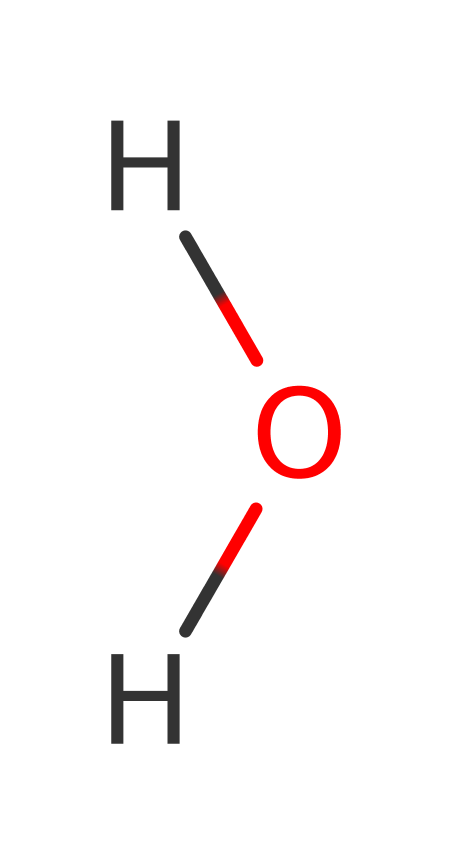
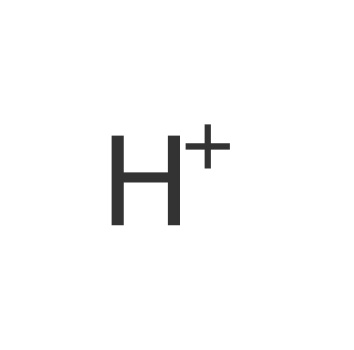
Enzyme Reaction (EC:3.1.1.61)


+
→

+
+


Alternative enzyme names: CheB methylesterase, PME, Chemotaxis-specific methylesterase, Methyl-accepting chemotaxis protein methyl-esterase, Methylesterase CheB, Protein carboxyl methylesterase, Protein methyl-esterase, Protein methylesterase, Protein-L-glutamate-5-O-methyl-ester acylhydrolase,
Enzyme Mechanism
Introduction
A mechanism analogous to that seen in cysteine proteases, such as papain, has been proposed for the deamidation. Cys27 acts as the nucleophile. It attacks the carbonyl carbon of the substrate yielding a tetrahedral intermediate. Ammonia is lost yielding a thioester which is hydrolysed by a water molecule.
Catalytic Residues Roles
| UniProt | PDB* (2f9z) | ||
| Cys27 | Cys27(29)C | Cys27 is the nucleophile which attacks the carbonyl carbon of the substrate. | covalently attached |
| Thr21 | Thr21(23)C | Stabilises the positions of His44 and Cys27. | electrostatic stabiliser |
| His44 | His44(46)C | His44 deprotonates Cys27 so that it may act as nucleophile. His44 may also protonate the amino-leaving group of the substrate. | proton shuttle (general acid/base) |
*PDB label guide - RESx(y)B(C) - RES: Residue Name; x: Residue ID in PDB file;
y: Residue ID in PDB sequence if different from PDB file; B: PDB Chain;
C: Biological Assembly Chain if different from PDB. If label is "Not Found" it means this residue is not found in the reference PDB.
Chemical Components
References
- Chao X et al. (2006), Cell, 124, 561-571. A Receptor-Modifying Deamidase in Complex with a Signaling Phosphatase Reveals Reciprocal Regulation. DOI:10.1016/j.cell.2005.11.046. PMID:16469702.

Catalytic Residues Roles
| Residue | Roles |
|---|---|
| His44(46)C | proton shuttle (general acid/base) |
| Thr21(23)C | electrostatic stabiliser |
| Cys27(29)C | covalently attached |
Chemical Components
Catalytic Residues Roles
| Residue | Roles |
|---|
Chemical Components
Catalytic Residues Roles
| Residue | Roles |
|---|
Chemical Components
Catalytic Residues Roles
| Residue | Roles |
|---|