Dimethylsulfoxide reductase
The molybdoenzyme dimethylsulfoxide (DMSO) reductase contributes to the release of dimethylsulfide, a compound that has been implicated in cloud nucleation and global climate regulation. Terminal reductase during anaerobic growth on various sulfoxide and N-oxide compounds. This enzyme contains a mononuclear Mo coordinated by two molybdopterin guanine dinucleotides as its single cofactor.
Reference Protein and Structure
- Sequence
-
Q57366
 (1.7.2.3, 1.8.5.3)
 (Sequence Homologues)
(PDB Homologues)
(Sequence Homologues)
(PDB Homologues)
- Biological species
-
Rhodobacter sphaeroides (Bacteria)
- PDB
-
1eu1
- THE CRYSTAL STRUCTURE OF RHODOBACTER SPHAEROIDES DIMETHYLSULFOXIDE REDUCTASE REVEALS TWO DISTINCT MOLYBDENUM COORDINATION ENVIRONMENTS.
(1.3 Å)



- Catalytic CATH Domains
-
3.40.50.740
 (see all for 1eu1)
- Cofactors
- Molybdenum(6+) (1)
Enzyme Reaction (EC:1.8.5.3)




Enzyme Mechanism
Introduction
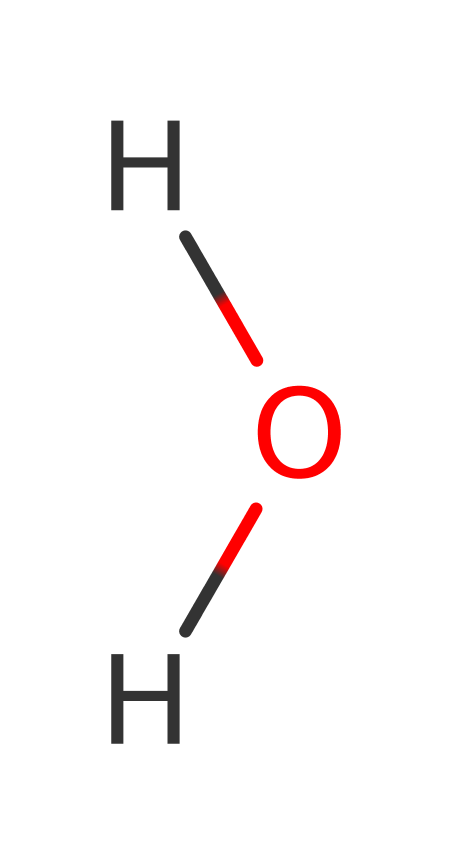
The active site of DMSO reductase contains a mononuclear Mo coordinated by two molybdopterin guanine dinucleotides and the oxygen of Ser147as its single cofactor. The oxidative half cycle of the reaction is initiated by substrate binding to the reduced enzyme, forming the Ered.DMSO complex containing Mo(IV). This is stabilised by Y114. Binding of DMSO is via the oxygen and leads to some degree of lengthening of the S-O bond. In the catalytic step, the substrate oxygen is transferred as an oxo ligand to the Mo with a concomitant two-electron oxidation of the metal forming Mo(VI) and dimethyl sulfate which is then released from the active site. The reductive half cycle of the reaction consists of two one-electron reduction steps coupled to the transfer of two protons to generate H2O from the substrate derived oxo group. This reduces Mo(VI) to Mo(IV) . The water is lost to the solvent and the oxidised enzyme is therefore returned to its initial reduced state.
Catalytic Residues Roles
| UniProt | PDB* (1eu1) | ||
| Tyr156 | Tyr114A | Stabilises the intermediate Ered.DMSO complex by hydrogen bonding to the O atom. | electrostatic stabiliser |
| Trp158 | Trp116A | Prevents water binding to Mo causing loss of the Q pterin group leading to inactivation of the enzyme | steric role |
Chemical Components
References
- George GN et al. (2007), Inorg Chem, 46, 3097-3104. Interaction of Product Analogues with the Active Site ofRhodobacterSphaeroidesDimethyl Sulfoxide Reductase. DOI:10.1021/ic0619052. PMID:17361996.
- Cobb N et al. (2007), J Biol Chem, 282, 35519-35529. Spectroscopic and Kinetic Studies of Y114F and W116F Mutants of Me2SO Reductase from Rhodobacter capsulatus. DOI:10.1074/jbc.m704458200. PMID:17921142.
- Schindelin H et al. (1996), Science, 272, 1615-1621. Crystal Structure of DMSO Reductase: Redox-Linked Changes in Molybdopterin Coordination. DOI:10.1126/science.272.5268.1615. PMID:8658134.

Catalytic Residues Roles
| Residue | Roles |
|---|---|
| Tyr114A | electrostatic stabiliser |
| Trp116A | steric role |