DNA-3-methyladenine glycosylase I
DNA glycosylases are able to remove bases from DNA by hydrolysing the glycosidic bond between the ribose sugar and the base. This enables specific glycosylases to correct particular defects in DNA such as mispairing or the insertion of a base analogue, making them of particular interest towards an understanding of DNA repair in cells. 3-methyladenine DNA glycosylase I is able to recognise the cationic base 3-methyladenine and remove it wherever it occurs in the sequence. As part of the HhH-GPD superfamily of DNA glycosylases, which includes well characterised members such as MutY, it works by a monofunctional mechanism to remove a purine, resulting in a relatively low rate enhancement of between 10 and 20 times the rate of spontaneous hydrolysis. Unlike other glycosylases that have a HhH motif, 3-methyladenine DNA glycosylase I does not have a conserved aspartate, indicating an alternative base excision mechanism is in place.
Reference Protein and Structure
- Sequence
-
P05100
 (3.2.2.20)
 (Sequence Homologues)
(PDB Homologues)
(Sequence Homologues)
(PDB Homologues)
- Biological species
-
Escherichia coli K-12 (Bacteria)
- PDB
-
1p7m
- SOLUTION STRUCTURE AND BASE PERTURBATION STUDIES REVEAL A NOVEL MODE OF ALKYLATED BASE RECOGNITION BY 3-METHYLADENINE DNA GLYCOSYLASE I
(solution nmr
Å)



- Catalytic CATH Domains
-
1.10.340.30
 (see all for 1p7m)
Enzyme Reaction (EC:3.2.2.20)




Enzyme Mechanism
Introduction
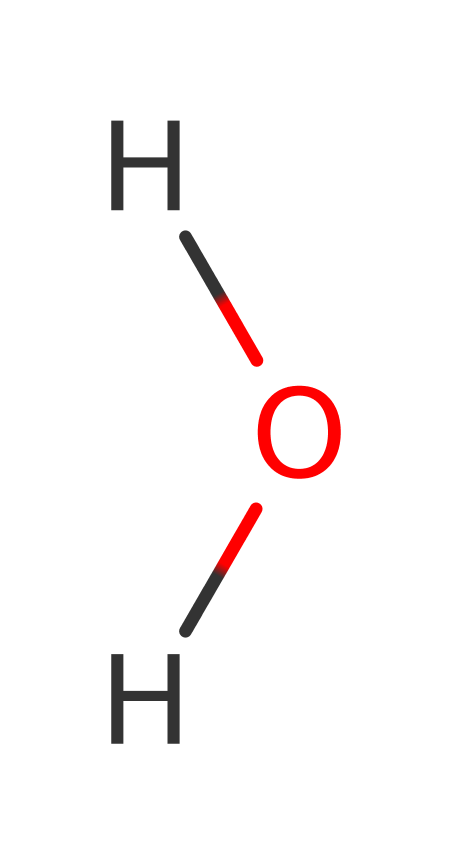
The reaction proceeds via hydrolysis of the glycosidic bond by nucleophilic attack on C1' of the ribose sugar, freeing the base from the sugar phosphate backbone. As the breaking of the glycosidic bond results in a negative charge developing on the N9 of the base, the transition state is overall neutral on the base. This distorts the structure of the base sufficiently so that hydrogen bonds between Glu38 and the N6 and N7 of 3mA become optimal, as do bonds between Tyr 16 and N1. Moreover, the distance between the base and Trp 46 becomes optimal for van der waal's forces. This stabilisation of the transition state means that the glycosidic bond is weakened, so hydrolysis is enhanced.
Catalytic Residues Roles
| UniProt | PDB* (1p7m) | ||
| Trp46 | Trp46A | Stabilises the transition state because stacks in perfect alignment for optimum Van der Waal's forces to the neutral base but sterically clashes with the methyl group of the charged base. | van der waals interaction, electrostatic stabiliser |
| Tyr16 | Tyr16A | Stabilises the transition state by forming hydrogen bonds to the N1 of the neutral base which is optimum length and orientation compared to the non-optimal bonds formed to the charged base. | hydrogen bond acceptor, hydrogen bond donor, electrostatic stabiliser |
| Glu38 | Glu38A | Stabilises the transition state by forming hydrogen bonds to the N6 and N7 of the neutral base which are optimum length and orientation, as opposed to the non-optimal bonds formed to the charged base. | hydrogen bond acceptor, hydrogen bond donor, electrostatic stabiliser |
Chemical Components
bimolecular nucleophilic substitution, overall reactant used, overall product formedReferences
- Cao C et al. (2003), J Biol Chem, 278, 48012-48020. Solution Structure and Base Perturbation Studies Reveal a Novel Mode of Alkylated Base Recognition by 3-Methyladenine DNA Glycosylase I. DOI:10.1074/jbc.m307500200. PMID:13129925.
- Metz AH et al. (2007), EMBO J, 26, 2411-2420. DNA damage recognition and repair by 3-methyladenine DNA glycosylase I (TAG). DOI:10.1038/sj.emboj.7601649. PMID:17410210.
- Fromme JC et al. (2004), Curr Opin Struct Biol, 14, 43-49. DNA glycosylase recognition and catalysis. DOI:10.1016/j.sbi.2004.01.003. PMID:15102448.

Catalytic Residues Roles
| Residue | Roles |
|---|---|
| Glu38A | electrostatic stabiliser |
| Trp46A | electrostatic stabiliser |
| Tyr16A | electrostatic stabiliser |
| Glu38A | hydrogen bond donor, hydrogen bond acceptor |
| Tyr16A | hydrogen bond donor, hydrogen bond acceptor |
| Trp46A | van der waals interaction |