Phospholipase A1
The outer membrane phospholipase A (OMPLA) is an integral membrane enzyme present in the outer membrane of Gram-negative bacteria. It catalyses the hydrolysis of acylester bonds in phospholipids. The physiological function of OMPLA is still not known.
Reference Protein and Structure
- Sequence
-
P0A921
 (3.1.1.4, 3.1.1.32)
 (Sequence Homologues)
(PDB Homologues)
(Sequence Homologues)
(PDB Homologues)
- Biological species
-
Escherichia coli K-12 (Bacteria)
- PDB
-
1qd6
- OUTER MEMBRANE PHOSPHOLIPASE A FROM ESCHERICHIA COLI
(2.1 Å)



- Catalytic CATH Domains
-
2.40.230.10
 (see all for 1qd6)
- Cofactors
- Water (2), Calcium(2+) (1)






Enzyme Mechanism
Introduction
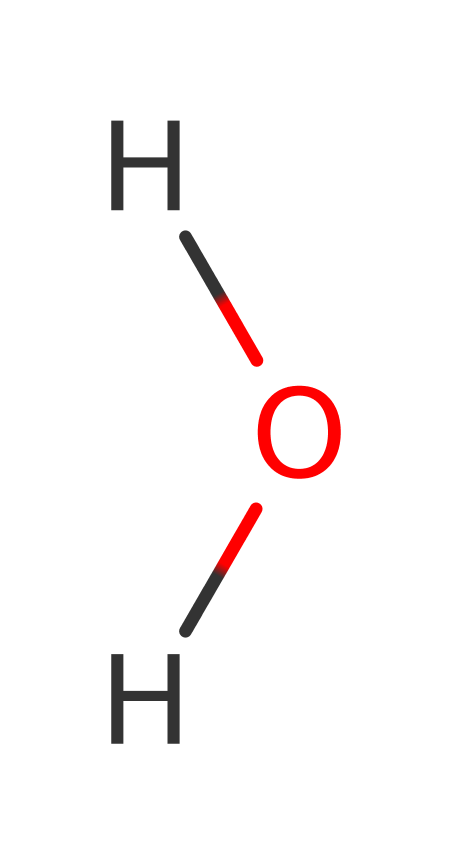
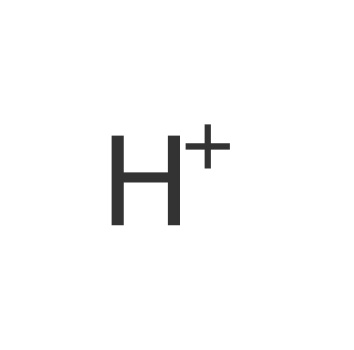
The mechanism of OMPLA is analogous to that of serine hydrolases. His162 acts as a base to deprotonate the side chain of Ser164 to allow its nucleophilic attack on the ester bond. The tetrahedral transition state is stabilised by an oxyanion hole formed by the amide of Gly166 and 2 water molecules. His162 protonates the leaving group and then deprotonates a water molecule to allow its nucleophilic attack on the acylenzyme intermediate. The essential Ca2+ ion increases the nucleophilicity of the serine and polarises the ester carbonyl bond to facilitate the nucleophilic attack. It is also involved in the oxyanion stabilisation.
Catalytic Residues Roles
| UniProt | PDB* (1qd6) | ||
| Ser164 | Ser144(115)C | It acts as a nucleophile to attack the ester bond of the substrate. | covalently attached, nucleofuge, nucleophile, proton acceptor, proton donor |
| His162 | His142(113)C | It deprotonates Ser 164 to allow its nucleophilic attack on the ester bond. It protonates the leaving group. It activates a water molecule to regenerate the enzyme from the acylenzyme intermediate. | proton acceptor, proton donor |
| Asn176 | Asn156(127)C | Increases the basicity of His162. | increase basicity, electrostatic stabiliser |
| Gly166 (main-N) | Gly146(117)C (main-N) | Its amide group forms the oxyanion hole to stabilise the transition state. | electrostatic stabiliser |
| Ser172, Ser126 (main-N), Arg167 (main-N) | Ser152(123)C, Ser106(77)D (main-N), Arg147(118)C (main-N) | Coordinate the calcium ion. | metal ligand |
Chemical Components
bimolecular nucleophilic addition, intermediate formation, overall reactant used, proton transfer, overall product formed, unimolecular elimination by the conjugate base, native state of enzyme regenerated, intermediate terminatedReferences
- Snijder HJ et al. (1999), Nature, 401, 717-721. Structural evidence for dimerization-regulated activation of an integral membrane phospholipase. DOI:10.1038/44890. PMID:10537112.
- Baaden M et al. (2003), J Mol Biol, 331, 177-189. A Molecular Dynamics Investigation of Mono and Dimeric States of the Outer Membrane Enzyme OMPLA. DOI:doi:10.1016/S0022-2836(03)00718-6.
- Brok RG et al. (1996), Biochemistry, 35, 7787-7793. Escherichia coliOuter Membrane Phospholipase A: Role of Two Serines in Enzymatic Activity†. DOI:10.1021/bi952970i. PMID:8672479.
- Brok RG et al. (1995), Eur J Biochem, 234, 934-938. A Conserved Histidine Residue of Escherichia Coli Outer-Membrane Phospholipase A is Important for Activity. DOI:10.1111/j.1432-1033.1995.934_a.x. PMID:8575454.
- Horrevoets AJ et al. (1991), Eur J Biochem, 198, 247-253. Inactivation of Escherichia coli outer-membrane phospholipase A by the affinity label hexadecanesulfonyl fluoride. Evidence for an active-site serine. DOI:10.1111/j.1432-1033.1991.tb16008.x. PMID:2040286.

Step 1. His162 acts as a general base activating the Ser164 hydroxyl group for nucleophilic attack on the carbonyl carbon of the ester bond. The third component of this catalytic triad- Asn176 acts to increase the basicity of the histidine. The oxyanion intermediate formed is stabilized by the amide group of Gly166, the calcium ion and the water molecules coordinated to the calcium.
Download: Image, Marvin FileCatalytic Residues Roles
| Residue | Roles |
|---|---|
| Gly146(117)C (main-N) | electrostatic stabiliser |
| Ser144(115)C | covalently attached |
| Asn156(127)C | electrostatic stabiliser |
| Asn156(127)C | increase basicity |
| Ser106(77)D (main-N) | metal ligand |
| Arg147(118)C (main-N) | metal ligand |
| Ser152(123)C | metal ligand |
| Ser144(115)C | nucleophile |
| His142(113)C | proton acceptor |
| Ser144(115)C | proton donor |
Chemical Components
ingold: bimolecular nucleophilic addition, intermediate formation, overall reactant used, proton transfer
Step 2. The tetrahedral intermediate collapses and 2-acyl-sn-glycero-3-phosphocholine is eliminated.
Download: Image, Marvin FileCatalytic Residues Roles
| Residue | Roles |
|---|---|
| Ser144(115)C | covalently attached |
| Gly146(117)C (main-N) | electrostatic stabiliser |
| Asn156(127)C | electrostatic stabiliser |
| Ser106(77)D (main-N) | metal ligand |
| Arg147(118)C (main-N) | metal ligand |
| Ser152(123)C | metal ligand |
| His142(113)C | proton donor |
Chemical Components
overall product formed, proton transfer, ingold: unimolecular elimination by the conjugate base
Step 3. His162 activates water for nucleophilic attack and another oxyanion intermediate is formed.
Download: Image, Marvin FileCatalytic Residues Roles
| Residue | Roles |
|---|---|
| Ser144(115)C | covalently attached |
| Asn156(127)C | increase basicity |
| Gly146(117)C (main-N) | electrostatic stabiliser |
| Asn156(127)C | electrostatic stabiliser |
| Ser106(77)D (main-N) | metal ligand |
| Arg147(118)C (main-N) | metal ligand |
| Ser152(123)C | metal ligand |
| His142(113)C | proton acceptor |
Chemical Components
ingold: bimolecular nucleophilic addition, proton transfer
Step 4. The tetrahedral intermediate collapses and Ser164 is eliminated.
Download: Image, Marvin FileCatalytic Residues Roles
| Residue | Roles |
|---|---|
| Gly146(117)C (main-N) | electrostatic stabiliser |
| Asn156(127)C | electrostatic stabiliser |
| Ser106(77)D (main-N) | metal ligand |
| Arg147(118)C (main-N) | metal ligand |
| Ser152(123)C | metal ligand |
| Ser144(115)C | nucleofuge, proton acceptor |
| His142(113)C | proton donor |
 Download: