Ubiquitinyl hydrolase 1 (peptidase C12 type)
Ubiquitin C-terminal hydrolase belongs to the peptidase C12 family and catalyses the hydrolysis of the peptide bond between the C-terminus of ubiquitin and either the epsilon amino group of a lysine residue or the alpha amino group of a protein. Ubiquitin is added enzymatically to the side-chains of lysine residues of acceptor proteins, with polyubiquination possible. The removal of the adducts is important for several reasons. Firstly, ubiquitin genes encode fusion proteins of either alpha-linked polyubiquitin or ubiquitin followed by a C-terminal peptide extension; in both cases proteolytic processing is required to generate ubiquitin monomers. Secondly, proteins are targeted for degradation by attachment of polyubiquitin chains: one ubiquitin molecule is linked to a lysine epsilon amino group of the protein to be targeted, a second ubiquitin is attached to a lysine residue of the first, and so on. Proteolytic processing is therefore required for release of polyubiquitin from the remnants of 26S proteasome substrates and for disassembly of polyubiquitin in order to recycle monomeric ubiquitin.
Ubiquitin C-terminal hydrolases (UCHs) constitute one of two main classes of de-ubiquitinating enzymes, the other being the UBPs (ubiquitin-specific proteases). In yeast UCH and UBP substrate specificities probably overlap, although the physiological substrates of UCH are unclear. Higher organisms can contain several different UCH enzymes, some of which are tissue specific and likely to target distinct substrates. UCHs are quite specific, cleaving only after the C-terminal glycine of ubiqutin.
Reference Protein and Structure
- Sequence
-
P15374
 (3.4.19.12)
 (Sequence Homologues)
(PDB Homologues)
(Sequence Homologues)
(PDB Homologues)
- Biological species
-
Homo sapiens (Human)
- PDB
-
1uch
- DEUBIQUITINATING ENZYME UCH-L3 (HUMAN) AT 1.8 ANGSTROM RESOLUTION
(1.8 Å)



- Catalytic CATH Domains
-
3.40.532.10
 (see all for 1uch)
Enzyme Reaction (EC:3.4.19.12)




Enzyme Mechanism
Introduction
UCH hydrolyses the peptide bond at the C-terminus of ubiquitin to regenerate active ubiquitin from adducts with small nucleophiles and is thought to use the same catalytic mechanism as that established for the well-studied papain family of cysteine proteases.
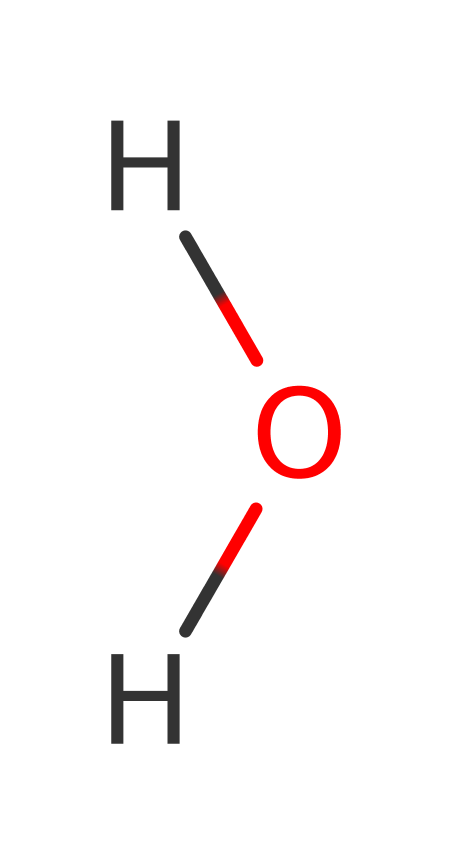
The catalytic Cys residue acts as a nucleophile to attack the peptide bond carbonyl and form an acyl-enzyme intermediate which is subsequently attacked and hydrolysed by a water molecule. His 169 functions to deprotonate Cys 95 and so generate the nucleophilic thiolate. It also protonates the departing amine leaving group during formation of the acyl-enzyme intermediate, and deprotonates the hydrolytic water molecule. Its pKa is modified by Asp 184. The backbone NH of Cys 95 and the sidechain amide of Gln 89 form an 'oxyanion-hole' that stabilises accumulation of negative charge on the carbonyl oxygen during nucleophilic attack on the peptide group.
Catalytic Residues Roles
| UniProt | PDB* (1uch) | ||
| Cys95 (main-N), Gln89 | Cys95A (main-N), Gln89A | Forms an oxyanion hole for stabilisation of the transition state formed in the cleavage reaction. | electrostatic stabiliser |
| Cys95 | Cys95A | Acts as an active site nucleophile to attack phosphodiester linkage in cleavage. | covalent catalysis, proton shuttle (general acid/base) |
| His169 | His169A | Deprotonates Cys 95 to generate the attacking thiolate nucleophile. Protonates the departing amine leaving group during formation of the acyl-enzyme intermediate. Deprotonates the nucleophilic water molecule that hydrolyses the acyl-enzyme. | proton shuttle (general acid/base) |
| Asp184 | Asp184A | Stabilises the protonated His 169. Also modifies the pKa of His169. | electrostatic stabiliser |
Chemical Components
References
- Johnston SC et al. (1997), EMBO J, 16, 3787-3796. Crystal structure of a deubiquitinating enzyme (human UCH-L3) at 1.8 Å resolution. DOI:10.1093/emboj/16.13.3787. PMID:9233788.
- Nijman SM et al. (2005), Cell, 123, 773-786. A genomic and functional inventory of deubiquitinating enzymes. DOI:10.1016/j.cell.2005.11.007. PMID:16325574.
- Johnston SC et al. (1999), EMBO J, 18, 3877-3887. Structural basis for the specificity of ubiquitin C-terminal hydrolases. DOI:10.1093/emboj/18.14.3877. PMID:10406793.
- D.Wilkinson K et al. (1999), J Mol Biol, 291, 1067-1077. The binding site for UCH-L3 on ubiquitin: mutagenesis and NMR studies on the complex between ubiquitin and UCH-L3. DOI:10.1006/jmbi.1999.3038.
- Larsen CN et al. (1996), Biochemistry, 35, 6735-6744. Substrate Binding and Catalysis by Ubiquitin C-Terminal Hydrolases: Identification of Two Active Site Residues†. DOI:10.1021/bi960099f. PMID:8639624.

Catalytic Residues Roles
| Residue | Roles |
|---|---|
| His169A | proton shuttle (general acid/base) |
| Asp184A | electrostatic stabiliser |
| Gln89A | electrostatic stabiliser |
| Cys95A | proton shuttle (general acid/base), covalent catalysis |
| Cys95A (main-N) | electrostatic stabiliser |