Chitinase (GH19, Class II)
Chitinase binds to chitin and randomly cleaves glycosidic linkages in chitin and chitodextrins in a non-processive mode, generating chitooligosaccharides and free ends on which exo-chitinases and exo-chitodextrinases can act. Chitin is a bio-polymer composed of 1,4-beta linked N-acetylglucosamine units, a major component of fungal cell walls and insect exoskeletons. Activity is greatly stimulated in the presence of EC 1.14.99.53, lytic chitin monoxygenase, which attacks the crystalline structure of chitin and makes the polymer more accessible to the chitinase. It is used by the seeds to retard fungal growth by interfering with the cell wall.
The enzyme, collected from barely seeds, is a type b member of the class II group, which is a member of Glycoside Hydrolase Family 19.
Reference Protein and Structure
- Sequence
-
P23951
 (3.2.1.14)
 (Sequence Homologues)
(PDB Homologues)
(Sequence Homologues)
(PDB Homologues)
- Biological species
-
Hordeum vulgare (Barley)
- PDB
-
1cns
- CRYSTAL STRUCTURE OF CHITINASE AT 1.91A RESOLUTION
(1.91 Å)



- Catalytic CATH Domains
-
3.30.20.10
 1.10.530.10
(see all for 1cns)
1.10.530.10
(see all for 1cns)
Enzyme Reaction (EC:3.2.1.14)




Enzyme Mechanism
Introduction
Initially, the catalytic site structure had been thought to resemble that of Hen Egg White Lysozyme, and adopt a similar mechanism in hydrolysing the 1,4 glycosidic link of chitin. However, more recent investigations have shown chitinase to operate by a different mechanism and is now known to be inverting.
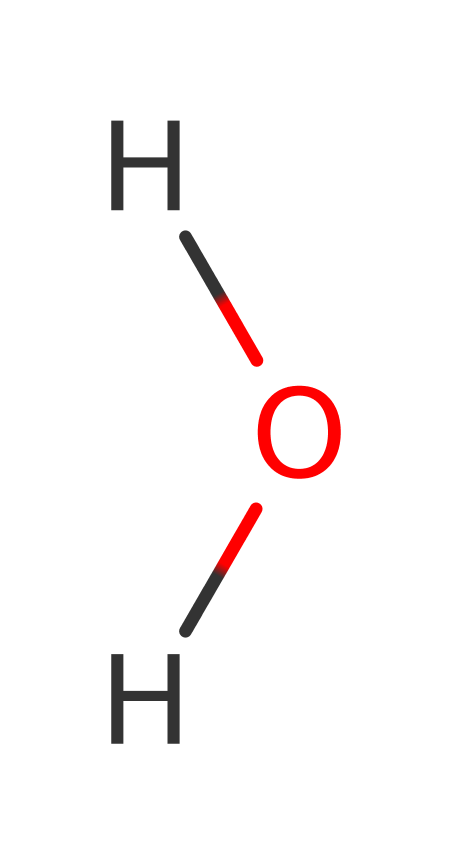
The reaction proceeds through a single displacement mechanism. The general acid, Glu67, protonates the beta-1,4-glycosidic oxygen atom, forming an oxocarbonium ion intermediate. A water molecule, activated by the general base Glu89 attacks the C1 atom of the intermediate state from the alpha side, hydrolytically cleaving the glycosyl bond with inversion of the anomeric position.
Catalytic Residues Roles
| UniProt | PDB* (1cns) | ||
| Glu90 | Glu67A | The residue acts as a general acid towards the beta-1,4-glycosidic oxygen atom forming the oxocarbenium intermediate. Through hydrogen bonding interactions the residue facilitates the cleavage of the glycosidic bond. | proton shuttle (general acid/base), electrostatic stabiliser |
| Glu112 | Glu89A | The residue acts as a general base towards the hydrolytic water molecule, increasing its nucleophilicity. Molecular dynamics have show the residue to stabilise the carbonium ion intermediate through electrostatic interactions. | proton shuttle (general acid/base), electrostatic stabiliser |
Chemical Components
References
- Fukamizo T (2000), Curr Protein Pept Sci, 1, 105-124. Chitinolytic Enzymes: Catalysis, Substrate Binding, and their Application. DOI:10.2174/1389203003381450. PMID:12369923.
- Fukamizo T et al. (2009), Biochim Biophys Acta, 1794, 1159-1167. A flexible loop controlling the enzymatic activity and specificity in a glycosyl hydrolase family 19 endochitinase from barley seeds (Hordeum vulgare L.). DOI:10.1016/j.bbapap.2009.03.009. PMID:19332152.
- Dennhart N et al. (2009), J Biotechnol, 143, 274-283. 26kDa endochitinase from barley seeds: Real-time monitoring of the enzymatic reaction and substrate binding experiments using electrospray ionization mass spectrometry. DOI:10.1016/j.jbiotec.2009.08.003. PMID:19665502.
- Sasaki C et al. (2003), Plant Mol Biol, 52, 43-52. Family 19 chitinase from rice (Oryza sativa L.): substrate-binding subsites demonstrated by kinetic and molecular modeling studies. DOI:10.1023/a:1023972007681. PMID:12825688.
- Ohnuma T et al. (2002), Biosci Biotechnol Biochem, 66, 277-284. Molecular Cloning, Functional Expression, and Mutagenesis of cDNA Encoding Rye (Secale cereale) Seed Chitinase-c. DOI:10.1271/bbb.66.277. PMID:11999399.
- Song HK et al. (1996), Acta Crystallogr D Biol Crystallogr, 52, 289-298. Refined Structure of the Chitinase from Barley Seeds at 2.0 Å Resolution. DOI:10.1107/s0907444995009061. PMID:15299702.
- Hart PJ et al. (1995), J Mol Biol, 248, 402-413. The refined crystal structure of an endochitinase from Hordeum vulgare L. seeds at 1.8 A resolution. PMID:7739049.

Catalytic Residues Roles
| Residue | Roles |
|---|---|
| Glu67A | electrostatic stabiliser, proton shuttle (general acid/base) |
| Glu89A | electrostatic stabiliser, proton shuttle (general acid/base) |