Methenyltetrahydrofolate cyclohydrolase
Enzymes involved in tetrahydrofolate metabolism are of particular pharmaceutical interest, as their function is crucial for amino acid and DNA biosynthesis.
In eukaryotes, the enzyme that performs this reaction occurs as a trifunctional enzyme that has two active sites: the bifunctional enzyme methylenetetrahydrofolate dehydrogenase – cyclohydrolase catalyses two sequential reactions involved in the interconversion of substituted tetrahydrofolates. The interconversion of 5,10-methylene-H4folate with 5,10-methenyl-H4folate is accomplished through the NADP+-dependent dehydrogenase activity, whereas 5,10-methenyl-H4folate and 10-formyl-H4folate are interconverted by the cyclohydrolase activity. The second domain represents the formate-tetrahydrofolate ligase (EC 6.3.4.3) activity.
Although the human protein represented here is actually trifunctional, the representative PDB structure only contains the dehydrogenase (D) and cyclohydrolase (C) domains, which have an overlapping active site (as determined by chemical modification and kinetic studies). This entry represents the bifunctional activity.
Reference Protein and Structure
- Sequence
-
P11586
 (1.5.1.5, 3.5.4.9, 6.3.4.3)
 (Sequence Homologues)
(PDB Homologues)
(Sequence Homologues)
(PDB Homologues)
- Biological species
-
Homo sapiens (Human)
- PDB
-
1a4i
- HUMAN TETRAHYDROFOLATE DEHYDROGENASE / CYCLOHYDROLASE
(1.5 Å)



- Catalytic CATH Domains
-
3.40.50.10860
 (see all for 1a4i)
Enzyme Reaction (EC:3.5.4.9)






Enzyme Mechanism
Introduction
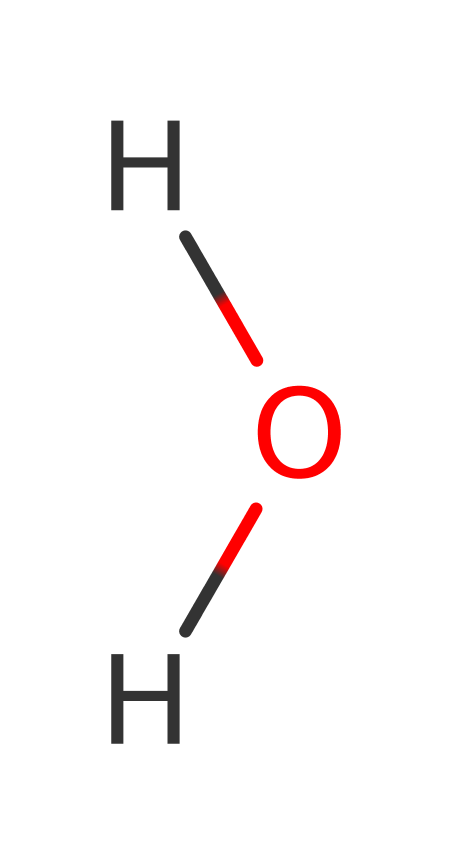
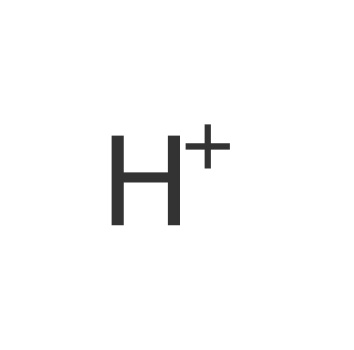
In the first half-reaction, which relates to EC number 1.5.1.5, a hydride is eliminated from the THF substrate. In the same active site, the second half reaction, which relates to EC number 3.5.4.9. In this hydrolysis reaction, a water molecule, positioned by Gln100 and activated by Lys56, attacks the substrate. It is then deprotonated by Lys56, which transfers the proton to elsewhere on the substrate. Lys56 then deprotonates the newly formed alcohol group on the intermediate, causing it to be reduced to a ketone and break open one of the rings in the substrate. Lys56 is restored to its original state by protonating a water molecule.
Catalytic Residues Roles
| UniProt | PDB* (1a4i) |
Chemical Components
References
- Schmidt A et al. (2000), Biochemistry, 39, 6325-6335. Structures of Three Inhibitor Complexes Provide Insight into the Reaction Mechanism of the Human Methylenetetrahydrofolate Dehydrogenase/Cyclohydrolase. DOI:10.1021/bi992734y. PMID:10828945.
- Sah S et al. (2015), Biochemistry, 54, 3504-3513. Impact of Mutating the Key Residues of a Bifunctional 5,10-Methylenetetrahydrofolate Dehydrogenase-Cyclohydrolase fromEscherichia colion Its Activities. DOI:10.1021/acs.biochem.5b00400. PMID:25988590.
- Sundararajan S et al. (2002), J Biol Chem, 277, 18703-18709. Residues Involved in the Mechanism of the Bifunctional Methylenetetrahydrofolate Dehydrogenase-Cyclohydrolase. THE ROLES OF GLUTAMINE 100 AND ASPARTATE 125. DOI:10.1074/jbc.m200127200. PMID:11904299.
- Bartoschek S et al. (2001), Chembiochem, 2, 530-541. Re-face stereospecificity of methylenetetrahydromethanopterin and methylenetetrahydrofolate dehydrogenases is predetermined by intrinsic properties of the substrate. PMID:11828486.
- Monzingo AF et al. (2000), Protein Sci, 9, 1374-1381. The X-ray structure of the NAD-dependent 5,10-methylenetetrahydrofolate dehydrogenase fromSaccharomyces cerevisiae. DOI:10.1110/ps.9.7.1374. PMID:10933503.
- Shen BW et al. (1999), Protein Sci, 8, 1342-1349. The crystal structure of a bacterial, bifunctional 5, 10 methylene-tetrahydrofolate dehydrogenase/cyclohydrolase. DOI:10.1110/ps.8.6.1342. PMID:10386884.
- Allaire M et al. (1998), Structure, 6, 173-182. The 3-D structure of a folate-dependent dehydrogenase/cyclohydrolase bifunctional enzyme at 1.5 å resolution. DOI:10.1016/s0969-2126(98)00019-7. PMID:9519408.

Catalytic Residues Roles
| Residue | Roles |
|---|---|
| Lys56A | proton shuttle (general acid/base) |
| Gln100A | activator |
| Ser49A | activator |