Beta-galactosidase
Catalyses the hydrolysis of terminal non-reducing beta-D-galactose residues in beta-D-galactoside. Belongs to the glycosyl hydrolase 2 family.
Reference Protein and Structure
- Sequence
-
P00722
 (3.2.1.23)
 (Sequence Homologues)
(PDB Homologues)
(Sequence Homologues)
(PDB Homologues)
- Biological species
-
Escherichia coli K-12 (Bacteria)
- PDB
-
4v40
- BETA-GALACTOSIDASE
(2.5 Å)



- Catalytic CATH Domains
- (see all for 4v40)
- Cofactors
- Sodium(+1) (1), Magnesium(2+) (2)
Enzyme Reaction (EC:3.2.1.23)


+
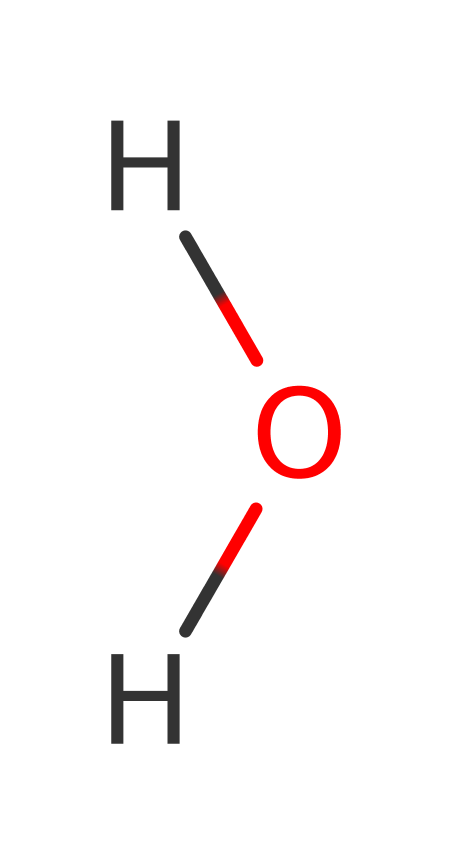
→

+


Alternative enzyme names: Beta-D-galactanase, Beta-D-lactosidase, Beta-lactosidase, S 2107, Hydrolact, Lactase, Lactozym, Maxilact, Oryzatym, Sumiklat, Trilactase, Exo-(1->4)-beta-D-galactanase,
Enzyme Mechanism
Introduction
Glu537 initiates a nucleophilic attack on the substrate, which eliminates the first product. Glu461 activates the catalytic water, which attacks the enzyme-substrate adduct, eliminating the final product and returning the enzyme to its native state.
Catalytic Residues Roles
| UniProt | PDB* (4v40) | ||
| Glu538 | Glu537A | Acts as the catalytic nucleophile. | |
| His358, His392 | His357A, His391A | Stabilises the negatively charged transition states. | |
| Glu462, Glu417, His419 | Glu461A, Glu416A, His418A | Forms the first magnesium binding site. | |
| Asp202, Phe602 (main-C), Asn605 | Asp201A, Phe601A (main-C), Asn604A | Forms sodium binding site. | |
| Asn598 | Asn597A | Forms part of the second magnesium binding site. |
*PDB label guide - RESx(y)B(C) - RES: Residue Name; x: Residue ID in PDB file;
y: Residue ID in PDB sequence if different from PDB file; B: PDB Chain;
C: Biological Assembly Chain if different from PDB. If label is "Not Found" it means this residue is not found in the reference PDB.
Chemical Components
References
- Juers DH et al. (2012), Protein Sci, 21, 1792-1807. LacZβ-galactosidase: Structure and function of an enzyme of historical and molecular biological importance. DOI:10.1002/pro.2165. PMID:23011886.
- Juers DH et al. (2009), Protein Sci, 18, 1281-1292. Direct and indirect roles of His-418 in metal binding and in the activity of β-galactosidase (E. coli). DOI:10.1002/pro.140. PMID:19472413.
- Xu J et al. (2004), Biochem Cell Biol, 82, 275-284. A study of the relationships of interactions between Asp-201, Na+or K+, and galactosyl C6 hydroxyl and their effects on binding and reactivity of β-galactosidase. DOI:10.1139/o04-004. PMID:15060622.
- Huber RE et al. (2001), Biochem Cell Biol, 79, 183-193. His-391 of beta-galactosidase (Escherichia coli) promotes catalyses by strong interactions with the transition state. PMID:11310566.
- Juers DH et al. (2001), Biochemistry, 40, 14781-14794. A structural view of the action of Escherichia coli (lacZ) beta-galactosidase. PMID:11732897.
- Juers DH et al. (2000), Protein Sci, 9, 1685-1699. High resolution refinement of β-galactosidase in a new crystal form reveals multiple metal-binding sites and provides a structural basis for α-complementation. DOI:10.1110/ps.9.9.1685. PMID:11045615.
- Roth NJ et al. (1998), Biochemistry, 37, 10099-10107. His-357 of β-Galactosidase (Escherichia coli) Interacts with the C3 Hydroxyl in the Transition State and Helps To Mediate Catalysis. DOI:10.1021/bi972796t. PMID:9665715.
- Davies G et al. (1995), Structure, 3, 853-859. Structures and mechanisms of glycosyl hydrolases. DOI:10.1016/s0969-2126(01)00220-9. PMID:8535779.
- Martinez-Bilbao M et al. (1995), Biochemistry, 34, 13437-13442. E461H-beta-galactosidase (Escherichia coli): altered divalent metal specificity and slow but reversible metal inactivation. PMID:7577931.
- Gebler JC et al. (1992), J Biol Chem, 267, 11126-11130. Glu-537, not Glu-461, is the nucleophile in the active site of (lac Z) beta-galactosidase from Escherichia coli. PMID:1350782.
- Herrchen M et al. (1984), Eur J Biochem, 138, 527-531. Identification of an essential carboxylate group at the active site of lacZ beta-galactosidase from Escherichia coli. PMID:6420154.

Catalytic Residues Roles
| Residue | Roles |
|---|