Histone acetyltransferase (crotonase type)
A member of the crotonase superfamily. Histone acetyltransferase catalyses the acetylation of N-terminal lysine residues in histones, as part of the displacement of histones by transition proteins and protamines during vertebrate spermatogenesis.
Reference Protein and Structure
- Sequence
-
Q9Y232
 (4.2.1.-)
 (Sequence Homologues)
(PDB Homologues)
(Sequence Homologues)
(PDB Homologues)
- Biological species
-
Homo sapiens (Human)
- PDB
-
2gtr
- Human chromodomain Y-like protein
(1.9 Å)



- Catalytic CATH Domains
-
3.90.226.10
 (see all for 2gtr)
Enzyme Reaction (EC:2.3.1.48)




Enzyme Mechanism
Introduction
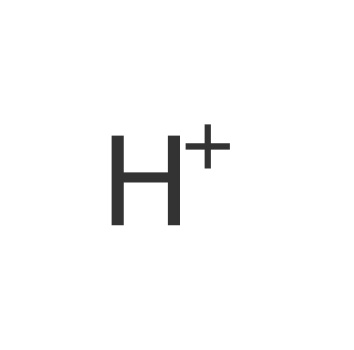
Asp146 actiavtes the histone lysine by abstracting a proton from the Neta group. The lysine then attacks the carbonyl group of acetyl-CoA, with the negatively charged intermediate formed stabilises by the backbone amides of Leu66 and Leu115. The oxyanion then collapses, eliminating CoA with concomitant deprotonation of Asp146.
Catalytic Residues Roles
| UniProt | PDB* (2gtr) | ||
| Asp483 | Asp146A | Acts as a general acid/base. | hydrogen bond acceptor, hydrogen bond donor, proton acceptor, proton donor |
| Leu403 (main-N), Leu452 (main-N) | Leu66A (main-N), Leu115A (main-N) | Form the oxyanion hole that stabilises the negatively charged intermediates formed. | hydrogen bond donor, electrostatic stabiliser |
Chemical Components
proton transfer, bimolecular nucleophilic addition, overall reactant used, intermediate formation, unimolecular elimination by the conjugate base, intermediate terminated, overall product formed, native state of enzyme regeneratedReferences
- Lahn BT et al. (2002), Proc Natl Acad Sci U S A, 99, 8707-8712. Previously uncharacterized histone acetyltransferases implicated in mammalian spermatogenesis. DOI:10.1073/pnas.082248899. PMID:12072557.

Step 1. Asp146 abstracts a proton from the NE group of lysine in histones, with the concomitant attack of the amino group to C1 in the substrate. This is facilitated by the binding of the thioester oxygen atom to an oxyanion hole formed by the peptide nitrogens of Leu66 and of Leu115.
Download: Image, Marvin FileCatalytic Residues Roles
| Residue | Roles |
|---|---|
| Leu115A (main-N) | electrostatic stabiliser, hydrogen bond donor |
| Leu66A (main-N) | electrostatic stabiliser, hydrogen bond donor |
| Asp146A | hydrogen bond acceptor |
| Asp146A | proton acceptor |
Chemical Components
proton transfer, ingold: bimolecular nucleophilic addition, overall reactant used, intermediate formation
Step 2. The oxyanion intermediate collapses to give two products with the help of a proton donated by Asp146
Download: Image, Marvin FileCatalytic Residues Roles
| Residue | Roles |
|---|---|
| Leu115A (main-N) | hydrogen bond donor, electrostatic stabiliser |
| Asp146A | hydrogen bond donor |
| Leu66A (main-N) | hydrogen bond donor, electrostatic stabiliser |
| Asp146A | proton donor |
 Download: