Nitrate reductase
Nitrate reductase is a molybdenum-bis(molybdopterin guanine dinucleotide) dependent enzyme. It catalyses the reduction of nitrate to nitrite and water. The protein associates with NapB, a soluble haem-containing protein and NapC, a membrane-bound cytochrome c. The periplasmic nitrate reductases are not involved in the assimilation of nitrogen, and are not directly involved in the formation of electrochemical gradients (i.e. respiration) either. Rather, the purpose of this enzyme is either dissimilatory (i.e. to dispose of excess reductive equivalents) or indirectly respiratory by virtue of the consumption of electrons derived from NADH via the proton translocating NADH dehydrogenase.
Reference Protein and Structure
- Sequence
-
Q53176
 (1.9.6.1)
 (Sequence Homologues)
(PDB Homologues)
(Sequence Homologues)
(PDB Homologues)
- Biological species
-
Rhodobacter sphaeroides 2.4.1 (Bacteria)
- PDB
-
1ogy
- Crystal structure of the heterodimeric nitrate reductase from Rhodobacter sphaeroides
(3.2 Å)



- Catalytic CATH Domains
-
3.40.228.10
 3.30.200.210
(see all for 1ogy)
3.30.200.210
(see all for 1ogy)
- Cofactors
- Tetra-mu3-sulfido-tetrairon (1), Molybdopterin guanine dinucleotide (2), Molybdenum(6+) (1) Metal MACiE
Enzyme Reaction (EC:1.7.99.4)


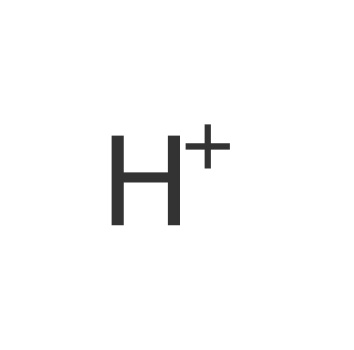
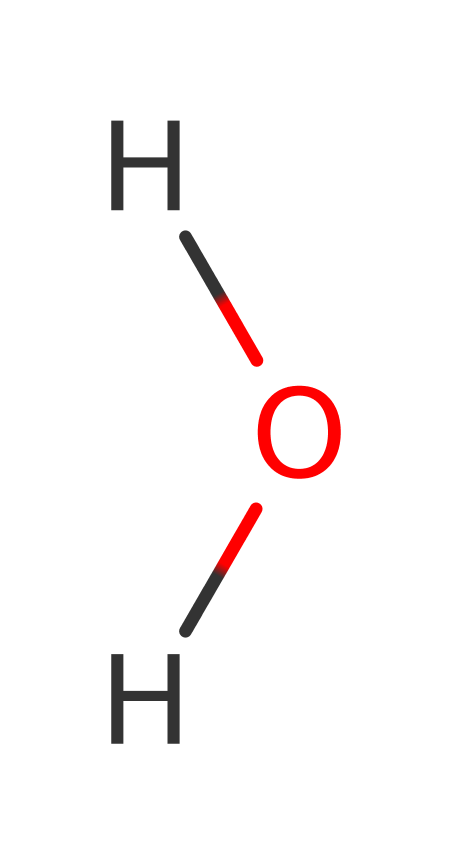


Enzyme Mechanism
Introduction
The nitrate oxyanion attacks the molybdenum coordination in a displacement reaction, eliminating the Cys152 sulfur which results in the formation of a disulfide bridge within the coordination sphere. The nitrate ligand undergoes heterolytic dissociation from molybdenum to form the nitrite product. The oxygen ligand is left behind at the metal centre. The close proximity iron sulfur cluster provides an electron to the molybdenum centre via a bridging lysine residue. A solvent molecule acts as a proton donor to the dianionic molybdenum centre. The close proximity iron sulfur cluster provides an electron to the molybdenum centre via a bridging lysine residue. A solvent molecule acts as a proton donor, forming a water ligand within the metal coordination sphere. The Cys152 sulfur atom substitutes the water molecule coordinated to the molybdenum centre.
Catalytic Residues Roles
| UniProt | PDB* (1ogy) | ||
| Cys181 | Cys152E | Forms part of the molybdenum coordination sphere. | covalently attached, nucleofuge, metal ligand, nucleophile, activator, electrostatic stabiliser |
| Lys85 | Lys56E | Acts as a single electron relay. | single electron relay, hydrogen bond donor, activator, single electron donor, single electron acceptor |
| Gly412 (main-N), Gln413 | Gly383E (main-N), Gln384E | Help stabilise the reactive intermediates formed during the course of the reaction. | hydrogen bond acceptor, hydrogen bond donor, electrostatic stabiliser |
| Met375, Met182 | Met346E, Met153E | Help stabilise the reactive intermediates and also ensure that all the substrates are correctly positioned for the reaction to occur. The conformational change adopted by the coordination sphere of the molybdenum ion on addition of the nitrate molecule is stabilised by the steric bulk and electronic charge delocalisation resulting from the position of Met308 and Met141 [PMID:10368307]. | steric role, electrostatic stabiliser, polar/non-polar interaction |
Chemical Components
bimolecular nucleophilic substitution, coordination to a metal ion, intermediate formation, decoordination from a metal ion, overall reactant used, cofactor used, redox reaction, intramolecular elimination, overall product formed, electron transfer, native state of cofactor regenerated, electron relay, proton transfer, intramolecular nucleophilic substitution, native state of enzyme regenerated, intermediate terminatedReferences
- Romão MJ (2009), Dalton Trans, 4053-4068. Molybdenum and tungsten enzymes: a crystallographic and mechanistic overview. DOI:10.1039/b821108f. PMID:19452052.
- Coelho C et al. (2015), Protein Sci, 24, 1901-1911. Structural and mechanistic insights on nitrate reductases. DOI:10.1002/pro.2801. PMID:26362109.
- Sparacino-Watkins C et al. (2014), Chem Soc Rev, 43, 676-706. Nitrate and periplasmic nitrate reductases. DOI:10.1039/c3cs60249d. PMID:24141308.
- Biaso F et al. (2012), Inorg Chem, 51, 3409-3419. DFT investigation of the molybdenum cofactor in periplasmic nitrate reductases: structure of the Mo(V) EPR-active species. DOI:10.1021/ic201533p. PMID:22397692.
- Cerqueira NM et al. (2009), J Comput Chem, 30, 2466-2484. The effect of the sixth sulfur ligand in the catalytic mechanism of periplasmic nitrate reductase. DOI:10.1002/jcc.21280. PMID:19360810.
- Dias JM et al. (1999), Structure, 7, 65-79. Crystal structure of the first dissimilatory nitrate reductase at 1.9 Å solved by MAD methods. DOI:10.1016/s0969-2126(99)80010-0. PMID:10368307.

Step 1. The nitrate oxyanion attacks the molybdenum coordination in a displacement reaction, eliminating the Cys152 sulfur which results in the formation of a disulfide bridge within the coordination sphere. Physiological conditions allow an equilibrium between Mo(V) and Mo(VI) to exist [PMID:19360810].
Download: Image, Marvin FileCatalytic Residues Roles
| Residue | Roles |
|---|---|
| Met153E | electrostatic stabiliser, polar/non-polar interaction, steric role |
| Lys56E | hydrogen bond donor |
| Cys152E | activator, covalently attached |
| Gly383E (main-N) | electrostatic stabiliser, hydrogen bond acceptor |
| Met346E | electrostatic stabiliser, polar/non-polar interaction, steric role |
| Gln384E | electrostatic stabiliser, hydrogen bond acceptor |
| Cys152E | nucleofuge |
Chemical Components
ingold: bimolecular nucleophilic substitution, coordination to a metal ion, intermediate formation, decoordination from a metal ion, overall reactant used, cofactor used
Step 2. The nitrate ligand undergoes heterolytic dissociation from molybdenum to form the nitrite product. The oxygen ligand is left behind at the metal centre. Theoretical studies have shown an inner sphere mechanism to be more favourable than a potential second sphere alternative [PMID:19360810].
Download: Image, Marvin FileCatalytic Residues Roles
| Residue | Roles |
|---|---|
| Met153E | electrostatic stabiliser, polar/non-polar interaction, steric role |
| Lys56E | hydrogen bond donor |
| Cys152E | activator, electrostatic stabiliser, covalently attached |
| Gly383E (main-N) | hydrogen bond acceptor, electrostatic stabiliser |
| Met346E | electrostatic stabiliser, polar/non-polar interaction, steric role |
| Gln384E | hydrogen bond acceptor, electrostatic stabiliser |
Chemical Components
redox reaction, ingold: intramolecular elimination, intermediate formation, overall product formed
Step 3. The electron is relayed to the iron-sulfur cluster from a mobile electron carrier present in the quinol oxidation respiratory electron transport chain. The close proximity iron sulfur cluster provides an electron to the molybdenum centre via a bridging lysine residue.
Download: Image, Marvin FileCatalytic Residues Roles
| Residue | Roles |
|---|---|
| Met153E | electrostatic stabiliser, polar/non-polar interaction, steric role |
| Lys56E | activator, hydrogen bond donor |
| Cys152E | activator, metal ligand, covalently attached |
| Gly383E (main-N) | hydrogen bond donor |
| Met346E | electrostatic stabiliser, polar/non-polar interaction, steric role |
| Lys56E | single electron relay, single electron donor, single electron acceptor |
Chemical Components
electron transfer, cofactor used, native state of cofactor regenerated, intermediate formation, electron relay, overall reactant used
Step 4. A solvent molecule acts as a proton donor to the dianionic molybdenum centre. The proton donor is presumed to be a solvent molecule because of the identification of solvent channels close to the metal coordination site. However, the possibility of a residue acting as a general acid has not been ruled out [PMID:10368307].
Download: Image, Marvin FileCatalytic Residues Roles
| Residue | Roles |
|---|---|
| Met153E | electrostatic stabiliser, polar/non-polar interaction, steric role |
| Lys56E | hydrogen bond donor |
| Cys152E | activator, electrostatic stabiliser, metal ligand, covalently attached |
| Gly383E (main-N) | hydrogen bond donor |
| Met346E | electrostatic stabiliser, polar/non-polar interaction, steric role |
Chemical Components
proton transfer, intermediate formation, overall reactant used
Step 5. The close proximity iron sulfur cluster provides an electron to the molybdenum centre via a bridging lysine residue. The electron is relayed to the iron-sulfur cluster from a mobile electron carrier present in the quinol oxidation respiratory electron transport chain.
Download: Image, Marvin FileCatalytic Residues Roles
| Residue | Roles |
|---|---|
| Met153E | electrostatic stabiliser, polar/non-polar interaction, steric role |
| Lys56E | activator, hydrogen bond donor |
| Met346E | electrostatic stabiliser, polar/non-polar interaction, steric role |
| Lys56E | single electron relay, single electron donor, single electron acceptor |
Chemical Components
electron transfer, cofactor used, native state of cofactor regenerated, electron relay, intermediate formation
Step 6. A solvent molecule acts as a proton donor, forming a water ligand within the metal coordination sphere. The proton donor is presumed to be a solvent molecule because of the identification of solvent channels close to the metal coordination site. However, the possibility of a residue acting as a general acid has not been ruled out [PMID:10368307].
Download: Image, Marvin FileCatalytic Residues Roles
| Residue | Roles |
|---|---|
| Met153E | electrostatic stabiliser, polar/non-polar interaction, steric role |
| Lys56E | hydrogen bond donor |
| Cys152E | activator, electrostatic stabiliser, covalently attached |
| Gly383E (main-N) | hydrogen bond donor |
| Met346E | electrostatic stabiliser, polar/non-polar interaction, steric role |
Chemical Components
proton transfer, overall reactant used, intermediate formation
Step 7. The Cys152 sulfur atom substitutes the water molecule coordinated to the molybdenum centre. The lone pair of electrons on the bridging sulfur substitutes the coordinated water. Both sulfur atoms of the disulfide bond are coordinated to the metal. In the absence of nitrate, the metal coordination sphere returns to its ground state.
Download: Image, Marvin FileCatalytic Residues Roles
| Residue | Roles |
|---|---|
| Met153E | electrostatic stabiliser, polar/non-polar interaction, steric role |
| Lys56E | hydrogen bond donor |
| Cys152E | activator, covalently attached, electrostatic stabiliser, metal ligand |
| Gly383E (main-N) | hydrogen bond acceptor |
| Met346E | electrostatic stabiliser, polar/non-polar interaction, steric role |
| Cys152E | nucleophile |
 Download: