Squalene synthase
Squalene synthase is a member of the Isoprenoid Synthase Type I superfamily. These enzymes catalyse the formation of squalene by the reductive dimerisation of two farnesyl diphosphate molecules in a two-step reaction (2 farnesyl diphosphate --> presqualene diphosphate; presqualene diphosphate + NAD(P)H --> squalene). In the human enzyme, the first half reaction occurs at one end of a large channel (surrounded by five alpha helices runs through the centre of the protein). Then the intermediate is thought to move into an enclosed pocket where the second half reaction occurs. This reaction occurs at the final branch point of the isoprenoid biosynthesis pathway, and is the first committed step in cholesterol biosynthesis.
Reference Protein and Structure
- Sequence
-
P37268
 (2.5.1.21)
 (Sequence Homologues)
(PDB Homologues)
(Sequence Homologues)
(PDB Homologues)
- Biological species
-
Homo sapiens (Human)
- PDB
-
1ezf
- CRYSTAL STRUCTURE OF HUMAN SQUALENE SYNTHASE
(2.15 Å)



- Catalytic CATH Domains
-
1.10.600.10
 (see all for 1ezf)
- Cofactors
- Magnesium(2+) (3) Metal MACiE
Enzyme Reaction (EC:2.5.1.21)




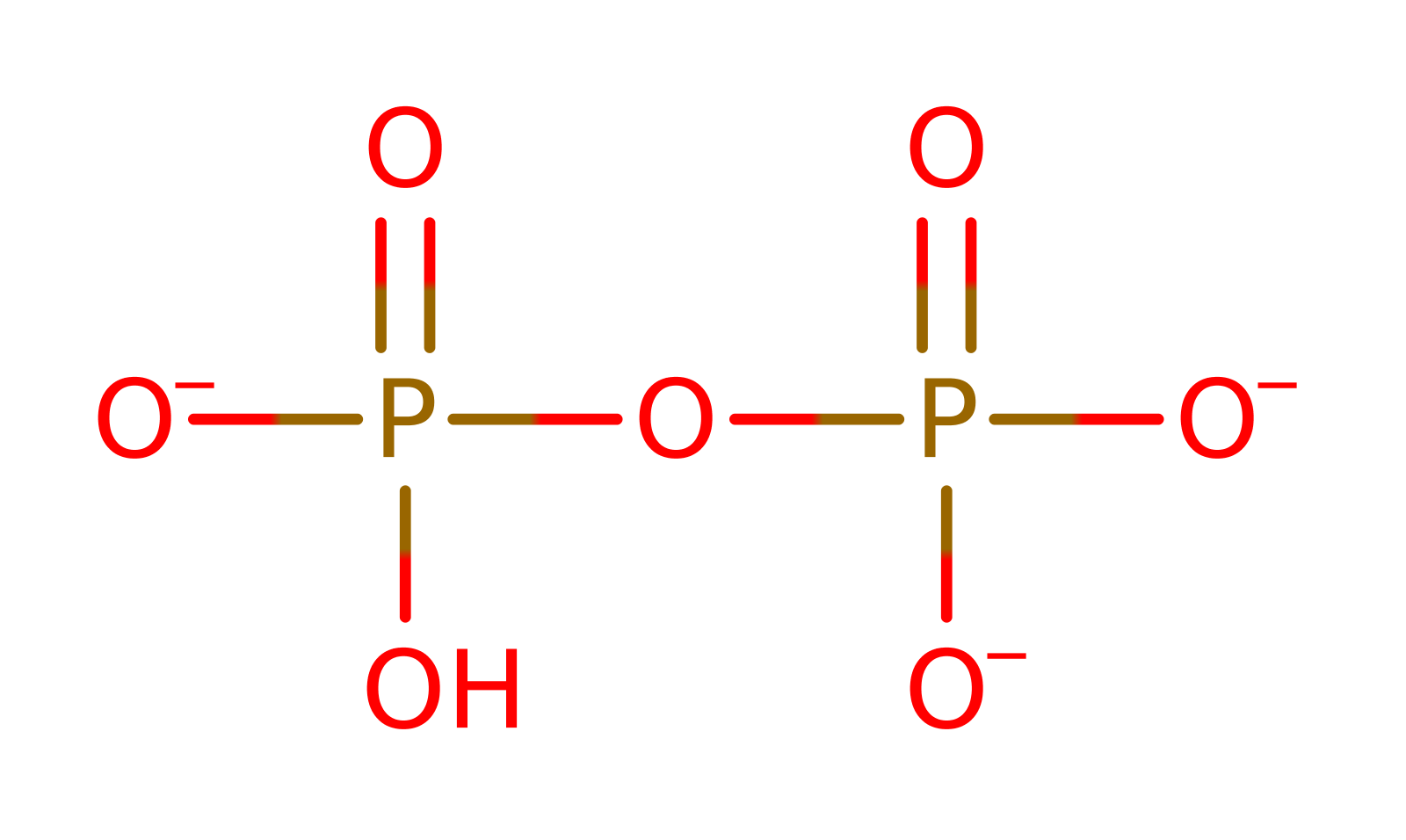


Enzyme Mechanism
Introduction
There is still much debate as to the exact mechanism of this enzyme. It is known that the reaction proceeds via two half reactions, the first of which produces the stable cyclopropylcarbinyl diphosphate intermediate (presqualene diphosphate) from two molecules of 2-trans,6-trans-farnesyl diphosphate. In the second half reaction, the presqualene diphosphate undergoes heterolysis, isomerisation and reduction with NAD(P)H to from squalene. In the absence of NAD(P)H, presqualene diphosphate is accumulated. When NAD(P)H is present, presqualene diphosphate does not dissociate from the enzyme during the synthesis of squalene from farnesyl diphosphate (FPP) [PMID:10677224]. High concentrations of FPP inhibit the production of squalene but not of PSPP [PMID:10677224]. Further discussion revolves around the presence of a single [PMID:10677224], or multiple [PMID:10896663] sites at which the reaction occurs. It is also currently unclear exactly how many magnesium ions are required and bound to the enzyme.
Catalytic Residues Roles
| UniProt | PDB* (1ezf) | ||
| Tyr171 | Tyr171(141)A | Acts as a general acid/base in the first half reaction. | hydrogen bond acceptor, hydrogen bond donor, proton acceptor, proton donor |
| Arg218, Arg228 | Arg218(188)A, Arg228(198)A | Acts to stabilise the diphosphate leaving group. | promote heterolysis, hydrogen bond donor, electrostatic stabiliser |
| Phe288 | Phe288(258)A | Acts to stabilise the reactive carbocation in the second half reaction. Also ensures the correct stereochemical outcome of the reaction. | van der waals interaction, steric role, polar/non-polar interaction |
Chemical Components
intramolecular elimination, proton transfer, charge delocalisation, dephosphorylation, intermediate formation, overall reactant used, overall product formed, bimolecular electrophilic addition, intramolecular nucleophilic addition, cyclisation, heterolysis, intramolecular rearrangement, hydride transfer, bimolecular nucleophilic addition, intermediate terminated, decyclisation, native state of enzyme regeneratedReferences
- Radisky ES et al. (2000), Biochemistry, 39, 1748-1760. Squalene Synthase: Steady-State, Pre-Steady-State, and Isotope-Trapping Studies†. DOI:10.1021/bi9915014. PMID:10677224.
- Liu CI et al. (2014), Acta Crystallogr D Biol Crystallogr, 70, 231-241. Structural insights into the catalytic mechanism of human squalene synthase. DOI:10.1107/S1399004713026230. PMID:24531458.
- Blagg BS et al. (2002), J Am Chem Soc, 124, 8846-8853. Recombinant Squalene Synthase. A Mechanism for the Rearrangement of Presqualene Diphosphate to Squalene. DOI:10.1021/ja020411a. PMID:12137537.
- Pandit J et al. (2000), J Biol Chem, 275, 30610-30617. Crystal Structure of Human Squalene Synthase: A KEY ENZYME IN CHOLESTEROL BIOSYNTHESIS. DOI:10.1074/jbc.m004132200. PMID:10896663.
- Gu P et al. (1998), J Biol Chem, 273, 12515-12525. Function-Structure Studies and Identification of Three Enzyme Domains Involved in the Catalytic Activity in Rat Hepatic Squalene Synthase. DOI:10.1074/jbc.273.20.12515. PMID:9575210.
- Poulter CD (1990), Acc Chem Res, 23, 70-77. Biosynthesis of non-head-to-tail terpenes. Formation of 1'-1 and 1'-3 linkages. DOI:10.1021/ar00171a003.

Step 1. Pyrophosphate is eliminated with concomitant deprotonation of Tyr171.
Download: Image, Marvin FileCatalytic Residues Roles
| Residue | Roles |
|---|---|
| Arg228(198)A | electrostatic stabiliser, promote heterolysis, hydrogen bond donor |
| Arg218(188)A | electrostatic stabiliser, promote heterolysis, hydrogen bond donor |
| Phe288(258)A | van der waals interaction |
| Tyr171(141)A | hydrogen bond donor |
| Tyr171(141)A | proton donor |
Chemical Components
ingold: intramolecular elimination, proton transfer, charge delocalisation, dephosphorylation, intermediate formation, overall reactant used, overall product formed
Step 2. The second molecule of farnesyl diphosphate initiates an electrophilic attack on the intermediate formed.
Download: Image, Marvin FileCatalytic Residues Roles
| Residue | Roles |
|---|---|
| Arg228(198)A | electrostatic stabiliser, hydrogen bond donor |
| Arg218(188)A | electrostatic stabiliser, hydrogen bond donor |
| Phe288(258)A | van der waals interaction |
| Tyr171(141)A | hydrogen bond acceptor |
Chemical Components
ingold: bimolecular electrophilic addition, intermediate formation, overall reactant used
Step 3. Tyr171 acts as a base to deprotonate the intermediate, forming the stable intermediate presqualene diphosphate, the product of the first half reaction.
Download: Image, Marvin FileCatalytic Residues Roles
| Residue | Roles |
|---|---|
| Arg228(198)A | electrostatic stabiliser, hydrogen bond donor |
| Arg218(188)A | electrostatic stabiliser, hydrogen bond donor |
| Phe288(258)A | van der waals interaction |
| Tyr171(141)A | hydrogen bond acceptor |
| Tyr171(141)A | proton acceptor |
Chemical Components
proton transfer, ingold: intramolecular nucleophilic addition, cyclisation, intermediate formation
Step 4. The substrate undergoes heterolysis. Phe288 essential for the second half reaction
Download: Image, Marvin FileCatalytic Residues Roles
| Residue | Roles |
|---|---|
| Phe288(258)A | polar/non-polar interaction, steric role |
Chemical Components
heterolysis, intermediate formation, overall product formed
Step 5. A 1,2 sigmatropic rearrangement to produce the cyclobutyl intermediate.
Download: Image, Marvin FileCatalytic Residues Roles
| Residue | Roles |
|---|---|
| Phe288(258)A | polar/non-polar interaction, steric role |
Chemical Components
intramolecular rearrangement, intermediate formation, cyclisation
Step 6. A 1,2 sigmatropic rearrangement to produce the second cyclopropyl intermediate.
Download: Image, Marvin FileCatalytic Residues Roles
| Residue | Roles |
|---|---|
| Phe288(258)A | polar/non-polar interaction, steric role |
Chemical Components
intramolecular rearrangement, intermediate formation, cyclisation
Step 7. A hydride transfer from NADP caused the cleavage of the cyclopropyl group to produce squalene.
Download: Image, Marvin FileCatalytic Residues Roles
| Residue | Roles |
|---|---|
| Phe288(258)A | polar/non-polar interaction, steric role |
 Download: