Acyl-[acyl-carrier-protein] desaturase
Delta-9 stearoyl-acyl carrier protein desaturase (delta-9 desaturase) is a plastid-localised non-membrane-bound soluble desaturase that introduces the first double bond into saturated fatty acids, resulting in the corresponding mono-unsaturated fatty acids.
Reference Protein and Structure
- Sequence
-
P22337
 (1.14.19.2)
 (Sequence Homologues)
(PDB Homologues)
(Sequence Homologues)
(PDB Homologues)
- Biological species
-
Ricinus communis (castor bean)
- PDB
-
1afr
- STEAROYL-ACYL CARRIER PROTEIN DESATURASE FROM CASTOR SEEDS
(2.4 Å)



- Catalytic CATH Domains
-
1.10.620.20
 (see all for 1afr)
- Cofactors
- Iron(2+) (2) Metal MACiE
Enzyme Reaction (EC:1.14.19.2)


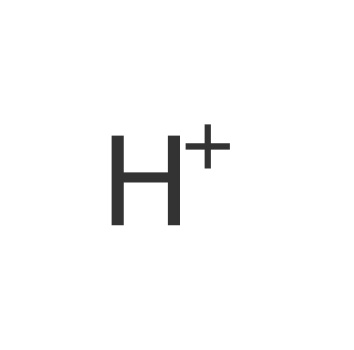


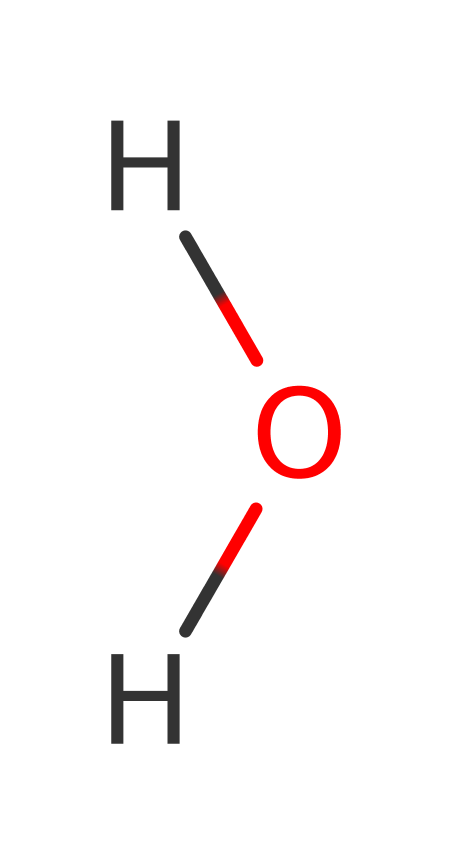


Enzyme Mechanism
Introduction
An electron transport chain carries an electron from ferredoxin to one of the iron centres via several residues. A second electron is then carried to the second iron centre. Several redox reactions take place involving oxygen, water and the iron centres, which result in deprotonation of the substrate and formation of a double bond.
There are two possible paths for the electron transport chain - the one described here has been chosen because of its analogy to what has been suggested for E. coli ribonucleotide reductase protein R2.
Catalytic Residues Roles
| UniProt | PDB* (1afr) | ||
| Trp95 | Trp62(44)A | Transfers electron from ferredoxin to Asp228. | single electron relay, single electron acceptor, single electron donor, hydrogen bond donor |
| His179 | His146(128)A | Transfers electron from Asp228 to Fe365 in the first step and to Fe364 in the second step. | single electron relay, hydrogen bond donor, metal ligand, single electron acceptor, single electron donor |
| Thr232 | Thr199(181)A | Helps stabilise the active dioxo intermediate. | hydrogen bond donor, electrostatic stabiliser |
| Asp261 | Asp228(210)A | Transfers electron from Trp62 to His146. | single electron relay, single electron donor, single electron acceptor, hydrogen bond acceptor |
| Glu229, His265 | Glu196(178)A, His232(214)A | Forms part of the Iron 2 binding site. | metal ligand |
| Glu138 | Glu105(87)A | Forms part of Iron 1 binding site. | metal ligand |
| Glu262, Glu176 | Glu229(211)A, Glu143(125)A | Act as bridging ligands between the two iron centres. | metal ligand |
Chemical Components
electron transfer, overall reactant used, cofactor used, intermediate formation, electron relay, elimination (not covered by the Ingold mechanisms), heterolysis, decoordination from a metal ion, bimolecular homolytic addition, coordination, coordination to a metal ion, proton transfer, colligation, hydrogen transfer, bimolecular elimination, hydride transfer, bimolecular nucleophilic substitution, native state of cofactor regenerated, intermediate terminated, intermediate collapse, overall product formed, native state of enzyme regeneratedReferences
- Lindqvist Y et al. (1996), EMBO J, 15, 4081-4092. Crystal structure of delta9 stearoyl-acyl carrier protein desaturase from castor seed and its relationship to other di-iron proteins. PMID:8861937.
- Liu Q et al. (2015), Plant Physiol, 169, 432-441. Half-of-the-Sites Reactivity of the Castor Δ9-18:0-Acyl Carrier Protein Desaturase. DOI:10.1104/pp.15.00622. PMID:26224800.
- Guy JE et al. (2011), Proc Natl Acad Sci U S A, 108, 16594-16599. Remote control of regioselectivity in acyl-acyl carrier protein-desaturases. DOI:10.1073/pnas.1110221108. PMID:21930947.
- Guy JE et al. (2006), Proc Natl Acad Sci U S A, 103, 17220-17224. A single mutation in the castor Delta9-18:0-desaturase changes reaction partitioning from desaturation to oxidase chemistry. DOI:10.1073/pnas.0607165103. PMID:17088542.
- Fox BG et al. (2004), Acc Chem Res, 37, 421-429. Reactions of the Diiron Enzyme Stearoyl-Acyl Carrier Protein Desaturase. DOI:10.1021/ar030186h. PMID:15260504.
- Moche M et al. (2003), J Biol Chem, 278, 25072-25080. Azide and acetate complexes plus two iron-depleted crystal structures of the di-iron enzyme delta9 stearoyl-acyl carrier protein desaturase. Implications for oxygen activation and catalytic intermediates. DOI:10.1074/jbc.M301662200. PMID:12704186.
- Nordlund P et al. (1993), J Mol Biol, 232, 123-164. Structure and Function of the Escherichia coli Ribonucleotide Reductase Protein R2. DOI:10.1006/jmbi.1993.1374. PMID:8331655.

Step 1. Ferredoxin donates a single electron, through Trp62, Asp228 and His146, to one of the Fe(III) centres.
Download: Image, Marvin FileCatalytic Residues Roles
| Residue | Roles |
|---|---|
| Trp62(44)A | hydrogen bond donor |
| His146(128)A | hydrogen bond donor |
| Asp228(210)A | hydrogen bond acceptor |
| Glu105(87)A | metal ligand |
| Glu229(211)A | metal ligand |
| Glu143(125)A | metal ligand |
| His146(128)A | metal ligand |
| Glu196(178)A | metal ligand |
| His232(214)A | metal ligand |
| Trp62(44)A | single electron relay |
| His146(128)A | single electron relay |
| Asp228(210)A | single electron relay |
| His146(128)A | single electron acceptor |
| Asp228(210)A | single electron donor |
| His146(128)A | single electron donor |
| Trp62(44)A | single electron acceptor, single electron donor |
| Asp228(210)A | single electron acceptor |
Chemical Components
electron transfer, overall reactant used, cofactor used, intermediate formation, electron relay
Step 2. Ferredoxin donates a second single electron, through Trp62, Asp228 and His146, to the second Fe(III) centre, which initiates the loss of the bridging O2- ion. This oxygen atom is displaced by dioxygen.
Download: Image, Marvin FileCatalytic Residues Roles
| Residue | Roles |
|---|---|
| Trp62(44)A | hydrogen bond donor |
| His146(128)A | hydrogen bond donor |
| Asp228(210)A | hydrogen bond acceptor |
| Glu105(87)A | metal ligand |
| Glu229(211)A | metal ligand |
| Glu143(125)A | metal ligand |
| His146(128)A | metal ligand |
| Glu196(178)A | metal ligand |
| His232(214)A | metal ligand |
| Trp62(44)A | single electron relay |
| His146(128)A | single electron relay |
| Asp228(210)A | single electron relay, single electron acceptor |
| His146(128)A | single electron donor |
| Asp228(210)A | single electron donor |
| His146(128)A | single electron acceptor |
| Trp62(44)A | single electron acceptor, single electron donor |
Chemical Components
electron transfer, elimination (not covered by the Ingold mechanisms), heterolysis, overall reactant used, cofactor used, intermediate formation, electron relay, decoordination from a metal ion
Step 3. Water coordinates to one of the Fe(II) centres, which causes the centre to donate a single electron to the dioxide molecule, initiating the first of two homolytic additions of the dioxygen molecule to both Fe(II) centres and the second Fe(II) centre also donates a single electron to the dioxygen bridge.
Download: Image, Marvin FileCatalytic Residues Roles
| Residue | Roles |
|---|---|
| Trp62(44)A | hydrogen bond donor |
| His146(128)A | hydrogen bond donor |
| Thr199(181)A | hydrogen bond donor, electrostatic stabiliser |
| Asp228(210)A | hydrogen bond acceptor |
| Glu105(87)A | metal ligand |
| Glu229(211)A | metal ligand |
| Glu143(125)A | metal ligand |
| His146(128)A | metal ligand |
| Glu196(178)A | metal ligand |
| His232(214)A | metal ligand |
Chemical Components
ingold: bimolecular homolytic addition, coordination, coordination to a metal ion, intermediate formation
Step 4. Both Fe(III) centres donate a single electron to the bridging dioxygen, cleaving the O-O bond and initiating one of the oxygen atoms to deprotonates the bound water and regenerating the oxo-bridge.
Download: Image, Marvin FileCatalytic Residues Roles
| Residue | Roles |
|---|---|
| Trp62(44)A | hydrogen bond donor |
| His146(128)A | hydrogen bond donor |
| Thr199(181)A | hydrogen bond donor |
| Asp228(210)A | hydrogen bond acceptor |
| Thr199(181)A | electrostatic stabiliser |
| Glu105(87)A | metal ligand |
| Glu229(211)A | metal ligand |
| Glu143(125)A | metal ligand |
| His146(128)A | metal ligand |
| Glu196(178)A | metal ligand |
| His232(214)A | metal ligand |
Chemical Components
electron transfer, elimination (not covered by the Ingold mechanisms), proton transfer, colligation, hydrogen transfer, coordination to a metal ion, intermediate formation
Step 5. The hydroxide on the first Fe(IV) centre deprotonates the stearoyl-[acyl-carrier protein] substrate, initiating the elimination of a hydride ion, which attacks the second Fe(IV) bound hydroxide. The excess electrons are donated singly to both Fe(IV) centres, regenerating the enzyme.
Download: Image, Marvin FileCatalytic Residues Roles
| Residue | Roles |
|---|---|
| Trp62(44)A | hydrogen bond donor |
| His146(128)A | hydrogen bond donor |
| Asp228(210)A | hydrogen bond acceptor |
| Glu105(87)A | metal ligand |
| Glu229(211)A | metal ligand |
| Glu143(125)A | metal ligand |
| His146(128)A | metal ligand |
| Glu196(178)A | metal ligand |
| His232(214)A | metal ligand |
 Download: