Trimethylamine dehydrogenase
Trimethylamine dehydrogenase (TMADH) is an iron-sulfur flavoprotein that catalyses the oxidative demethylation of trimethylamine to form dimethylamine and formaldehyde. It contains a unique flavin, in the form of a 6-S-cysteinyl FMN, which is bent by approximately 25 degrees along the N5-N10 axis of the flavin isoalloxazine ring.
Reference Protein and Structure
- Sequence
-
P16099
 (1.5.8.2)
 (Sequence Homologues)
(PDB Homologues)
(Sequence Homologues)
(PDB Homologues)
- Biological species
-
Methylophilus methylotrophus (Bacteria)
- PDB
-
2tmd
- CORRELATION OF X-RAY DEDUCED AND EXPERIMENTAL AMINO ACID SEQUENCES OF TRIMETHYLAMINE DEHYDROGENASE
(2.4 Å)



- Catalytic CATH Domains
-
3.20.20.70
 (see all for 2tmd)
- Cofactors
- Fmnh2(2-) (1), Tetra-mu3-sulfido-tetrairon (1) Metal MACiE




Enzyme Mechanism
Introduction
Trimethylamine initiates a nucleophilic attack on the FMN, which results in the elimination of the product imine and two electron reduction of the FMN cofactor. We have shown the process in two steps for clarity, but it is likely that this process occurs in a concerted manner. FMN is then oxidised through two single electron transfers (via an iron-sulfur cluster) to the FAD of the electron transfer flavoprotein reactant.
Catalytic Residues Roles
| UniProt | PDB* (2tmd) | ||
| Cys31 | Cys30A | Covalently attached to the FMN cofactor. It is responsible for perturbing the redox potential of the flavin, making it more redox active. | covalently attached, activator, alter redox potential |
| Tyr170 | Tyr169A | Part of the Tyr-His-Asp catalytic triad. It is responsible for the stabilisation of the reactive intermediates and transition states formed during the course of the reaction. This residue also plays an important role in mediating the spin-interaction between the flavin semiquinone and reduced 4Fe/4S center in TMADH. | activator, hydrogen bond donor, alter redox potential, electrostatic stabiliser |
| His173, Asp268 | His172A, Asp267A | Part of the Tyr-His-Asp catalytic triad. | activator, hydrogen bond acceptor, hydrogen bond donor, electrostatic stabiliser |
Chemical Components
aromatic bimolecular nucleophilic addition, overall reactant used, cofactor used, enzyme-substrate complex formation, intermediate formation, proton transfer, unimolecular elimination by the conjugate base, overall product formed, enzyme-substrate complex cleavage, electron transfer, radical formation, radical termination, native state of cofactor regenerated, intermediate terminated, native state of enzyme regenerated, reaction occurs outside the enzyme, bimolecular nucleophilic addition, intramolecular eliminationReferences
- Basran J et al. (2001), J Biol Chem, 276, 24581-24587. Deuterium Isotope Effects during Carbon–Hydrogen Bond Cleavage by Trimethylamine Dehydrogenase. DOI:10.1074/jbc.m101178200. PMID:11304539.
- Burgess SG et al. (2008), Biochemistry, 47, 5168-5181. Probing the Dynamic Interface between Trimethylamine Dehydrogenase (TMADH) and Electron Transferring Flavoprotein (ETF) in the TMADH−2ETF Complex: Role of the Arg-α237 (ETF) and Tyr-442 (TMADH) Residue Pair†,‡. DOI:10.1021/bi800127d. PMID:18407658.
- Leys D et al. (2004), Biochem Soc Symp, 1-14. Flavin radicals, conformational sampling and robust design principles in interprotein electron transfer: the trimethylamine dehydrogenase-electron-transferring flavoprotein complex. PMID:15777008.
- Sutcliffe MJ et al. (2002), Eur J Biochem, 269, 3096-3102. A new conceptual framework for enzyme catalysis. Hydrogen tunnelling coupled to enzyme dynamics in flavoprotein and quinoprotein enzymes. PMID:12084049.
- Trickey P et al. (2000), Biochemistry, 39, 7678-7688. Structural and biochemical characterization of recombinant wild type and a C30A mutant of trimethylamine dehydrogenase from methylophilus methylotrophus (sp. W(3)A(1)). PMID:10869173.
- Jang MH et al. (1999), J Biol Chem, 274, 13147-13154. The Reaction of Trimethylamine Dehydrogenase with Trimethylamine. DOI:10.1074/jbc.274.19.13147. PMID:10224069.
- Basran J et al. (1999), J Biol Chem, 274, 13155-13161. The role of Tyr-169 of trimethylamine dehydrogenase in substrate oxidation and magnetic interaction between FMN cofactor and the 4Fe/4S center. PMID:10224070.

Step 1. The nitrogen of trimethylamine initiates a nucleophilic attack on the FMN.
Download: Image, Marvin FileCatalytic Residues Roles
| Residue | Roles |
|---|---|
| Tyr169A | activator, hydrogen bond donor |
| His172A | activator, hydrogen bond acceptor, hydrogen bond donor |
| Cys30A | covalently attached, activator |
| Tyr169A | alter redox potential |
| Cys30A | alter redox potential |
| Asp267A | electrostatic stabiliser |
Chemical Components
ingold: aromatic bimolecular nucleophilic addition, overall reactant used, cofactor used, enzyme-substrate complex formation, intermediate formation, proton transfer
Step 2. It is likely that this step occurs in a concerted manner with step 1. The carbanion formed collapses, resulting in the two electron oxidation of the flavin cofactor and the immine product.
Download: Image, Marvin FileCatalytic Residues Roles
| Residue | Roles |
|---|---|
| Cys30A | alter redox potential, covalently attached |
| Asp267A | electrostatic stabiliser |
| His172A | electrostatic stabiliser |
| Tyr169A | alter redox potential, electrostatic stabiliser |
Chemical Components
ingold: unimolecular elimination by the conjugate base, overall product formed, enzyme-substrate complex cleavage
Step 3. The first single electron transfer from FMN to ETF, which passes through a single iron-sulfur cluster.
Download: Image, Marvin FileCatalytic Residues Roles
| Residue | Roles |
|---|---|
| Tyr169A | hydrogen bond donor |
| His172A | hydrogen bond acceptor, hydrogen bond donor |
| Cys30A | covalently attached, activator |
| Cys30A | alter redox potential |
| Tyr169A | alter redox potential |
| Asp267A | electrostatic stabiliser |
Chemical Components
electron transfer, radical formation, overall reactant used, intermediate formation
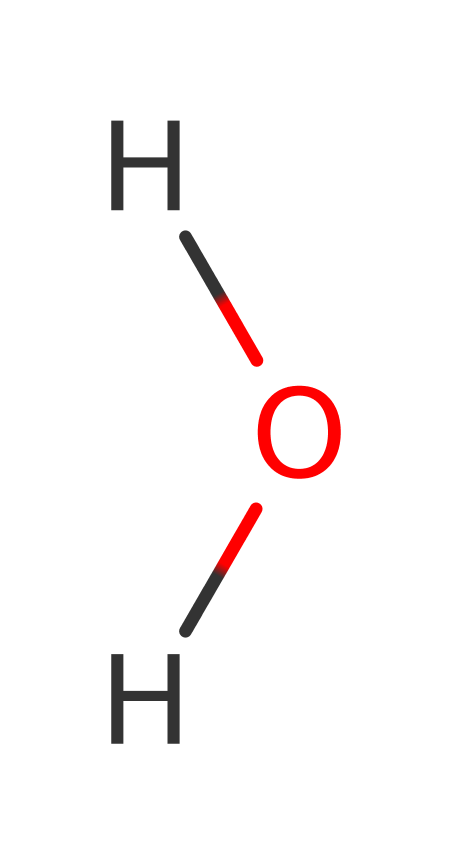
Step 4. The second single electron transfer from FMN to ETF, which passes through a single iron-sulfur cluster. The transfer is facilitated by the abstraction of a proton from the FMN by water.
Download: Image, Marvin FileCatalytic Residues Roles
| Residue | Roles |
|---|---|
| Tyr169A | hydrogen bond donor |
| His172A | hydrogen bond acceptor, hydrogen bond donor |
| Cys30A | covalently attached, activator |
| Cys30A | alter redox potential |
| Tyr169A | alter redox potential |
| Asp267A | electrostatic stabiliser |
Chemical Components
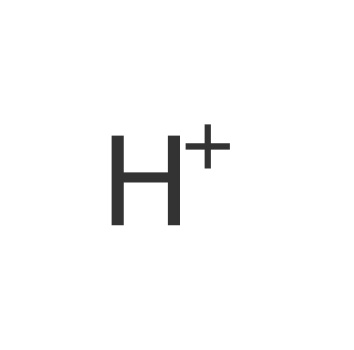
electron transfer, radical termination, proton transfer, native state of cofactor regenerated, overall product formed, intermediate terminated, native state of enzyme regenerated
Step 5. The product of the enzyme undergoes spontaneous hydrolysis outside of the active site to produce formaldehyde and dimethylamine (first step).
Download: Image, Marvin FileCatalytic Residues Roles
| Residue | Roles |
|---|
Chemical Components
reaction occurs outside the enzyme, ingold: bimolecular nucleophilic addition, proton transfer
Step 6. The product of the enzyme undergoes spontaneous hydrolysis outside of the active site to produce formaldehyde and dimethylamine (second step).
Download: Image, Marvin FileCatalytic Residues Roles
| Residue | Roles |
|---|
 Download: