Prolidase (Xaa-Pro dipeptidase)
Prolidase is a ubiquitously distributed dipeptidase and the only known metalloenzyme in humans capable of cleaving the peptide bond preceding the amino acids proline (Pro) or hydroxyproline (Hyp) in Xaa-Pro (Xaa: any hydrophobic amino acid) dipeptides. Prolidase plays an important role in the degradation of dietary and endogenous proteins to recycle Pro for protein synthesis. Moreover, it's also involved in hydrolysis of Pro- and hydroxyproline-containing dipeptides in the last step of collagen catabolism. Diminished or absent prolidase activity is related to a rare autosomal disease, referred to as prolidase deficiency.
Reference Protein and Structure
- Sequence
-
P12955
 (3.4.13.9)
 (Sequence Homologues)
(PDB Homologues)
(Sequence Homologues)
(PDB Homologues)
- Biological species
-
Homo sapiens (Human)
- PDB
-
5m4g
- Crystal Structure of Wild-Type Human Prolidase with Mn ions
(1.48 Å)



- Catalytic CATH Domains
- (see all for 5m4g)
- Cofactors
- Manganese(2+) (2)
Enzyme Reaction (EC:3.4.13.9)




Enzyme Mechanism
Introduction
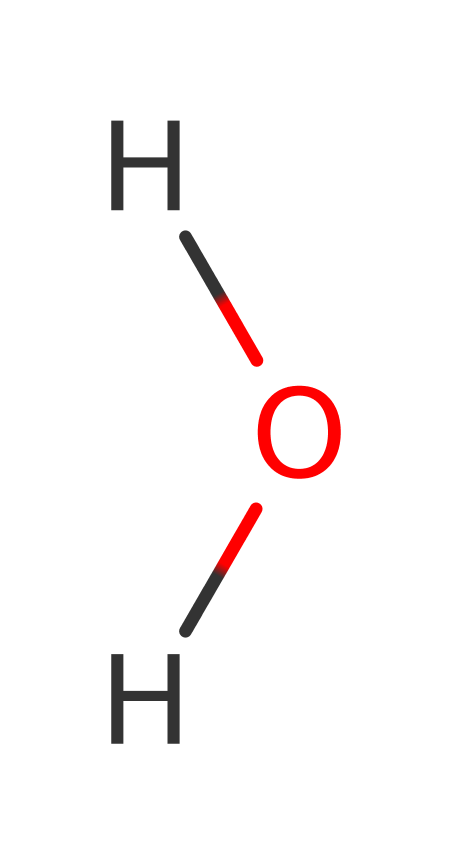
A water molecule bound in the active site between the two Mn2+ ions is activated by the abstraction of a proton resulting in the OH- bridged structure. The substrate GlyPro is then bound and His255 moves toward the active site to coordinate the carboxylate group of the substrate. The amide nitrogen and the carbonyl oxygen of the scissile bond of GlyPro are both coordinated by Mn2+ ions facilitating the build-up of a partial positive charge at the carbon atom. The nucleophilic attack of the hydroxide ion results in the formation of a (hypothetical) tetrahedral intermediate. Subsequently, proton transfer and rearrangement of the electrons lead to the breaking of the scissile peptide bond. After the products have left, the productive state of the enzyme is reformed by taking up a water molecule from bulk solvent.
Catalytic Residues Roles
| UniProt | PDB* (5m4g) | ||
| Asp287, Asp276, Glu452, Glu412, His370 | Asp287(282)A, Asp276(271)A, Glu452(447)A, Glu412(407)A, His370(365)A | Coordinate metal ligand | metal ligand |
| His377 | His377(372)A | His377 contacts the carbonyl oxygen atom of Gly to stabilize the negative charge built up during the formation of a tetrahedral intermediate. | hydrogen bond donor |
| Arg398 | Arg398(393)A | Arg398's guanidium group coordinates the C-terminal oxygen atoms of Pro in the Gly-Pro substrate | hydrogen bond donor |
| His255 | His255(250)A | Upon the formation of closed conformation, His255 moves toward the active site to coordinate the carboxylate group of the substrate. | hydrogen bond donor |
Chemical Components
proton transfer, coordination to a metal ion, bimolecular nucleophilic addition, intermediate formation, overall reactant used, overall product formed, intramolecular rearrangement, unimolecular elimination by the conjugate base, inferred reaction step, native state of enzyme regeneratedReferences
- Wilk P et al. (2017), FEBS J, 284, 2870-2885. Substrate specificity and reaction mechanism of human prolidase. DOI:10.1111/febs.14158. PMID:28677335.
- Yang L et al. (2016), Oncotarget, 7, 42340-42352. Dual inhibition of ErbB1 and ErbB2 in cancer by recombinant human prolidase mutant hPEPD-G278D. DOI:10.18632/oncotarget.9851. PMID:27286447.
- Alberto ME et al. (2011), Inorg Chem, 50, 3394-3403. Can human prolidase enzyme use different metals for full catalytic activity? DOI:10.1021/ic1022517. PMID:21425789.
- Lowther WT et al. (2002), Chem Rev, 102, 4581-4608. Metalloaminopeptidases: Common Functional Themes in Disparate Structural Surroundings. DOI:10.1021/cr0101757.

Step 1. Two Mn2+ ions are coordinated by the many residues and a water molecule in the active site. Glu412 abstracts a proton from the bridging water molecule, resulting in the OH- -bridged structure
Download: Image, Marvin FileCatalytic Residues Roles
| Residue | Roles |
|---|---|
| Asp287(282)A | metal ligand |
| Asp276(271)A | metal ligand |
| Glu452(447)A | metal ligand |
| Glu412(407)A | metal ligand |
| His370(365)A | metal ligand |
| His377(372)A | hydrogen bond donor |
| Arg398(393)A | hydrogen bond donor |
| His255(250)A | hydrogen bond donor |
| Glu412(407)A | proton acceptor |
Chemical Components
proton transfer, coordination to a metal ion
Step 2. Nucleophilic attack of the hydroxide ion onto the carbonyl C-atom, leading to the formation of a tetrahedral intermediate.
Download: Image, Marvin FileCatalytic Residues Roles
| Residue | Roles |
|---|---|
| Asp287(282)A | metal ligand |
| Asp276(271)A | metal ligand |
| Glu452(447)A | metal ligand |
| Glu412(407)A | metal ligand |
| His370(365)A | metal ligand |
Chemical Components
ingold: bimolecular nucleophilic addition, intermediate formation, overall reactant used
Step 3. The intermediate collapses leading to the formation of the products. The nitrogen of the proline is here inferred to be protonated directly by Glu412. The first product (Gly) leaves the active site, then, the return of the protein conformation to the open state kicks the second product (Pro) out of the active site. After the products have left, the productive state of the enzyme is reformed by taking up a water molecule from bulk solvent.
Download: Image, Marvin FileCatalytic Residues Roles
| Residue | Roles |
|---|---|
| Asp287(282)A | metal ligand |
| Asp276(271)A | metal ligand |
| Glu452(447)A | metal ligand |
| Glu412(407)A | metal ligand |
| His370(365)A | metal ligand |
| Glu412(407)A | proton donor |
 Download: