 |
PDBsum entry 6t3b
|
|

|
|
PDB id:
|
|
|
|
| Name: |
|
Transferase
|
|
|
Title:
|
|
Crystal structure of pi3kgamma with a dihydropurinone inhibitor (compound 4)
|
|
Structure:
|
|
Phosphatidylinositol 4,5-bisphosphate 3-kinase catalytic subunit gamma isoform. Chain: a. Fragment: amino acids 144-1102. Synonym: ptdins-3-kinase subunit gamma,phosphatidylinositol 4,5- bisphosphate 3-kinase 110 kda catalytic subunit gamma,p110gamma, phosphoinositide-3-kinase catalytic gamma polypeptide, serine/threonine protein kinase pik3cg,p120-pi3k. Engineered: yes
|
|
Source:
|
|
Homo sapiens. Human. Organism_taxid: 9606. Gene: pik3cg. Expressed in: spodoptera frugiperda. Expression_system_taxid: 7108. Expression_system_cell_line: sf21.
|
|
Resolution:
|
|
|
3.01Å
|
R-factor:
|
0.231
|
R-free:
|
0.274
|
|
|
Authors:
|
|
J.Petersen,L.Oster,M.Schimpl,F.W.Goldberg,M.R.V.Finlay,A.K.T.Ting, D.Beattie,G.M.Lamont,C.Fallan,G.L.Wrigley,M.R.Howard,B.Williamson, B.R.Davies,E.B.Cadogan,A.Ramos-Montoya,E.Dean
|
|
Key ref:
|
|
F.W.Goldberg
et al.
(2020).
The Discovery of 7-Methyl-2-[(7-methyl[1,2,4]triazolo[1,5-a]pyridin-6-yl)amino]-9-(tetrahydro-2H-pyran-4-yl)-7,9-dihydro-8H-purin-8-one (AZD7648), a Potent and Selective DNA-Dependent Protein Kinase (DNA-PK) Inhibitor.
J Med Chem,
63,
3461-3471.
PubMed id:
DOI:
|
|
|
Date:
|
|
|
10-Oct-19
|
Release date:
|
01-Jan-20
|
|
|
|
|
|
|
PROCHECK
|

|
|
|
|
|
Headers
|
|
|
|
References
|
|
|
|
|
|

|
|
P48736
(PK3CG_HUMAN) -
Phosphatidylinositol 4,5-bisphosphate 3-kinase catalytic subunit gamma isoform from Homo sapiens
|
|
|
|
Seq:
Struc:
|
|
|
|
1102 a.a.
804 a.a.
|
|

|

|
|
|
|
|
|
|
|
|
|
|
|
Key: |
 |
PfamA domain |
|
|
 |
Secondary structure |
|
|
|
|
|
|
|
|
|
|
|
|
|
Enzyme class 2:
|
|
E.C.2.7.11.1
- non-specific serine/threonine protein kinase.
|
|
|
|
|
|
|
Reaction:
|
|
|
1.
|
L-seryl-[protein] + ATP = O-phospho-L-seryl-[protein] + ADP + H+
|
|
2.
|
L-threonyl-[protein] + ATP = O-phospho-L-threonyl-[protein] + ADP + H+
|
|
|
|
|
|
|
L-seryl-[protein]
|
+
|
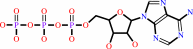 ATP
ATP
|
=
|
O-phospho-L-seryl-[protein]
|
+
|
 ADP
ADP
|
+
|
H(+)
|
|
|
|
|
|
|
L-threonyl-[protein]
|
+
|
ATP
|
=
|
O-phospho-L-threonyl-[protein]
|
+
|
ADP
|
+
|
H(+)
|
|
|
|
|
|
|
|
|
|
Enzyme class 3:
|
|
E.C.2.7.1.137
- phosphatidylinositol 3-kinase.
|
|
|
|
|
|
|
Pathway:
|
|
|
|
|
|
|
|
Reaction:
|
|
a 1,2-diacyl-sn-glycero-3-phospho-(1D-myo-inositol) + ATP = a 1,2-diacyl- sn-glycero-3-phospho-(1D-myo-inositol-3-phosphate) + ADP + H+
|
|
|
|
|
|
1,2-diacyl-sn-glycero-3-phospho-(1D-myo-inositol)
|
+
|
ATP
|
=
|
1,2-diacyl- sn-glycero-3-phospho-(1D-myo-inositol-3-phosphate)
|
+
|
ADP
|
+
|
H(+)
|
|
|
|
|
|
|
|
|
|
Enzyme class 4:
|
|
E.C.2.7.1.153
- phosphatidylinositol-4,5-bisphosphate 3-kinase.
|
|
|
|
|
|
|
Pathway:
|
|
|
|
|
|
|
|
Reaction:
|
|
a 1,2-diacyl-sn-glycero-3-phospho-(1D-myo-inositol-4,5-bisphosphate) + ATP = a 1,2-diacyl-sn-glycero-3-phospho-(1D-myo-inositol-3,4,5- trisphosphate) + ADP + H+
|
|
|
|
|
|
1,2-diacyl-sn-glycero-3-phospho-(1D-myo-inositol-4,5-bisphosphate)
|
+
|
ATP
|
=
|
1,2-diacyl-sn-glycero-3-phospho-(1D-myo-inositol-3,4,5- trisphosphate)
|
+
|
ADP
|
+
|
H(+)
|
|
|
|
|
|
|
|
|
|
Enzyme class 5:
|
|
E.C.2.7.1.154
- phosphatidylinositol-4-phosphate 3-kinase.
|
|
|
|
|
|
|
Pathway:
|
|
|
|
|
|
|
|
Reaction:
|
|
a 1,2-diacyl-sn-glycero-3-phospho-(1D-myo-inositol 4-phosphate) + ATP = a 1,2-diacyl-sn-glycero-3-phospho-(1D-myo-inositol-3,4-bisphosphate) + ADP + H+
|
|
|
|
|
|
1,2-diacyl-sn-glycero-3-phospho-(1D-myo-inositol 4-phosphate)
|
+
|
ATP
|
=
|
1,2-diacyl-sn-glycero-3-phospho-(1D-myo-inositol-3,4-bisphosphate)
|
+
|
ADP
|
+
|
H(+)
|
|
|
|
|
|
|
|
|
|
|
|
|
Note, where more than one E.C. class is given (as above), each may
correspond to a different protein domain or, in the case of polyprotein
precursors, to a different mature protein.
|
|
|
|
Molecule diagrams generated from .mol files obtained from the
KEGG ftp site
|
|
|
|
|
|
|
|
|
|
|
|
|
|
 |
|
|
|
|
|
|
| |
|
|
| |
|
DOI no:
|
J Med Chem
63:3461-3471
(2020)
|
|
PubMed id:
|
|
|
|
|
|
| |
|
The Discovery of 7-Methyl-2-[(7-methyl[1,2,4]triazolo[1,5-a]pyridin-6-yl)amino]-9-(tetrahydro-2H-pyran-4-yl)-7,9-dihydro-8H-purin-8-one (AZD7648), a Potent and Selective DNA-Dependent Protein Kinase (DNA-PK) Inhibitor.
|
|
F.W.Goldberg,
M.R.V.Finlay,
A.K.T.Ting,
D.Beattie,
G.M.Lamont,
C.Fallan,
G.L.Wrigley,
M.Schimpl,
M.R.Howard,
B.Williamson,
M.Vazquez-Chantada,
D.G.Barratt,
B.R.Davies,
E.B.Cadogan,
A.Ramos-Montoya,
E.Dean.
|
|
|
|
|
| |
ABSTRACT
|
|
|
|
| |
|
|
DNA-PK is a key component within the DNA damage response, as it is responsible
for recognizing and repairing double-strand DNA breaks (DSBs) via non-homologous
end joining. Historically it has been challenging to identify inhibitors of the
DNA-PK catalytic subunit (DNA-PKcs) with good selectivity versus the
structurally related PI3 (lipid) and PI3K-related protein kinases. We screened
our corporate collection for DNA-PKcs inhibitors with good PI3 kinase
selectivity, identifying compound 1. Optimization focused on further
improving selectivity while improving physical and pharmacokinetic properties,
notably co-optimization of permeability and metabolic stability, to identify
compound 16 (AZD7648). Compound 16 had no significant off-target
activity in the protein kinome and only weak activity versus PI3Kα/γ lipid
kinases. Monotherapy activity in murine xenograft models was observed, and
regressions were observed when combined with inducers of DSBs (doxorubicin or
irradiation) or PARP inhibition (olaparib). These data support progression into
clinical studies (NCT03907969).
|
|
|
|
|
|
|
|
|
|
|
|
|
|
|
|
|
|
 |
 |
 |
|


 Links
Links


