DECIPHER v11.29 released
The v11.29 DECIPHER release is out now. Find out about the new features and improvements

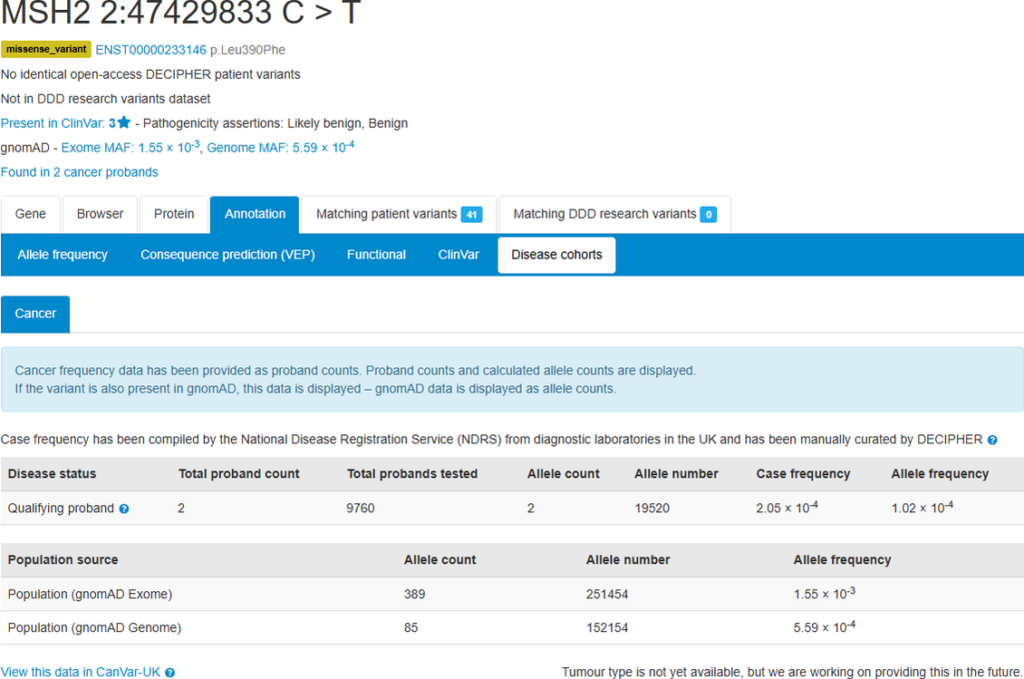
National Disease Registration Service (NDRS) cancer case frequency data
Cancer case frequency data compiled by the National Disease Registration Service (NDRS) from diagnostic laboratories in England is now available. This dataset indicates if a variant has been observed in probands with a high risk of carrying a pathogenic variant due to a personal and/or family history of cancer. Data is available for nearly 4,500 variants in 13 cancer susceptibility genes including BRCA1, BRCA2, MSH2, PTEN and SMAD4. Cancer case frequency data can be viewed on the “Annotation” tab on patient records, variant pages and protein variant pages under “Disease cohort” for cancer susceptibility genes, where this is available.
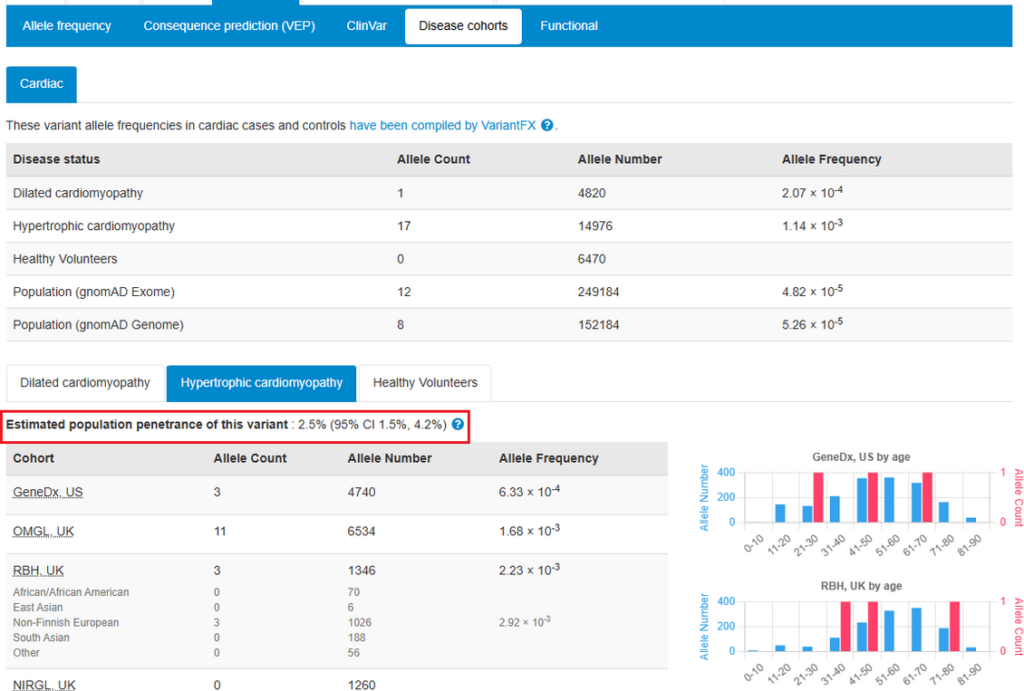
VariantFX cardiomyopathy penetrance estimates
VariantFX estimated population penetrance for variants associated with cardiomyopathies, where available, are now displayed alongside cardiac allele frequencies. This information is useful when considering secondary findings. Further information is available in McGurk et al., 2023.
Updated cardiac case/control cohort data
On gene pages, cardiac case/control cohort data, which demonstrates the confidence of cardiac gene-phenotype relationships associated with specific variant classes, has been updated. Data for more variant classes are now available such as canonical splice site variants and premature termination codon variants that undergo NMD. The prevalence for cardiomyopathies is also now displayed.
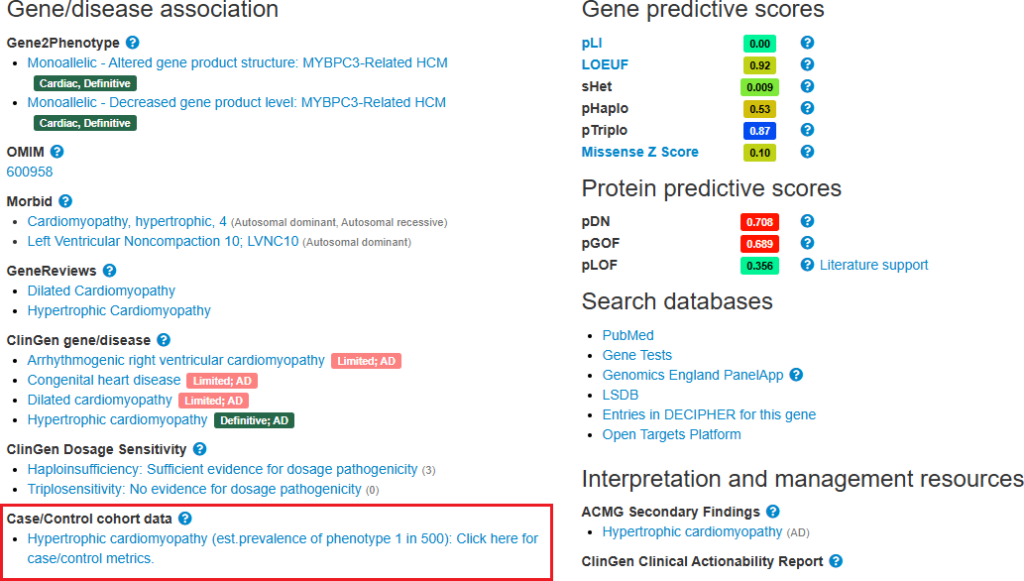
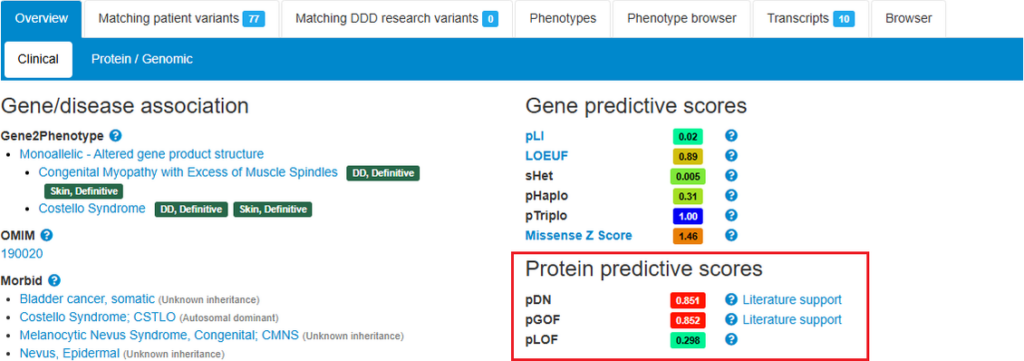
Protein predictive scores on gene pages
Protein predictive scores are now displayed on gene pages. These scores predict the likelihood that the protein is associated with a dominant-negative, gain-of-function or loss-of-function mechanism. Where literature support for a molecular disease mechanism has been curated, a link to the relevant manuscript and a supporting statement is provided. Further information about these scores and curations can be found in Badonyi and Marsh et al., 2024.
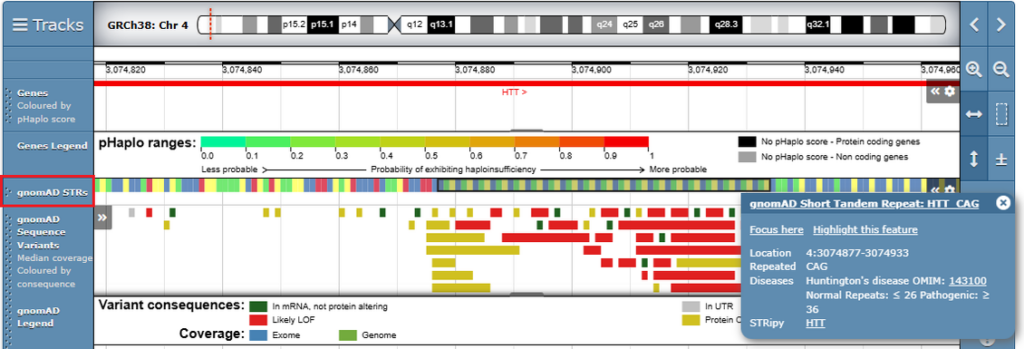
New gnomAD STR genome browser track
A gnomAD Short Tandem Repeat (STR) track is now available on the genome browser which displays information about 60 disease associated repeat loci. The associated diseases are displayed along with the normal and pathogenic repeat lengths. Links to STRipy and the relevant page in gnomAD are also provided. This track is display by default when a STR is deposited on a patient record. A user can choose to display this genome browser track by clicking on “Tracks” at the top left of the genome browser and adding this track to the enabled tracks list.
Expanded Matchmaker Exchange network
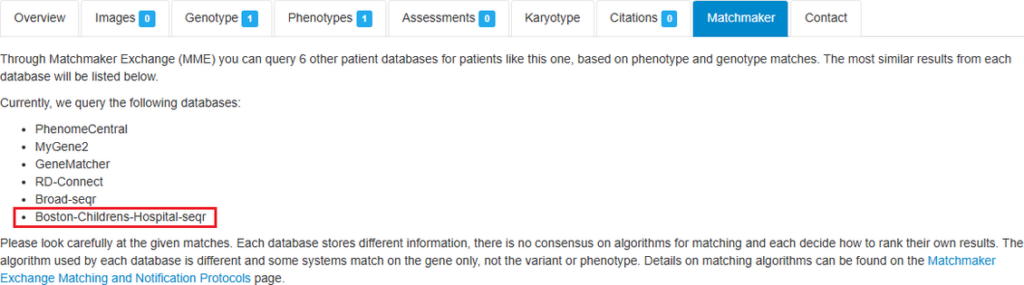
Users can now search for patient matches in Boston Children’s Hospital seqr in addition to PhenomeCentral, Broad seqr, GeneMatcher, RD-connect and MyGene2 using Matchmaker Exchange. Matchmaker Exchange is a federated platform to facilitate the matching of cases with similar phenotypic and genotypic profiles. Find the “Matchmaker” tab on your patient page between the “Citations” and “Contact” tabs.