AlphaFold Database welcomes community datasets
Latest AlphaFold Database update adds high-value datasets for microbial and viral proteins, generated by specialist communities
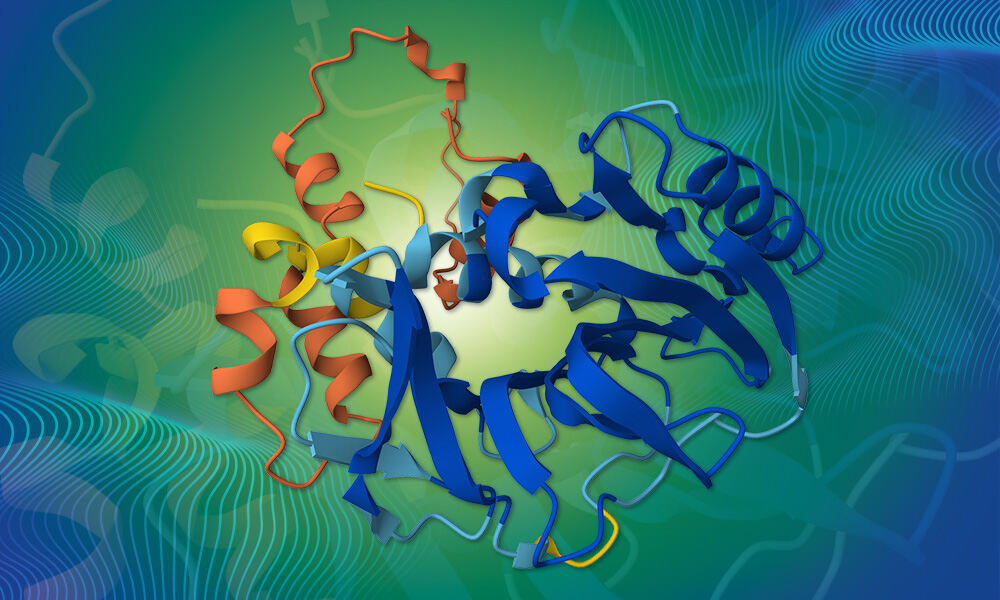
The AlphaFold Protein Structure Database is now accepting large-scale datasets from scientific communities with deep domain expertise. This move aims to empower specialist communities to contribute and address remaining gaps in structural knowledge, particularly for organisms with limited sequence data.
The AlphaFold Database provides open access to over 200 million protein structure predictions to accelerate scientific research. The database is jointly developed by Google DeepMind and EMBL’s European Bioinformatics Institute (EMBL-EBI).
By integrating essential, high-quality datasets from users, this update reinforces the AFDB’s role as an inclusive, community-driven resource. It is also set to maximise impact for scientific research in specialist areas including pandemic preparedness, antimicrobial resistance, neglected tropical diseases and environmental sciences.
The first such large-scale datasets are already available in the database. This includes:
- Microbial proteomes: Over 17 million structure predictions for bacterial proteins from the AllTheBacteria project, supporting antimicrobial resistance research.
- Neglected tropical diseases: Protein structure predictions for parasites associated with tropical diseases, developed by the Wheeler Lab at the University of Edinburgh.
- Viral ‘dark proteome’: Over 350,000 viral protein structure predictions from the Big Fantastic Virus Database (BFVD), developed by the Steinegger lab at Seoul National University, spanning the understudied structural landscape of viruses. Plus Viro3D – over 85,000 proteins from more than 4400 viruses, produced by researchers at the MRC-University of Glasgow Centre for Virus Research.
Who can submit datasets and how?
Eligible datasets must use AlphaFold 2 and must provide a strong scientific justification for their inclusion in the database.
Data providers are credited on the AFDB entry pages and in the metadata of the file, as well as on the Collaborators page on the AFDB website.
To contribute a dataset or check with the AFDB team if your data qualify, please email afdbhelp@ebi.ac.uk.
What do AlphaFold DB collaborators say?
- “To understand how unicellular parasites are so successful as pathogens and develop interventions to treat them, researchers need the best possible protein structure predictions. Our dataset improves many predictions for the neglected tropical pathogens Trypanosoma and Leishmania, and sets an example of how the community can help maximise the value of structure predictions with their contribution.” – Richard Wheeler, University of Edinburgh
- “The AlphaFold revolution is having a transformative impact on molecular biology, providing new opportunities for fundamental discovery and accelerating the development of therapies against human disease. The inclusion of predicted structures for viral proteins in the AlphaFold Protein Structure Database will allow the virology community to benefit from the AlphaFold revolution, providing new perspectives on the origins and evolution of viruses, and informing lab-based investigations of viral protein mechanisms. Critically, this resource represents an invaluable stockpile of molecular knowledge that can be used to tackle existing and emergent viral threats to human health.” – Joe Grove, MRC-University of Glasgow Centre for Virus Research
- “By integrating the viral protein structure predictions from BFVD into the AlphaFold database, we’re giving researchers access to extraordinary structural diversity. This could enable the discovery of major drivers of genetic and functional innovation in viral-host dynamics across the tree of life.” – Rachel Seongeun Kim, Seoul National University
- “Annotating the functions of many bacterial proteins remains extremely challenging, even for commonly studied species, but recent advances in using protein structures instead of just their sequences have helped massively. Accordingly, we hope that these novel bacterial protein structures derived from high-quality genome assemblies will allow us to better understand the functional capabilities across the breadth of all bacteria.” – George Bouras, lead of the AllTheBacteria protein structure prediction project, PhD student and bioinformatician at Adelaide University.