 |
PDBsum entry 4f4z

|
|
|
|
|
|

|

|

|

|
|

|
|

|
|

|
|

|
|

|
|

|
|

|
|
|
 |

|

|
|
|
|
|
|
|
|
|
|
|
|
|
|
|
|
|
|
|
|
|
|
|
|
|
|
|
|
|
|
|
|
|
|
|
|
Transferase/DNA
|
PDB id
|
|
|
|
4f4z
|
|
|
|
|
|
|
|
|
|
|
|
|
|
|

|

|

|
|
|
|
|
|
|
PDB id:
|
|
|
|
| Name: |
|
Transferase/DNA
|
|
|
Title:
|
|
Y-family DNA polymerase chimera dpo4-dpo4-dbh
|
|
Structure:
|
|
DNA polymerase iv. Chain: b, a. Synonym: pol iv. Engineered: yes. DNA (5'-d( Ap Gp Gp Gp Gp Gp Ap Ap Gp Cp Cp G)-3'). Chain: p, c. Engineered: yes. Other_details: primer DNA. DNA (5'-
|
|
Source:
|
|
Sulfolobus solfataricus, sulfolobus acidocaldarius. Organism_taxid: 273057, 330779. Strain: atcc 35092 / dsm 1617 / jcm 11322 / p2. Gene: dbh, dpo4, dpo4 (s. Solfataricus) and dbh (s. Acidocaldarius), sso2448, saci_05 54. Expressed in: escherichia coli. Expression_system_taxid: 562. Synthetic: yes.
|
|
Resolution:
|
|
|
2.31Å
|
R-factor:
|
0.188
|
R-free:
|
0.260
|
|
|
Authors:
|
|
J.D.Pata,R.C.Wilson
|
|
Key ref:
|
|
R.C.Wilson
et al.
(2013).
Y-family polymerase conformation is a major determinant of fidelity and translesion specificity.
Structure,
21,
20-31.
PubMed id:
|
|
|
Date:
|
|
|
11-May-12
|
Release date:
|
02-Jan-13
|
|
|
|
|
|
|
PROCHECK
|

|
|
|
|
|
Headers
|
|
|
|
References
|
|
|
|
|
|
|
|
|
|
|
|
Enzyme class:
|
|
E.C.2.7.7.7
- DNA-directed Dna polymerase.
|
|
|
|
|
|
|
Reaction:
|
|
DNA(n) + a 2'-deoxyribonucleoside 5'-triphosphate = DNA(n+1) + diphosphate
|
|
|
|
|
|
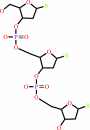 DNA(n)
|
+
|
2'-deoxyribonucleoside 5'-triphosphate
|
=
|
DNA(n+1)
|
+
|
 diphosphate
|
|
|
|
|
|
|
|
|
|
|
|
|
Molecule diagrams generated from .mol files obtained from the
KEGG ftp site
|
|
|
|
|
|
|
|
|
|
|
|
|
|
 |
|
|
|
|
|
|
| |
|
|
| |
|
|
Structure
21:20-31
(2013)
|
|
PubMed id:
|
|
|
|
|
|
| |
|
Y-family polymerase conformation is a major determinant of fidelity and translesion specificity.
|
|
R.C.Wilson,
M.A.Jackson,
J.D.Pata.
|
|
|
|
|
| |
ABSTRACT
|
|
|
|
| |
|
|
Y-family polymerases help cells tolerate DNA damage by performing translesion
synthesis opposite damaged DNA bases, yet they also have a high intrinsic error
rate. We constructed chimeras of two closely related Y-family polymerases that
display distinctly different activity profiles and found that the polypeptide
linker that tethers the catalytic polymerase domain to the C-terminal
DNA-binding domain is a major determinant of overall polymerase activity,
nucleotide incorporation fidelity, and abasic site-bypass ability. Exchanging
just 3 out of the 15 linker residues is sufficient to interconvert the
polymerase activities tested. Crystal structures of four chimeras show that the
conformation of the protein correlates with the identity of the interdomain
linker sequence. Thus, residues that are more than 15 Å away from the active
site are able to influence many aspects of polymerase activity by altering the
relative orientations of the catalytic and DNA-binding domains.
|
|
|
|
|
|
|
|
|
|
|
|
|
|
|
|
|
|
 |
 |
 |
|
|


 Links
Links





