Resorcylate decarboxylase
γ-Resorcylate decarboxylase (γ-RSD) has evolved to catalyse the decarboxylation of 2,6-dihydroxybenzoate to resorcinol. This enzyme is of significant interest because of its potential for the production of γ-resorcylate and other benzoic acid derivatives under environmentally sustainable conditions. It contains a manganese ion and an aspartate in the active site responsible for the reaction. The reaction is reversible, but equilibrium greatly favors the decarboxylation reaction.
Reference Protein and Structure
- Sequence
-
Q12BV1

 (Sequence Homologues)
(PDB Homologues)
(Sequence Homologues)
(PDB Homologues)
- Biological species
-
Polaromonas sp. JS666 (Bacteria)
- PDB
-
4qro
- CRYSTAL STRUCTURE of DIHYDROXYBENZOIC ACID DECARBBOXYLASE BPRO_2061 (TARGET EFI-500288) FROM POLAROMONAS SP. JS666 WITH BOUND MANGANESE AND AN INHIBITOR, 2-NITRORESORCINOL
(1.65 Å)



- Catalytic CATH Domains
-
3.20.20.140
 (see all for 4qro)
- Cofactors
- Manganese(2+) (1)


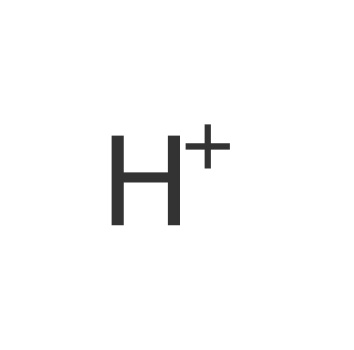


Enzyme Mechanism
Introduction
In the proposed reaction mechanism, gamma-resorcylate binds 2,6-dihydroxybenzoate by direct coordination of the active site manganese ion to the carboxylate anion and one of the adjacent phenolic oxygens of the substrate. The enzyme subsequently catalyzes the transfer of a proton to C1 of gamma-resorcylate. This causes the decarboxylation of the substrate. This reaction is reversible but highly in favour of the decarboxylation reaction.
Catalytic Residues Roles
| UniProt | PDB* (4qro) | ||
| Asp287 | Asp287G | Acts as a proton donor to the substrate causing the decarboxylation. | metal ligand, proton donor |
| His164, Glu8, Asp287, His10 | His164G, Glu8G, Asp287G, His10G | The residues responsible for manganese coordination. | metal ligand |
Chemical Components
proton transfer, intermediate formation, intermediate collapse, unimolecular elimination by the conjugate base, overall reactant used, intramolecular rearrangement, overall product formedReferences
- Sheng X et al. (2018), Biochemistry, 57, 3167-3175. Mechanism and Structure of γ-Resorcylate Decarboxylase. DOI:https://doi.org/10.1021/acs.biochem.7b01213.
- Sheng X et al. (2018), Front Chem, 6,Reaction Mechanism and Substrate Specificity of Iso-orotate Decarboxylase: A Combined Theoretical and Experimental Study. DOI:https://doi.org/10.3389/fchem.2018.00608.
- Kasai D et al. (2015), Appl Environ Microbiol, 81, 7656-7665. γ-Resorcylate catabolic-pathway genes in the soil actinomycete Rhodococcus jostii RHA1. DOI:10.1128/AEM.02422-15. PMID:26319878.
- Goto M et al. (2006), J Biol Chem, 281, 34365-34373. Crystal structures of nonoxidative zinc-dependent 2,6-dihydroxybenzoate (gamma-resorcylate) decarboxylase from Rhizobium sp. strain MTP-10005. DOI:10.1074/jbc.M607270200. PMID:16963440.

Step 1. Asp287 protonates the C1 of the substrate. This forms an intermediate.
Download: Image, Marvin FileCatalytic Residues Roles
| Residue | Roles |
|---|---|
| His164G | metal ligand |
| Glu8G | metal ligand |
| Asp287G | metal ligand, proton donor |
| His10G | metal ligand |
Chemical Components
proton transfer, intermediate formation, intermediate collapse, ingold: unimolecular elimination by the conjugate base, overall reactant used
Step 2. The intermediate collapses with a bond rearrangement. The carboxylate leaves the substrate as carbon dioxide.
Download: Image, Marvin FileCatalytic Residues Roles
| Residue | Roles |
|---|---|
| His164G | metal ligand |
| Glu8G | metal ligand |
| Asp287G | metal ligand |
| His10G | metal ligand |
 Download: