Lactoperoxidase
Antimicrobial agent which utilizes hydrogen peroxide and thiocyanate (SCN) to generate the antimicrobial substance hypothiocyanous acid (HOSCN). Hypo(pseudo)halides, such as HOSCN, are powerful oxidants with antimicrobial activity, thus this reaction is thought to help protect the udder from infection and promote growth in newborn calves. Inhibits growth of the following bacterial species: E. coli, K. pneumoniae, P. aeruginosa, S. sonnei, S. saphrophyticus, S. epidermidis, and S. dysenteriae.
Reference Protein and Structure
- Sequence
-
A5JUY8
 (1.11.1.7)
 (Sequence Homologues)
(PDB Homologues)
(Sequence Homologues)
(PDB Homologues)
- Biological species
-
Bubalus bubalis (Water buffalo)
- PDB
-
3fnl
- Crystal Structure of the Complex of Buffalo Lactoperoxidase with Salicylhydroxamic Acid at 2.48 A Resolution
(2.48 Å)



- Catalytic CATH Domains
-
1.10.640.10
 (see all for 3fnl)
- Cofactors
- Heme b (1), Calcium(2+) (1)
Enzyme Reaction (EC:1.11.1.7)





Enzyme Mechanism
Introduction
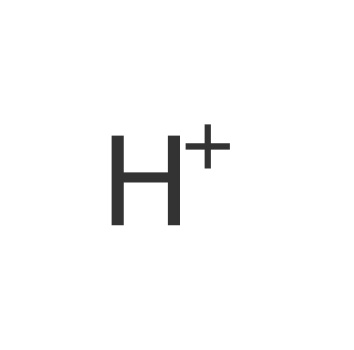
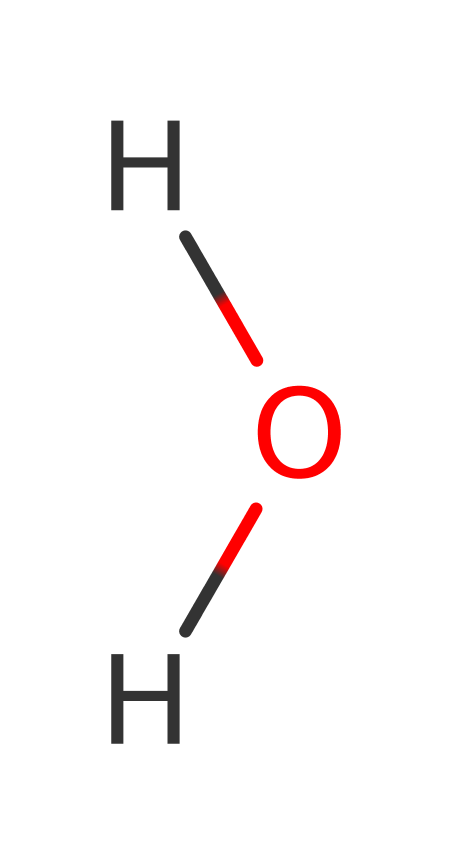
The thiocyanate ion, which is a physiological substrate for the mammalian enzyme, is placed almost parallel to the plane of the heme moiety with the sulfur atom being closer to the heme iron than its nitrogen atom. The first reaction in the mechanism of this enzyme is the formation of compound I utilising hydrogen peroxide, which acts as an electron acceptor. The native enzyme undergoes a two-electron oxidation. Two electrons are transferred from the enzyme to hydrogen peroxide which is reduced into water. Compound I is two oxidising equivalents above the native enzyme: one is in the oxyferryl heme center and the other is present as an organic cation located on the porphyrin ring.In the presence of a halogen (Cl-, Br-, or I-) or a pseudohalogen (SCN-), Compound I is reduced back to its native enzymatic form through a two-electron transfer while the (pseudo)halogen is oxidised into a hypo(pseudo)halide.
Catalytic Residues Roles
| UniProt | PDB* (3fnl) | ||
| Asp227, Thr301, Phe303, Asp305, Ser307 | Asp110A, Thr184A, Phe186A, Asp188A, Ser190A | Forms the calcium ion binding site. | metal ligand |
| Asp225, Glu375 | Asp108A, Glu258A | These residues are covalently attached to the heme cofactor, helping to regulate its redox potential. | covalently attached, alter redox potential |
| His468 | His351A | Acts as the distal ligand to the iron in heme. | metal ligand |
| Gln222 | Gln105A | Helps to stabilise the reactive intermediates and transition states formed during the course of the reaction. | transition state stabiliser |
Chemical Components
References
- Bafort F et al. (2014), Enzyme Res, 2014, 517164-. Mode of action of lactoperoxidase as related to its antimicrobial activity: a review. DOI:10.1155/2014/517164. PMID:25309750.
- Mak PJ et al. (2015), J Am Chem Soc, 137, 349-361. Resonance Raman spectroscopy reveals pH-dependent active site structural changes of lactoperoxidase compound 0 and its ferryl heme O-O bond cleavage products. DOI:10.1021/ja5107833. PMID:25506715.
- Sicking W et al. (2012), Chemistry, 18, 10937-10948. DFT calculations suggest a new type of self-protection and self-inhibition mechanism in the mammalian heme enzyme myeloperoxidase: nucleophilic addition of a functional water rather than one-electron reduction. DOI:10.1002/chem.201103477. PMID:22829409.
- Singh AK et al. (2012), Protein J, 31, 598-608. Bovine carbonyl lactoperoxidase structure at 2.0Å resolution and infrared spectra as a function of pH. DOI:10.1007/s10930-012-9436-3. PMID:22886082.
- Singh AK et al. (2011), Int J Biochem Mol Biol, 2, 328-339. Structural evidence for the order of preference of inorganic substrates in mammalian heme peroxidases: crystal structure of the complex of lactoperoxidase with four inorganic substrates, SCN, I, Br and Cl. PMID:22187667.
- Banerjee S et al. (2011), Biotechnol J, 6, 231-243. Bovine lactoperoxidase - a versatile one- and two-electron catalyst of high structural and thermal stability. DOI:10.1002/biot.201000375. PMID:21298808.
- Singh AK et al. (2010), J Biol Inorg Chem, 15, 1099-1107. First structural evidence for the mode of diffusion of aromatic ligands and ligand-induced closure of the hydrophobic channel in heme peroxidases. DOI:10.1007/s00775-010-0669-3. PMID:20461536.
- Sheikh IA et al. (2009), J Biol Chem, 284, 14849-14856. Structural evidence of substrate specificity in mammalian peroxidases: structure of the thiocyanate complex with lactoperoxidase and its interactions at 2.4 A resolution. DOI:10.1074/jbc.M807644200. PMID:19339248.
- Devarajan A et al. (2008), J Inorg Biochem, 102, 1549-1557. Effect of covalent links on the structure, spectra, and redox properties of myeloperoxidase--a density functional study. DOI:10.1016/j.jinorgbio.2008.01.031. PMID:18331758.
- Singh AK et al. (2008), J Mol Biol, 376, 1060-1075. Crystal structure of lactoperoxidase at 2.4 A resolution. DOI:10.1016/j.jmb.2007.12.012. PMID:18191143.
- Furtmüller PG et al. (2006), Arch Biochem Biophys, 445, 199-213. Active site structure and catalytic mechanisms of human peroxidases. DOI:10.1016/j.abb.2005.09.017. PMID:16288970.
- Jantschko W et al. (2005), Arch Biochem Biophys, 434, 51-59. Reaction of ferrous lactoperoxidase with hydrogen peroxide and dioxygen: an anaerobic stopped-flow study. DOI:10.1016/j.abb.2004.10.014. PMID:15629108.
- Ghibaudi E et al. (2003), Eur J Biochem, 270, 4403-4412. Unraveling the catalytic mechanism of lactoperoxidase and myeloperoxidase. PMID:14622268.

Catalytic Residues Roles
| Residue | Roles |
|---|---|
| Asp108A | covalently attached |
| Glu258A | covalently attached |
| Asp108A | alter redox potential |
| Glu258A | alter redox potential |
| Asp110A | metal ligand |
| Thr184A | metal ligand |
| Phe186A | metal ligand |
| Asp188A | metal ligand |
| Ser190A | metal ligand |
| His351A | metal ligand |
| Gln105A | transition state stabiliser |