Aminoacyl-tRNA hydrolase
Peptidyl-tRNA hydrolase (PTH) is a bacterial enzyme that cleaves peptidyl-tRNA or N-acyl-aminoacyl-tRNA to yield free peptides or N-acyl-amino acids and tRNA. The natural substrate for this enzyme may be peptidyl-tRNA which drop off the ribosome during protein synthesis [PMID:1833189, PMID:8635758]. Bacterial PTH has been found to be evolutionary related to a yeast protein [PMID:8563640].
Reference Protein and Structure
- Sequence
-
P0A7D1
 (3.1.1.29)
 (Sequence Homologues)
(PDB Homologues)
(Sequence Homologues)
(PDB Homologues)
- Biological species
-
Escherichia coli K-12 (Bacteria)
- PDB
-
2pth
- PEPTIDYL-TRNA HYDROLASE FROM ESCHERICHIA COLI
(1.2 Å)



- Catalytic CATH Domains
-
3.40.50.1470
 (see all for 2pth)
Enzyme Reaction (EC:3.1.1.29)


+
→

+


Alternative enzyme names: N-substituted aminoacyl transfer RNA hydrolase, Aminoacyl-transfer ribonucleate hydrolase, Peptidyl-tRNA hydrolase,
Enzyme Mechanism
Introduction
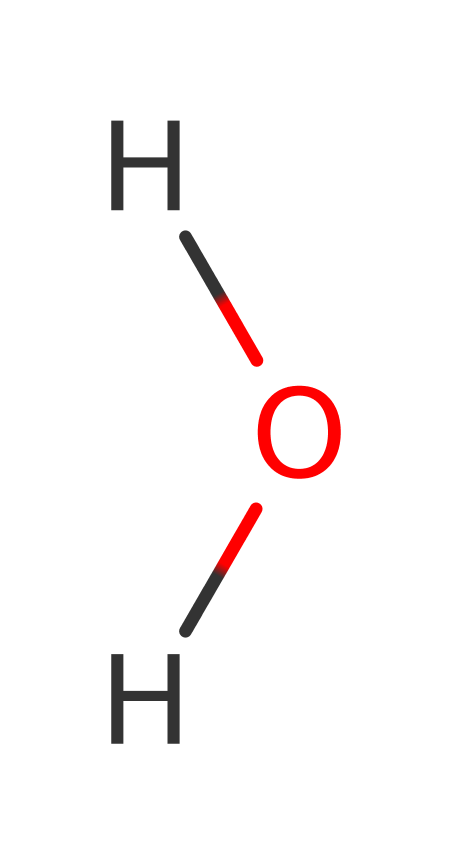
His20 abstracts a proton from a proximal water molecule. The resulting hydroxyl nucleophilically attacks the carbon of the scissile ester. The tetrahedral intermediate then collapses to form the products.
Catalytic Residues Roles
| UniProt | PDB* (2pth) | ||
| Asn69, Asn115 | Asn68A, Asn114A | Forms the oxyanion hole that stabilises the negatively charged intermediate and transition states formed during the course of the reaction. | electrostatic stabiliser |
| Asp94 | Asp93A | A conserved hydrogen bond between this Asp and the Ndelta1 of His20 serves to stabilise and modify the pKa of the catalytic histidine. | modifies pKa, electrostatic stabiliser |
| His21 | His20A | His20 forms a hydrogen bond with the Neta2 atom of His20 in the Pth:peptidyl-tRNA complex model. This allows the histidine to abstract a proton from this catalytic water, which goes onto attack the substrate. | proton shuttle (general acid/base) |
*PDB label guide - RESx(y)B(C) - RES: Residue Name; x: Residue ID in PDB file;
y: Residue ID in PDB sequence if different from PDB file; B: PDB Chain;
C: Biological Assembly Chain if different from PDB. If label is "Not Found" it means this residue is not found in the reference PDB.
Chemical Components
References
- Ito K et al. (2012), Nucleic Acids Res, 40, 10521-10531. Structural basis for the substrate recognition and catalysis of peptidyl-tRNA hydrolase. DOI:10.1093/nar/gks790. PMID:22923517.
- Kabra A et al. (2017), RNA, 23, 202-216. Unraveling the stereochemical and dynamic aspects of the catalytic site of bacterial peptidyl-tRNA hydrolase. DOI:10.1261/rna.057620.116. PMID:28096445.
- Hames MC et al. (2013), Int J Mol Sci, 14, 22741-22752. Small molecule binding, docking, and characterization of the interaction between Pth1 and peptidyl-tRNA. DOI:10.3390/ijms141122741. PMID:24256814.
- Kaushik S et al. (2013), PLoS One, 8, e67547-. The mode of inhibitor binding to peptidyl-tRNA hydrolase: binding studies and structure determination of unbound and bound peptidyl-tRNA hydrolase from Acinetobacter baumannii. DOI:10.1371/journal.pone.0067547. PMID:23844024.
- Goodall JJ et al. (2004), Biochemistry, 43, 4583-4591. Essential role of histidine 20 in the catalytic mechanism of Escherichia coli peptidyl-tRNA hydrolase. DOI:10.1021/bi0302200. PMID:15078105.
- Schmitt E et al. (1997), EMBO J, 16, 4760-4769. Crystal structure at 1.2Aresolution and active site mapping of Escherichia coli peptidyl-tRNA hydrolase. DOI:10.1093/emboj/16.15.4760. PMID:9303320.
- De La Vega FM et al. (1996), Gene, 169, 97-100. Microbial genes homologous to the peptidyl-tRNA hydrolase-encoding gene of Escherichia coli. PMID:8635758.
- Ouzounis C et al. (1995), Protein Sci, 4, 2424-2428. New protein functions in yeast chromosome VIII. DOI:10.1002/pro.5560041121. PMID:8563640.
- García-Villegas MR et al. (1991), EMBO J, 10, 3549-3555. Peptidyl-tRNA hydrolase is involved in lambda inhibition of host protein synthesis. PMID:1833189.

Catalytic Residues Roles
| Residue | Roles |
|---|---|
| His20A | proton shuttle (general acid/base) |
| Asp93A | modifies pKa |
| Asn68A | electrostatic stabiliser |
| Asp93A | electrostatic stabiliser |
| Asn114A | electrostatic stabiliser |