Nitrate reductase [NADH]
This entry represents the NADH dependent nitrate reductase (NR) from plants and fungi, including NIA1 and NIA2 from Arabidopsis. They contain an N-terminal oxidoreductase molybdopterin binding domain and a C-terminal FAD-binding domain. The N-terminal domain is responsible for the reduction of nitrate; the C-terminal domain is responsible for the regeneration of the FAD cofactor. Only the N-terminal domain function is shown here; the C-terminal function can be found in MACiE:862.
Reference Protein and Structure
- Sequence
-
P49050
 (1.7.1.3)
 (Sequence Homologues)
(PDB Homologues)
(Sequence Homologues)
(PDB Homologues)
- Biological species
-
Ogataea angusta (Fungus)
- PDB
-
2bii
- crystal structure of nitrate-reducing fragment of assimilatory nitrate reductase from Pichia angusta
(1.7 Å)



- Catalytic CATH Domains
-
3.90.420.10
 (see all for 2bii)
- Cofactors
- Moo2-molybdopterin cofactor(2−) (1)
Enzyme Reaction (EC:1.7.1.3)
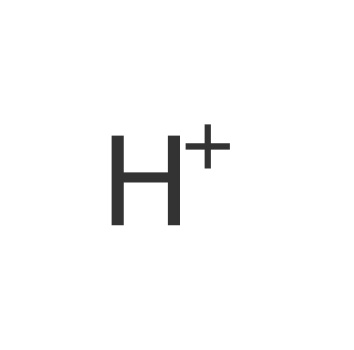


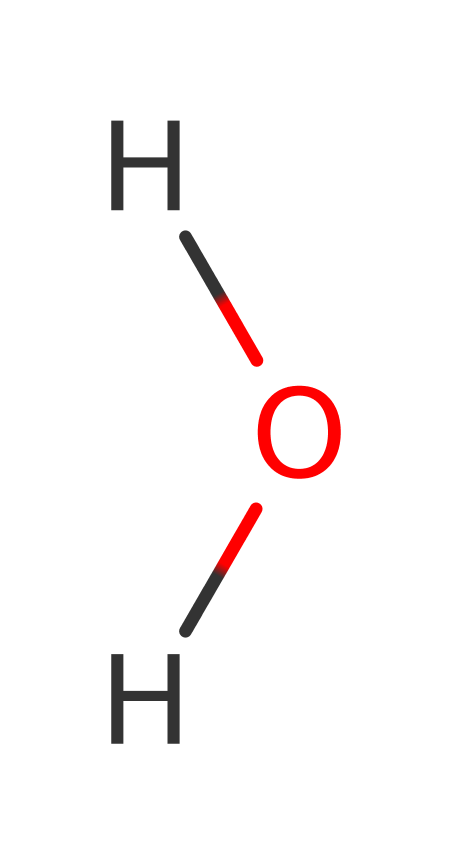


Enzyme Mechanism
Introduction
This entry represents the mechanism of the N-terminal domain of the protein. In the first step of the reaction (which starts with the oxidized Mo(VI) centre), the Mo is reduced by NAD to Mo(IV). In the next step, the nitrate displaces equatorial hydroxo/water ligand on the molybdenum ion. Upon oxidation of the Mo centre to Mo(VI), the bond between the nitrate oxygen and nitrogen is broken, and nitrite is released.
Catalytic Residues Roles
| UniProt | PDB* (2bii) | ||
| Asp269, Asp269, Asn270, Asn270 | Asp271(211)B, Asp271(211)B, Asn272(212)B, Asn272(212)B | Asp271 and Asn272 play a crucial role for displacing the Mo-hydroxo/water ligand, as well as stabilising the reaction intermediates formed during the course of the reaction. | electrostatic stabiliser, transition state stabiliser |
| Cys137 | Cys139(79)B | Binds the molybdenum ion of the Mo-MPT cofactor. | metal ligand |
Chemical Components
redox reaction, proton transfer, bimolecular nucleophilic substitution, intermediate formation, overall reactant used, decoordination from a metal ion, coordination to a metal ion, intermediate collapse, electron transferReferences
- Fischer K et al. (2005), Plant Cell, 17, 1167-1179. Structural basis of eukaryotic nitrate reduction: crystal structures of the nitrate reductase active site. DOI:10.1105/tpc.104.029694. PMID:15772287.
- Cerqueira NM et al. (2009), J Comput Chem, 30, 2466-2484. The effect of the sixth sulfur ligand in the catalytic mechanism of periplasmic nitrate reductase. DOI:10.1002/jcc.21280. PMID:19360810.
- Lu G et al. (1995), J Mol Biol, 248, 931-948. Structural Studies on Corn Nitrate Reductase: Refined Structure of the CytochromebReductase Fragment at 2.5 Å, its ADP Complex and an Active-site Mutant and Modeling of the CytochromebDomain. DOI:10.1006/jmbi.1995.0273. PMID:7760334.

Step 1. The reaction cycle starts by NADPH reducing the Moco bound molybdenum. One of the molybdenum bound oxygens turns into a hydroxide group.
Download: Image, Marvin FileCatalytic Residues Roles
| Residue | Roles |
|---|---|
| Cys139(79)B | metal ligand |
| Asp271(211)B | electrostatic stabiliser |
| Asn272(212)B | electrostatic stabiliser |
Chemical Components
redox reaction, proton transfer
Step 2. The nitrate then displaces the OH molecule from the coordination sphere of molybdenum.
Download: Image, Marvin FileCatalytic Residues Roles
| Residue | Roles |
|---|---|
| Cys139(79)B | metal ligand |
| Asp271(211)B | electrostatic stabiliser |
| Asn272(212)B | electrostatic stabiliser |
Chemical Components
ingold: bimolecular nucleophilic substitution, intermediate formation, overall reactant used, decoordination from a metal ion, coordination to a metal ion
Step 3. The Mo metal then creates a double bond with the bound nitrate oxygen, releasing nitrite into the solution. This oxidises the Mo back to its (VI) state. The transition state is stabilised by Asp271 and Asn272.
Download: Image, Marvin FileCatalytic Residues Roles
| Residue | Roles |
|---|---|
| Asp271(211)B | electrostatic stabiliser, transition state stabiliser |
| Asn272(212)B | electrostatic stabiliser, transition state stabiliser |
| Cys139(79)B | metal ligand |
Chemical Components
overall reactant used, intermediate collapse, electron transfer
Step 4. The nitrite leaves the coordination sphere and the cofactor is regenerated completing the cycle.
Download: Image, Marvin FileCatalytic Residues Roles
| Residue | Roles |
|---|---|
| Cys139(79)B | metal ligand |
 Download: