Lysozyme (glycosyl hydrolase 24 family)
Endolysin with lysozyme activity degrades host peptidoglycans and participates with the holin and spanin proteins in the sequential events which lead to the programmed host cell lysis releasing the mature viral particles. Once the holin has permeabilised the host cell membrane, the endolysin can reach the periplasm and break down the peptidoglycan layer.
Reference Protein and Structure
- Sequence
-
P00720
 (3.2.1.17)
 (Sequence Homologues)
(PDB Homologues)
(Sequence Homologues)
(PDB Homologues)
- Biological species
-
Enterobacteria phage T4 (Virus)
- PDB
-
206l
- PHAGE T4 LYSOZYME
(1.75 Å)



- Catalytic CATH Domains
-
1.10.530.40
 (see all for 206l)
Enzyme Reaction (EC:3.2.1.17)
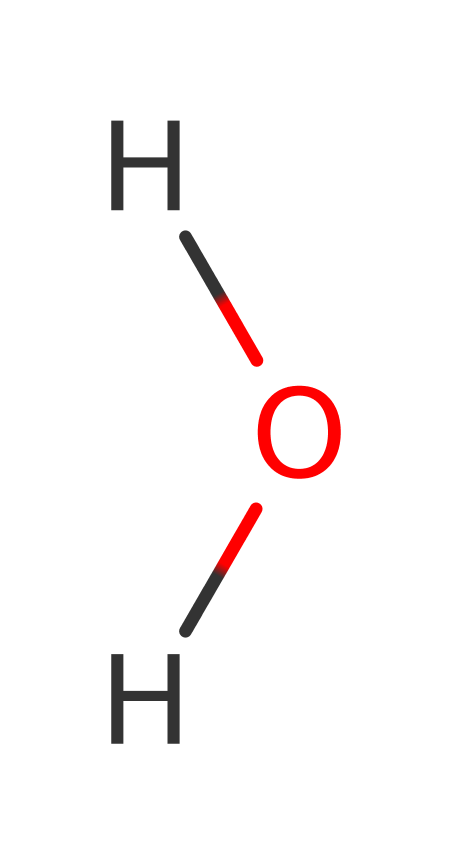

+

→

+


Alternative enzyme names: 1,4-N-acetylmuramidase, N,O-diacetylmuramidase, L-7001, PR1-lysozyme, Globulin G, Globulin G1, Lysozyme g, Mucopeptide N-acetylmuramoylhydrolase, Mucopeptide glucohydrolase, Muramidase,
Enzyme Mechanism
Introduction
Similarly to other lysozyme type mechanisms, Asp20 attacks the anomeric carbon of the substrate, eliminating the leaving groups sugar, which abstracts a proton from Glu11. Glu11 then activates the water molecule that eliminates the final product from the enzyme.
Catalytic Residues Roles
| UniProt | PDB* (206l) | ||
| Asp20 | Asp20A | Acts as the catalytic nucleophile, attacking the anomeric carbon of the substrate. | covalent catalysis |
| Glu11 | Glu11A | Acts as a general acid/base, donating a proton to the leaving group and then deprotonating the catalytic water molecule. | proton shuttle (general acid/base) |
*PDB label guide - RESx(y)B(C) - RES: Residue Name; x: Residue ID in PDB file;
y: Residue ID in PDB sequence if different from PDB file; B: PDB Chain;
C: Biological Assembly Chain if different from PDB. If label is "Not Found" it means this residue is not found in the reference PDB.
Chemical Components
References
- Hardy LW et al. (1991), Biochemistry, 30, 9457-9463. Reexamination of the role of Asp20 in catalysis by bacteriophage T4 lysozyme. PMID:1892846.
- Kuroki R et al. (1999), Proc Natl Acad Sci U S A, 96, 8949-8954. Structural basis of the conversion of T4 lysozyme into a transglycosidase by reengineering the active site. PMID:10430876.
- Davies G et al. (1995), Structure, 3, 853-859. Structures and mechanisms of glycosyl hydrolases. DOI:10.1016/s0969-2126(01)00220-9. PMID:8535779.
- Kuroki R et al. (1995), Nat Struct Biol, 2, 1007-1011. Structure-based design of a lysozyme with altered catalytic activity. PMID:7583653.
- Kuroki R et al. (1993), Science, 262, 2030-2033. A covalent enzyme-substrate intermediate with saccharide distortion in a mutant T4 lysozyme. PMID:8266098.
- Blaber M et al. (1993), Biochemistry, 32, 11363-11373. Energetic cost and structural consequences of burying a hydroxyl group within the core of a protein determined from Ala-->Ser and Val-->Thr substitutions in T4 lysozyme. PMID:8218201.
- Anand NN et al. (1988), Biochem Biophys Res Commun, 153, 862-868. Mutation of active site residues in synthetic T4-lysozyme gene and their effect on lytic activity. PMID:3382407.

Catalytic Residues Roles
| Residue | Roles |
|---|---|
| Glu11A | proton shuttle (general acid/base) |
| Asp20A | covalent catalysis |