Endopeptidase Clp
CLP Protease (ClpP) is an ATP dependent protease which performs a large proportion of cellular protein degradation in most cells. ClpP is a large tetradecamer (two rings of seven subunits each) which forms a hollow cylinder within which proteins bind and are degraded. ATPase sub-unit control the activity of the main proteolytic sub-units and have also been implicated as having an important role in ensuring correct protein folding. The fold of the monomer identifies ClpP as a member of the crotonase-like superfamily, however it shares no functional similarities with other members of the group. It has been identified as a serine protease (peptidase S14 family), containing a classical catalytic triad however it is structurally unrelated to other serine protease families.
Reference Protein and Structure
- Sequence
-
P0A6G7
 (3.4.21.92)
 (Sequence Homologues)
(PDB Homologues)
(Sequence Homologues)
(PDB Homologues)
- Biological species
-
Escherichia coli K-12 (Bacteria)
- PDB
-
1tyf
- THE STRUCTURE OF CLPP AT 2.3 ANGSTROM RESOLUTION SUGGESTS A MODEL FOR ATP-DEPENDENT PROTEOLYSIS
(2.3 Å)



- Catalytic CATH Domains
-
3.90.226.10
 (see all for 1tyf)
Enzyme Reaction (EC:3.4.21.92)


Enzyme Mechanism
Introduction
For full activity, clpP requires the ATPase sub-unit (clpA) to unfold the protein substrate. However, the catalytic mechanism of the clpP sub-unit doesn't differ, only the nature of the substrate changes. ClpP contains a classic catalytic triad: serine 97 is the nucleophile activated by histidine 122 and aspartate 171. The backbone amides of glycine 68 and methionine 98 form an oxyanion hole.
It has been shown that the ClpP N-terminus controls many aspects of the mechanism: (1) it acts as a "gate" controlling substrate access to the active sites, (2) binding of ClpA opens this "gate", allowing substrate entry and formation of the acyl-enzyme intermediate, and (3) closing of the N-terminal "gate" stimulates acyl-enzyme hydrolysis.
Catalytic Residues Roles
| UniProt | PDB* (1tyf) | ||
| Ser111, Ser111 | Ser97A, Ser97A | Part of the catalytic Ser-His-Asp triad. Ser97 is activated by the histidine and then acts as a nucleophile. | covalent catalysis, proton shuttle (general acid/base) |
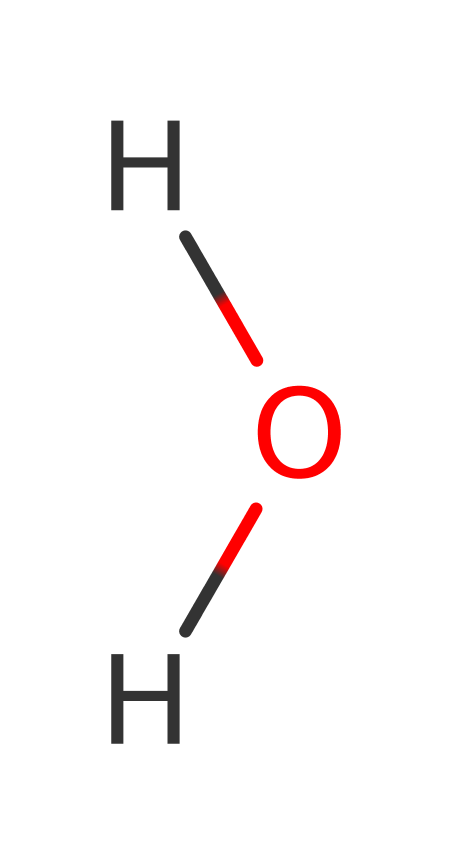
| His136 | His122A | Part of the catalytic Ser-His-Asp triad. His122 acts as a general acid/base, first by abstracting the proton from serine to enable it to act as a nucleophile. It then donates that proton to the protein leaving group before activating water to remove serine from the final product. | proton shuttle (general acid/base) |
| Asp185 | Asp171A | Part of the catalytic Ser-His-Asp triad. Stabilises and activates the catalytic histidine. | modifies pKa, electrostatic stabiliser |
| Gly82 (main-N), Met112 (main-N) | Gly68A (main-N), Met98A (main-N) | Form the oxyanion hole that stabilises the reactive intermediates and transition states. | electrostatic stabiliser |
Chemical Components
References
- Olivares AO et al. (2016), Nat Rev Microbiol, 14, 33-44. Mechanistic insights into bacterial AAA+ proteases and protein-remodelling machines. DOI:10.1038/nrmicro.2015.4. PMID:26639779.
- Gersch M et al. (2013), Angew Chem Int Ed Engl, 52, 3009-3014. The mechanism of caseinolytic protease (ClpP) inhibition. DOI:10.1002/anie.201204690. PMID:23361916.
- Zeiler E et al. (2013), Proc Natl Acad Sci U S A, 110, 11302-11307. Structural and functional insights into caseinolytic proteases reveal an unprecedented regulation principle of their catalytic triad. DOI:10.1073/pnas.1219125110. PMID:23798410.
- Bewley MC et al. (2009), J Struct Biol, 165, 118-125. Turned on for degradation: ATPase-independent degradation by ClpP. DOI:10.1016/j.jsb.2008.10.005. PMID:19038348.
- Jennings LD et al. (2008), Biochemistry, 47, 11536-11546. ClpP hydrolyzes a protein substrate processively in the absence of the ClpA ATPase: mechanistic studies of ATP-independent proteolysis. DOI:10.1021/bi801101p. PMID:18839965.
- Jennings LD et al. (2008), Biochemistry, 47, 11031-11040. The ClpP N-terminus coordinates substrate access with protease active site reactivity. DOI:10.1021/bi8010169. PMID:18816064.
- Bewley MC et al. (2006), J Struct Biol, 153, 113-128. The asymmetry in the mature amino-terminus of ClpP facilitates a local symmetry match in ClpAP and ClpXP complexes. DOI:10.1016/j.jsb.2005.09.011. PMID:16406682.
- Szyk A et al. (2006), J Struct Biol, 156, 165-174. Crystal structure at 1.9A of E. coli ClpP with a peptide covalently bound at the active site. DOI:10.1016/j.jsb.2006.03.013. PMID:16682229.
- Porankiewicz J et al. (1999), Mol Microbiol, 32, 449-458. New insights into the ATP-dependent Clp protease: Escherichia coli and beyond. DOI:10.1046/j.1365-2958.1999.01357.x. PMID:10320569.
- Wang J et al. (1998), J Struct Biol, 124, 151-163. Crystal Structure Determination ofEscherichia coliClpP Starting from an EM-Derived Mask. DOI:10.1006/jsbi.1998.4058. PMID:10049803.
- Wang J et al. (1997), Cell, 91, 447-456. The Structure of ClpP at 2.3 Å Resolution Suggests a Model for ATP-Dependent Proteolysis. DOI:10.1016/s0092-8674(00)80431-6. PMID:9390554.

Catalytic Residues Roles
| Residue | Roles |
|---|---|
| Gly68A (main-N) | electrostatic stabiliser |
| Met98A (main-N) | electrostatic stabiliser |
| Asp171A | electrostatic stabiliser, modifies pKa |
| Ser97A | proton shuttle (general acid/base) |
| His122A | proton shuttle (general acid/base) |
| Ser97A | covalent catalysis |