6,7-dimethyl-8-ribityllumazine synthase
Riboflavin is biosynthesised in plants, fungi and certain microorganisms; as animals lack the necessary enzymes to produce this vitamin, they acquire it from dietary sources. The penultimate step in the biosynthesis of riboflavin (vitamin B2) involves the condensation of 3,4-dihydroxy-2-butanone 4-phosphate with 5-amino-6-ribitylamino-2,4(1H,3H)-pyrimidinedione, which is catalysed by 6,7-dimethyl-8-ribityllumazine synthase (lumazine synthase).
Reference Protein and Structure
- Sequence
-
P11998
 (2.5.1.78)
 (Sequence Homologues)
(PDB Homologues)
(Sequence Homologues)
(PDB Homologues)
- Biological species
-
Bacillus subtilis subsp. subtilis str. 168 (Bacteria)
- PDB
-
1rvv
- SYNTHASE/RIBOFLAVIN SYNTHASE COMPLEX OF BACILLUS SUBTILIS
(2.4 Å)



- Catalytic CATH Domains
-
3.40.50.960
 (see all for 1rvv)
Enzyme Reaction (EC:2.5.1.78)


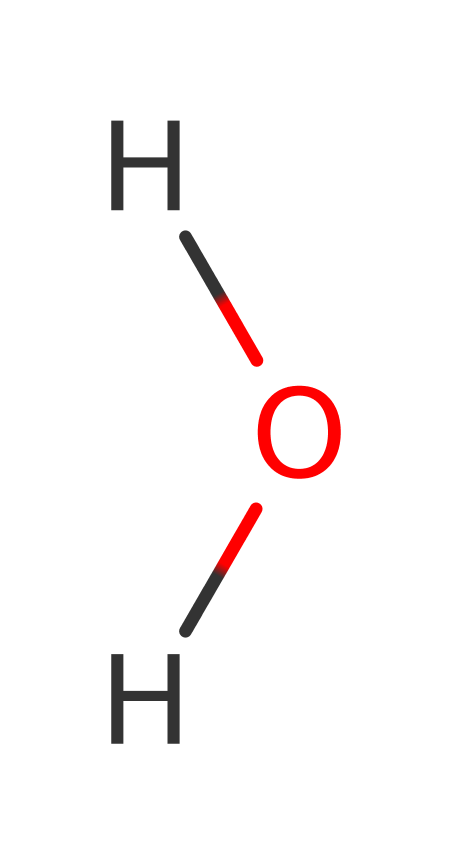
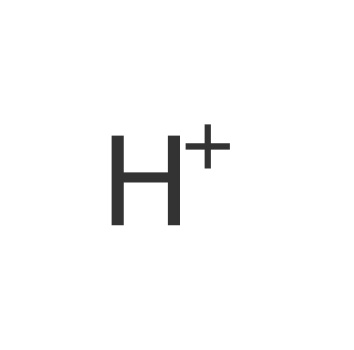


Enzyme Mechanism
Introduction
It has been proposed that the first step of the mechanism involves the formation of a Schiff base intermediate between the two substrates. The position 7 hydrogen of the intermediate is removed by His88, which facilitates the loss of the phosphate group. The intermediate then undergoes tautomerisation and rotation of the enol motif. This positions the carbonyl group for the final ring closure.
Catalytic Residues Roles
| UniProt | PDB* (1rvv) | ||
| His88 | His88A | Acts as a general acid/base. | proton shuttle (general acid/base) |
Chemical Components
References
- Fischer M et al. (2003), J Mol Biol, 326, 783-793. Enzyme catalysis via control of activation entropy: site-directed mutagenesis of 6,7-dimethyl-8-ribityllumazine synthase. PMID:12581640.
- Gerhardt S et al. (2002), J Mol Biol, 318, 1317-1329. The Structural Basis of Riboflavin Binding to Schizosaccharomyces pombe 6,7-Dimethyl-8-ribityllumazine Synthase. DOI:10.1016/s0022-2836(02)00116-x. PMID:12083520.
- Zhang X et al. (2001), J Mol Biol, 306, 1099-1114. X-ray structure analysis and crystallographic refinement of lumazine synthase from the hyperthermophile Aquifex aeolicus at 1.6 Å resolution: determinants of thermostability revealed from structural comparisons. DOI:10.1006/jmbi.2000.4435. PMID:11237620.
- Meining W et al. (2000), J Mol Biol, 299, 181-197. The atomic structure of pentameric lumazine synthase from Saccharomyces cerevisiae at 1.85 Å resolution reveals the binding mode of a phosphonate intermediate analogue. DOI:10.1006/jmbi.2000.3742. PMID:10860731.
- Kis K et al. (1995), Biochemistry, 34, 2883-2892. Biosynthesis of riboflavin. Studies on the reaction mechanism of 6,7-dimethyl-8-ribityllumazine synthase. PMID:7893702.
- Ritsert K et al. (1995), J Mol Biol, 253, 151-167. Studies on the lumazine synthase/riboflavin synthase complex of Bacillus subtilis: crystal structure analysis of reconstituted, icosahedral beta-subunit capsids with bound substrate analogue inhibitor at 2.4 A resolution. DOI:10.1006/jmbi.1995.0542. PMID:7473709.

Catalytic Residues Roles
| Residue | Roles |
|---|---|
| His88A | proton shuttle (general acid/base) |