Cytochrome-b5 reductase
NADH:cytochrome b5 reductase (CBR) serves as electron donor for cytochrome b5, a ubiquitous electron carrier, thus participating in a variety of metabolic pathways (including steroid biosynthesis, desaturation and elongation of fatty acids, P450-dependent reactions, methaemoglobin reduction, etc.).
Reference Protein and Structure
- Sequence
-
P83686
 (1.6.2.2)
 (Sequence Homologues)
(PDB Homologues)
(Sequence Homologues)
(PDB Homologues)
- Biological species
-
Sus scrofa (pig)
- PDB
-
1ndh
- CRYSTAL STRUCTURE OF NADH-CYTOCHROME B5 REDUCTASE FROM PIG LIVER AT 2.4 ANGSTROMS RESOLUTION
(2.1 Å)



- Catalytic CATH Domains
-
2.40.30.10
 3.40.50.80
(see all for 1ndh)
3.40.50.80
(see all for 1ndh)
- Cofactors
- Fadh2(2-) (1)
Enzyme Reaction (EC:1.6.2.2)




Enzyme Mechanism
Introduction
The binding of NADH induces domain motion. Thr66 moves close to the N5 atom of FAD upon domain orientation rearrangement and forms a hydrogen-bonding network from N5 to His49. This pathway is essential for the rapid proton emission from FAD and in the conversion from the blue to the red semiquinone forms.
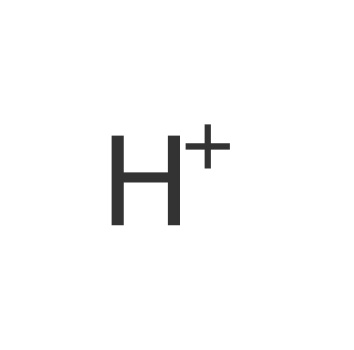
In the first step of the reaction, a hydride is transferred from NADH to the flavin cofactor. A single electron is then transferred to the b5 substrate (probably via the Thr66-His49 pathway). The product proton is then lost from the flavin, followed by a second single electron transfer. NAD+ is then released from the protein, regenerating the active site for another round of catalysis.
Catalytic Residues Roles
| UniProt | PDB* (1ndh) | ||
| Thr66 | Thr66A | Positioned near both the N5 atom of the isoalloxazine ring of FAD and the potential binding site of the nicotinamide ring of NADH. Forms a hydrogen bonding network with HIs49 (via two water molecules) that is responsible for the rapid elimination of the product proton from the active site. | proton shuttle (general acid/base), single electron shuttle |
| His49 | His49A | Forms a hydrogen bonding network with Thr66 (via two water molecules) that is responsible for the rapid elimination of the product proton from the active site. | proton shuttle (general acid/base), single electron shuttle |
| Cys245 | Cys245A | The sulfhydryl group of Cys245 is in van der Waals contact with the nicotinamide C3 atom at the si-face. This interaction is thought to alter the redox potentials of the NAD substrate. | alter redox potential |
| Tyr65 | Tyr65A | The specific arrangement between the side chain of Tyr65 and FAD contributes to protein stability and electron transfer. Tyr65 contributes to the stability of the protein and is important in the electron transfer from NADH to FAD. | electrostatic stabiliser |
Chemical Components
References
- Yamada M et al. (2013), J Mol Biol, 425, 4295-4306. Elucidations of the catalytic cycle of NADH-cytochrome b5 reductase by X-ray crystallography: new insights into regulation of efficient electron transfer. DOI:10.1016/j.jmb.2013.06.010. PMID:23831226.
- Takaba K et al. (2017), Sci Rep, 7, 43162-. Distribution of valence electrons of the flavin cofactor in NADH-cytochrome b5 reductase. DOI:10.1038/srep43162. PMID:28225078.
- Marohnic CC et al. (2005), Biochemistry, 44, 2449-2461. Cytochrome b5 reductase: role of the si-face residues, proline 92 and tyrosine 93, in structure and catalysis. DOI:10.1021/bi048045q. PMID:15709757.
- Kimura S et al. (2003), J Biol Chem, 278, 3580-3589. Role of Thr(66) in porcine NADH-cytochrome b5 reductase in catalysis and control of the rate-limiting step in electron transfer. DOI:10.1074/jbc.M209838200. PMID:12459552.
- Kimura S et al. (2001), J Biochem, 130, 481-490. Effects of flavin-binding motif amino acid mutations in the NADH-cytochrome b5 reductase catalytic domain on protein stability and catalysis. PMID:11574067.
- Nishida H et al. (1995), Biochemistry, 34, 2763-2767. Crystal structure of NADH-cytochrome b5 reductase from pig liver at 2.4 A resolution. PMID:7893687.
- Nishida H et al. (1995), FEBS Lett, 361, 97-100. Specific arrangement of three amino acid residues for flavin-binding barrel structures in NADH-cytochrome b5 reductase and the other flavin-dependent reductases. PMID:7890048.

Catalytic Residues Roles
| Residue | Roles |
|---|---|
| Tyr65A | electrostatic stabiliser |
| Cys245A | alter redox potential |
| His49A | proton shuttle (general acid/base) |
| Thr66A | proton shuttle (general acid/base) |
| His49A | single electron shuttle |
| Thr66A | single electron shuttle |