Cyanase
Cyanate lyase activity is present in some but not all bacteria. The enzyme detoxifies the cyanate ion, which reacts with nucleophilic groups of proteins. The enzyme is a decamer with unusual 5/2 (D2) symmetry, forming a pentamer of dimers. The active site is dyadic and made up of residues from two adjacent dimers. There are 5 active sites per decamer. The protein fold is unique but shows some similarity to DNA binding proteins such as 434 repressor, but the enzyme is not thought to bind DNA in vivo.
Reference Protein and Structure
- Sequence
-
P00816
 (4.2.1.104)
 (Sequence Homologues)
(PDB Homologues)
(Sequence Homologues)
(PDB Homologues)
- Biological species
-
Escherichia coli K-12 (Bacteria)
- PDB
-
1dw9
- Structure of cyanase reveals that a novel dimeric and decameric arrangement of subunits is required for formation of the enzyme active site
(1.65 Å)



- Catalytic CATH Domains
-
3.30.1160.10
 (see all for 1dw9)
Enzyme Reaction (EC:4.2.1.104)




Enzyme Mechanism
Introduction
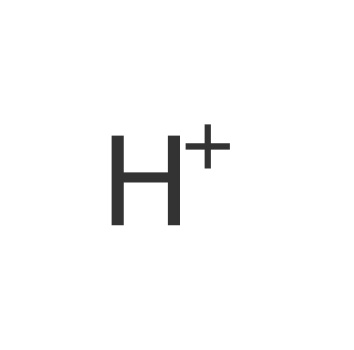
Although the exact mechanism and roles of the catalytic residues are currently unclear. It has been suggested that the cyanate carbon atom is activated by water molecule (activated by Glu99) to make it more electrophilic, and a nucleophilic attack by the bicarbonate carboxylate oxygen results in the formation of the proposed dianion intermediate (stabilised by Arg96 and possibly Ser122). This intermediate then decarboxylates to CO2 and carbamate. The structure of the catalytic site suggests that ‘on-the-enzyme’ decarboxylation of the dianion is likely, as opposed to dissociation and subsequent nonenzymatic decarboxylation.
Catalytic Residues Roles
| UniProt | PDB* (1dw9) | ||
| Glu99 | Glu99D | Glu99 interacts directly via a carboxylate oxygen to a tightly bound water molecule. Protonation of the bound cyanate nitrogen by an activated water molecule bound to Glu99 is probable. | enhance reactivity |
| Arg96 | Arg96D | The negatively charged cyanate and bicarbonate are probably stabilised by the guanidinium group of Arg96. Arg96 forms a salt bridge with Glu99. | electrostatic stabiliser |
| Ser122 | Ser122A | Important in substrate binding, not yet clear if it has a specific role in catalysis. | electrostatic stabiliser |
Chemical Components
References
- Walsh MA et al. (2000), Structure, 8, 505-514. Structure of cyanase reveals that a novel dimeric and decameric arrangement of subunits is required for formation of the enzyme active site. DOI:10.2210/pdb1dw9/pdb. PMID:10801492.

Catalytic Residues Roles
| Residue | Roles |
|---|---|
| Arg96D | electrostatic stabiliser |
| Ser122A | electrostatic stabiliser |
| Glu99D | enhance reactivity |