DNA helicase
PcrA DNA helicase is a 3'-5' DNA helicase. It is a single-stranded DNA (ssDNA)-dependent ATPase that uses the free energy of ATP hydrolysis to unwind duplex DNA. PcrA is known to be essential in some species, such as Bacillus subtilis and Staphylococcus aureus, with roles in DNA repair and rolling circle replication. This annotation covers the ATPase activity of PcrA.
The conformational changes brought about through ATP binding, hydrolysis and subsequent release allow PcrA to bind to DNA and unwind the helix. In particular a Glutamine residue that binds to the gamma phosphate of ATP is part of the motif III switch which bridges the ATPase domain and the DNA binding domain. So the binding of the gamma phosphate and its cleavage from the ATP in the ATPase domain can result in conformational changes in the DNA binding domain which enables PcrA to bind to DNA.
Reference Protein and Structure
- Sequence
-
P56255
 (3.6.4.12)
 (Sequence Homologues)
(PDB Homologues)
(Sequence Homologues)
(PDB Homologues)
- Biological species
-
Geobacillus stearothermophilus (Bacteria)
- PDB
-
1qhg
- STRUCTURE OF DNA HELICASE MUTANT WITH ADPNP
(2.5 Å)



- Catalytic CATH Domains
-
3.40.50.300
 (see all for 1qhg)
- Cofactors
- Magnesium(2+) (1)
Enzyme Reaction (EC:3.6.4.12)


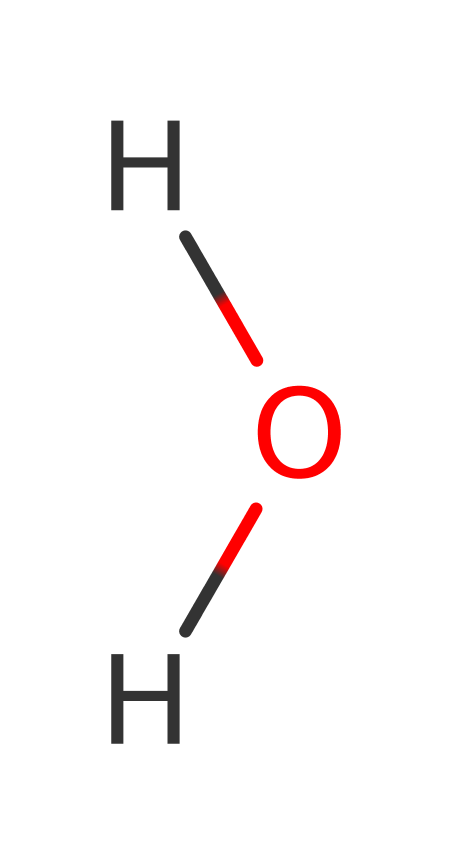

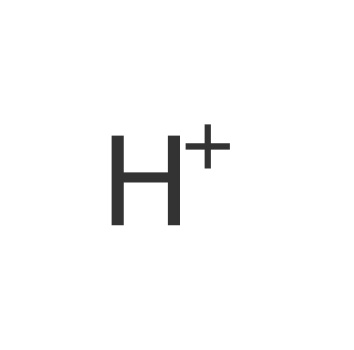


Enzyme Mechanism
Introduction
PcrA uses Glu 224 as a general base to deprotonate the water molecule that attacks the gamma phosphate of ATP. In addition, Lys 37,Arg 387, Arg 610, Gln 254 and an Mg2+ ion contact the triphosphate chain of ATP and stabilise negative charge in the transition state.
Catalytic Residues Roles
| UniProt | PDB* (1qhg) | ||
| Asp223, Thr38 | Asp223A, Thr38A | Form Mg2+ binding site | electrostatic stabiliser |
| Lys37 | Lys37A | Interacts with the beta phosphate of ATP; stabilises negative charge in the transition state. | electrostatic stabiliser |
| Glu224 | Glu224A | Deprotonates the water molecule that attacks the gamma phosphate of ATP. | proton acceptor |
| Gln254, Arg610 | Gln254A, Arg610A | Polarises the gamma phosphate of ATP, stabilising negative charge in the transition state. | electrostatic stabiliser |
Chemical Components
proton transfer, bimolecular nucleophilic substitution, overall reactant used, overall product formed, native state of enzyme is not regeneratedReferences
- Soultanas P et al. (1999), J Mol Biol, 290, 137-148. DNA binding mediates conformational changes and metal ion coordination in the active site of PcrA helicase. DOI:10.1006/jmbi.1999.2873. PMID:10388562.
- Mhashal AR et al. (2016), J Mol Model, 22, 54-. Probing the ATP-induced conformational flexibility of the PcrA helicase protein using molecular dynamics simulation. DOI:10.1007/s00894-016-2922-3. PMID:26860503.
- Caruthers JM et al. (2002), Curr Opin Struct Biol, 12, 123-133. Helicase structure and mechanism. DOI:10.1016/S0959-440X(02)00298-1.
- Geourjon C et al. (2001), Trends Biochem Sci, 26, 539-544. A common mechanism for ATP hydrolysis in ABC transporter and helicase superfamilies. DOI:10.1016/S0968-0004(01)01907-7.
- Velankar SS et al. (1999), Cell, 97, 75-84. Crystal Structures of Complexes of PcrA DNA Helicase with a DNA Substrate Indicate an Inchworm Mechanism. DOI:10.1016/s0092-8674(00)80716-3. PMID:10199404.
- Dillingham MS et al. (1999), Nucleic Acids Res, 27, 3310-3317. Site-directed mutagenesis of motif III in PcrA helicase reveals a role in coupling ATP hydrolysis to strand separation. DOI:10.1093/nar/27.16.3310.

Step 1. A water molecule is activated for nucleophilic attack through deprotonation by Glu 224. The nucleophile then attacks the gamma phosphate resulting in the cleavage of the phosphoanhydride bond.
Download: Image, Marvin FileCatalytic Residues Roles
| Residue | Roles |
|---|---|
| Lys37A | electrostatic stabiliser |
| Arg610A | electrostatic stabiliser |
| Asp223A | electrostatic stabiliser |
| Gln254A | electrostatic stabiliser |
| Thr38A | metal ligand |
| Glu224A | proton acceptor |
 Download: