RRNA endonuclease
Alpha-sarcin is an extracellular cytotoxic protein produced by the mold Aspergillus giganteus. It is a specific ribonuclease which inhibits protein synthesis by cleaving a specific phosphodiester bond in the highly conserved sarcin-ricin loop of the 28S rRNA. The enzyme is a member of a distinctive family of fungal ribonucleases known as ribotoxins, which are produced by different Aspergillus species. The ribotoxins show high sequence homology to each other and are also related to the RNAse T1 subfamily of microbial ribonucleases.
Reference Protein and Structure
- Sequence
-
P00655
 (4.6.1.23)
 (Sequence Homologues)
(PDB Homologues)
(Sequence Homologues)
(PDB Homologues)
- Biological species
-
Aspergillus giganteus (Fungus)
- PDB
-
1de3
- SOLUTION STRUCTURE OF THE CYTOTOXIC RIBONUCLEASE ALPHA-SARCIN
(solution nmr
Å)



- Catalytic CATH Domains
-
3.10.450.30
 (see all for 1de3)




Enzyme Mechanism
Introduction
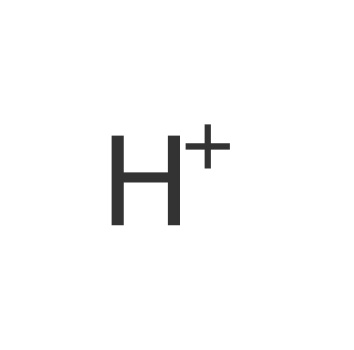
Alpha-sarcin is a cyclizing RNAse. Deprotonation of the 2' OH group by Glu 96 allows this group to attack the 3' phosphate. The 5' oxygen of the departing nucleotide is protonated by His 137. Subsequent hydrolysis of the produced 2',3'-cyclic phosphate completes the reaction to give the corresponding 3'-mononucleotide.
Catalytic Residues Roles
| UniProt | PDB* (1de3) | ||
| Glu123 | Glu96A | Deprotonates the 2' OH group of the substrate, allowing this group to attack the 3' phosphate to form the cyclic intermediate. Subsequently protonates the 2' OH group when it forms the leaving group as the cyclic intermediate is hydrolysed. | increase nucleophilicity, promote heterolysis, proton acceptor, proton donor |
| His77 | His50A | Modifies the pKa of Glu 96, allowing it to deprotonate the 2' OH group. | electrostatic stabiliser |
| His164 | His137A | Initially protonates the 5' oxygen of the departing nucleotide during formation of the cyclic intermediate. Subsequently acts as a base to activate water to hydrolyse the cyclic intermediate. | increase nucleophilicity, promote heterolysis, proton acceptor, proton donor |
Chemical Components
overall product formed, overall reactant used, proton transfer, intramolecular nucleophilic substitution, cyclisation, decyclisation, bimolecular nucleophilic substitution, native state of enzyme regeneratedReferences
- Campos-Olivas R et al. (1996), FEBS Lett, 399, 163-165. Structural basis for the catalytic mechanism and substrate specificity of the ribonuclease α-sarcin. DOI:10.1016/s0014-5793(96)01320-8. PMID:8980143.
- Pérez-Cañadillas JM et al. (2000), J Mol Biol, 299, 1061-1073. The highly refined solution structure of the cytotoxic ribonuclease α-sarcin reveals the structural requirements for substrate recognition and ribonucleolytic activity. DOI:10.1006/jmbi.2000.3813. PMID:10843858.
- Lacadena J et al. (1999), Proteins, 37, 474-484. Role of histidine‐50, glutamic acid‐96, and histidine‐137 in the ribonucleolytic mechanism of the ribotoxin α‐sarcin. DOI:10.1002/(sici)1097-0134(19991115)37:3<474::aid-prot14>3.3.co;2-e. PMID:10591106.
- Lacadena J et al. (1998), FEBS Lett, 424, 46-48. The cytotoxin α-sarcin behaves as a cyclizing ribonuclease. DOI:10.1016/s0014-5793(98)00137-9. PMID:9580156.

Step 1. Glu96 deprotonates the 2' hydroxyl group this promotes its nucleophilic attack on the phosphate group forming a cyclic intermediate. His137 protonates the the 5' hydroxyl leaving group promoting the cleavage.This SN2 reaction proceeds via a penta-coordinate transition state stabilized by His50.
Download: Image, Marvin FileCatalytic Residues Roles
| Residue | Roles |
|---|---|
| His50A | electrostatic stabiliser |
| Glu96A | increase nucleophilicity |
| His137A | promote heterolysis |
| His137A | proton donor |
| Glu96A | proton acceptor |
Chemical Components
overall product formed, overall reactant used, proton transfer, ingold: intramolecular nucleophilic substitution, cyclisation
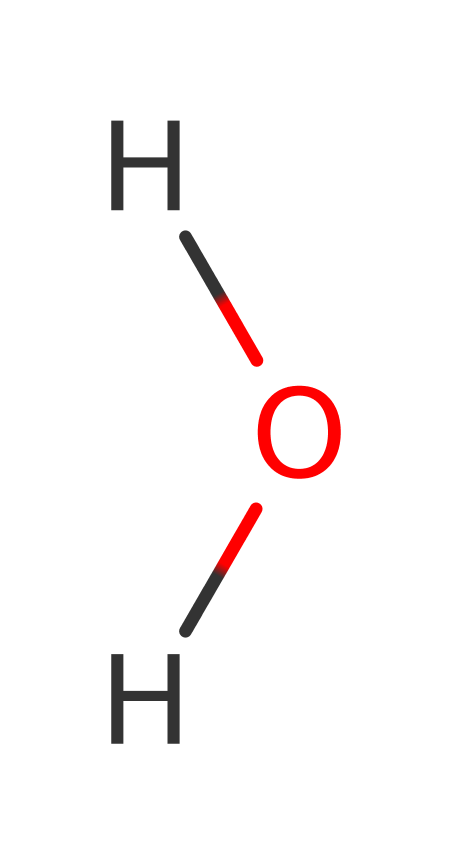
Step 2. His137 now acting as a base deprotonates a water molecule allowing it to perform a nucleophillic attack on the phosphate group. This leads to the cleavage of the 2' hydroxyl- phosphate bond upon protonation by Glu96.
Download: Image, Marvin FileCatalytic Residues Roles
| Residue | Roles |
|---|---|
| His50A | electrostatic stabiliser |
| His137A | increase nucleophilicity |
| Glu96A | promote heterolysis |
| His137A | proton acceptor |
| Glu96A | proton donor |
 Download: