Fructose-2,6-bisphosphate 2-phosphatase
Fructose-6-phosphate-2-kinase/fructose-2,6-biphosphatase is a bifunctional enzyme. It is responsible to regulate the concentration of fructose-2,6-phosphate (Fru-2,6-P2), a potent physiological activator of phosphofructose kinase and an inhibitor of fructose-1,6-biphosphatase. Therefore, Fru-6-P,2-kinase/Fru-2,6-Pase is important in glucose homeostasis. The fructose-2,6-biphosphatase domain has been shown to be structurally and functionally homologous to phosphoglycerate mutase. It catalyses its reaction via a phosphoenzyme intermediate which utilises an active site histidine as a nucleophilic phosphoacceptor.
Reference Protein and Structure
- Sequence
-
P25114
 (2.7.1.105, 3.1.3.46)
 (Sequence Homologues)
(PDB Homologues)
(Sequence Homologues)
(PDB Homologues)
- Biological species
-
Rattus norvegicus (Norway rat)
- PDB
-
2bif
- 6-PHOSPHOFRUCTO-2-KINASE/FRUCTOSE-2,6-BISPHOSPHATASE H256A MUTANT WITH F6P IN PHOSPHATASE ACTIVE SITE
(2.4 Å)



- Catalytic CATH Domains
-
3.40.50.1240
 (see all for 2bif)
Enzyme Reaction (EC:3.1.3.46)




Enzyme Mechanism
Introduction
The catalytic reaction proceeds in two steps: (1) Formation of the phosphoryl-histidine intermediate and release of fructose 6-phosphate; and (2) hydrolysis of the phosphoenzyme intermediate. The proposed mechanism has His236 acting as a nucleophile to attack the phosphate, leading to a pentacovalent transition state, where the excess negative charge is stabilised by Arg255, Asn262, Arg305 and His390. A protonated Glu325 donates a proton to the leaving Fru-6-P. Ionised Glu325 activates a water nucleophile to attack the phosphohistidine intermediate and restore the enzyme.
Catalytic Residues Roles
| UniProt | PDB* (2bif) | ||
| His257 | Ala256(257)A | It acts as a nucleophile to attack the target phosphate of the substrate, forming a phosphoenzyme intermediate. | covalently attached, nucleofuge, nucleophile |
| Arg306 | Arg305(306)A | It neutralises the excess negative charge developed on the phosphate of Fru-2,6-P2 during the transfer to His 256, hence stabilises the transition state. | electrostatic stabiliser |
| Glu326 | Glu325(326)A | It acts as an acid to protonate the leaving Fru-6-P and acts as a base to activate a water nucleophile, which attack the phosphohistidine intermediate to restore the enzyme. | activator, proton acceptor, proton donor |
| Asn263, His391 | Asn262(263)A, His390(391)A | It interacts with the 2-phosphate of Fru-2,6-P2 and stabilises the transition state. | electrostatic stabiliser |
| Arg256 | Arg255(256)A | It stabilises the transition state. | electrostatic stabiliser |
Chemical Components
bimolecular nucleophilic addition, intermediate formation, overall product formed, enzyme-substrate complex formation, proton transfer, intermediate collapse, aromatic unimolecular elimination by the conjugate base, heterolysis, intermediate terminated, native state of enzyme regenerated, rate-determining step, enzyme-substrate complex cleavageReferences
- Yuen MH et al. (1999), J Biol Chem, 274, 2176-2184. Crystal Structure of the H256A Mutant of Rat Testis Fructose-6-phosphate,2-kinase/Fructose-2,6-bisphosphatase: FRUCTOSE 6-PHOSPHATE IN THE ACTIVE SITE LEADS TO MECHANISMS FOR BOTH MUTANT AND WILD TYPE BISPHOSPHATASE ACTIVITIES. DOI:10.1074/jbc.274.4.2176. PMID:9890980.
- Sakurai M et al. (2000), Biochemistry, 39, 16238-16243. Glutamate 325 Is a General Acid−Base Catalyst in the Reaction Catalyzed by Fructose-2,6-bisphosphatase†. DOI:10.1021/bi0020170. PMID:11123954.
- Lin K et al. (1992), J Biol Chem, 267, 19163-19171. Arg-257 and Arg-307 of 6-phosphofructo-2-kinase/fructose-2,6-bisphosphatase bind the C-2 phospho group of fructose-2,6-bisphosphate in the fructose-2,6-bisphosphatase domain. PMID:1326547.
- Tauler A et al. (1990), J Biol Chem, 265, 15617-15622. Hepatic 6-phosphofructo-2-kinase/fructose-2,6-bisphosphatase. Use of site-directed mutagenesis to evaluate the roles of His-258 and His-392 in catalysis. PMID:2168419.
- Pilkis SJ et al. (1984), J Biol Chem, 259, 949-958. Evidence for two catalytic sites on 6-phosphofructo-2-kinase/fructose 2,6-bisphosphatase. Dynamics of substrate exchange and phosphoryl enzyme formation. PMID:6319392.
- Pilkis SJ et al. (1983), J Biol Chem, 258, 6135-6141. 6-phosphofructo-2-kinase/fructose 2,6-bisphosphatase from rat liver. PMID:6304027.

Step 1. Nucleophilic attack of 2-phosphate by His256 resulting in a tetrahedral intermediate which is stabilised by Arg205, Arg255, His390 and Asn262.
Download: Image, Marvin FileCatalytic Residues Roles
| Residue | Roles |
|---|---|
| Asn262(263)A | electrostatic stabiliser |
| His390(391)A | electrostatic stabiliser |
| Arg255(256)A | electrostatic stabiliser |
| Arg305(306)A | electrostatic stabiliser |
| Ala256(257)A | covalently attached, nucleophile |
Chemical Components
ingold: bimolecular nucleophilic addition, intermediate formation, overall product formed, enzyme-substrate complex formation
Step 2. Fructose-6-phosphate is protonated by Glu325 and then exits the active site.
Download: Image, Marvin FileCatalytic Residues Roles
| Residue | Roles |
|---|---|
| Ala256(257)A | covalently attached |
| Glu325(326)A | proton donor |
Chemical Components
proton transfer, intermediate collapse, ingold: aromatic unimolecular elimination by the conjugate base, overall product formed
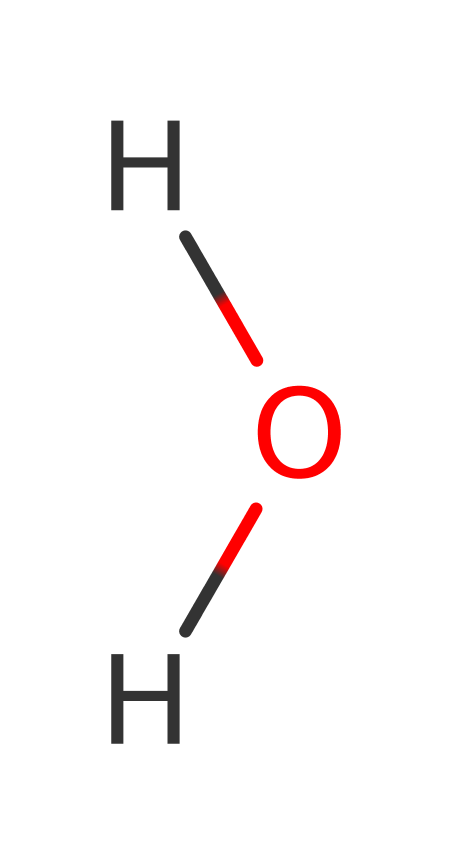
Step 3. Glu325 abstracts a proton off the water molecule, causing it to act as a nucleophile and attack phospho-His256. The tetrahedral intermediate formed is also stabilised by Arg305, Arg255, His390 and Asn262.
Download: Image, Marvin FileCatalytic Residues Roles
| Residue | Roles |
|---|---|
| Arg255(256)A | electrostatic stabiliser |
| Asn262(263)A | electrostatic stabiliser |
| Arg305(306)A | electrostatic stabiliser |
| His390(391)A | electrostatic stabiliser |
| Glu325(326)A | activator |
| Ala256(257)A | covalently attached |
| Glu325(326)A | proton acceptor |
Chemical Components
intermediate formation, ingold: bimolecular nucleophilic addition, intermediate collapse
Step 4. The intermediate collapses, resulting in the cleavage of the phospho-His256 bond. The phosphate group is held in the active site until displaced by an incoming substrate.
Download: Image, Marvin FileCatalytic Residues Roles
| Residue | Roles |
|---|---|
| Ala256(257)A | nucleofuge |
 Download: