NAD+---diphthamide ADP-ribosyltransferase
Diphtheria toxin (secreted by lysogenic strains of Corynebacterium diphtheriae) inhibits eukaryotic protein synthesis by modifying EF-2, an elongation factor.
Reference Protein and Structure
- Sequence
-
P00588
 (2.4.2.36)
 (Sequence Homologues)
(PDB Homologues)
(Sequence Homologues)
(PDB Homologues)
- Biological species
-
Corynephage beta (Virus)
- PDB
-
1tox
- DIPHTHERIA TOXIN DIMER COMPLEXED WITH NAD
(2.3 Å)



- Catalytic CATH Domains
-
3.90.175.10
 (see all for 1tox)
Enzyme Reaction (EC:2.4.2.36)


+

→

+

+
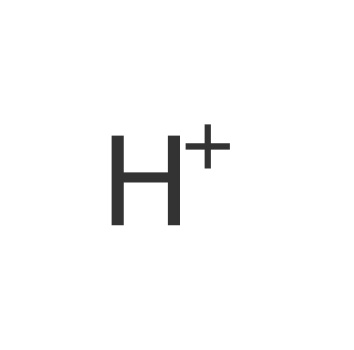


Alternative enzyme names: ADP-ribosyltransferase, Mono(ADPribosyl)transferase, Mono(ADP-ribosyl)transferase, NAD--diphthamide ADP-ribosyltransferase, NAD(+):peptide-diphthamide N-(ADP-D-ribosyl)transferase,
Enzyme Mechanism
Introduction
The enzyme transfers the ADP-ribosyl group transfer, from NAD to a diphthamide (modified histidine) residue of EF-2. The mechanism is essentially migration of an electrophilic ribooxacarbenium group, from the nicotinamide moiety of NAD to the imidazole group of diphthamide in EF-2. Glu 148 stabilises the positively charged, ion-like transition state.
Catalytic Residues Roles
| UniProt | PDB* (1tox) | ||
| Glu180 | Glu148B | Stabilises the positively charged ribooxacarbenium ion, which is the transition state of the reaction. | electrostatic stabiliser |
*PDB label guide - RESx(y)B(C) - RES: Residue Name; x: Residue ID in PDB file;
y: Residue ID in PDB sequence if different from PDB file; B: PDB Chain;
C: Biological Assembly Chain if different from PDB. If label is "Not Found" it means this residue is not found in the reference PDB.
Chemical Components
References
- Parikh SL et al. (2004), Biochemistry, 43, 1204-1212. Transition State Structure for ADP-Ribosylation of Eukaryotic Elongation Factor 2 Catalyzed by Diphtheria Toxin. DOI:10.1021/bi035907z. PMID:14756556.
- Holbourn KP et al. (2006), FEBS J, 273, 4579-4593. A family of killer toxins. Exploring the mechanism of ADP-ribosylating toxins. DOI:10.1111/j.1742-4658.2006.05442.x. PMID:16956368.
- Bell CE et al. (1997), Biochemistry, 36, 481-488. Crystal Structure of Nucleotide-Free Diphtheria Toxin†,‡. DOI:10.1021/bi962214s. PMID:9012663.
- Wilson BA et al. (1990), Biochemistry, 29, 8643-8651. Active-site mutations of diphtheria toxin: effects of replacing glutamic acid-148 with aspartic acid, glutamine, or serine. DOI:10.1021/bi00489a021. PMID:1980208.

Catalytic Residues Roles
| Residue | Roles |
|---|---|
| Glu148B | electrostatic stabiliser |