NAD+---diphthamide ADP-ribosyltransferase
Exotoxin A (ETA) from Pseudomonas aeruginosa is an NAD+-diphthamide ADP-ribosyltransferase from the enzyme family of mono-ADP-ribosyltransferases. It catalyses the ADP-ribosylation of eukaryotic elongation factor 2 (eEF2). Inactivation of eEF2 then results in cessation of protein synthesis and eventual cellular death.
Reference Protein and Structure
- Sequences
-
P32324

P11439 (2.4.2.36)
 (Sequence Homologues)
(PDB Homologues)
(Sequence Homologues)
(PDB Homologues)
- Biological species
-
Saccharomyces cerevisiae S288c (Baker's yeast)
- PDB
-
1zm2
- Structure of ADP-ribosylated eEF2 in complex with catalytic fragment of ETA
(3.07 Å)



- Catalytic CATH Domains
-
3.90.175.10
 (see all for 1zm2)
Enzyme Reaction (EC:2.4.2.36)


+

→

+
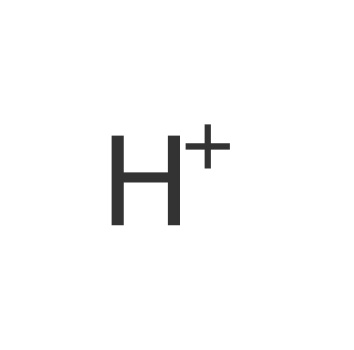
+


Alternative enzyme names: ADP-ribosyltransferase, Mono(ADPribosyl)transferase, Mono(ADP-ribosyl)transferase, NAD--diphthamide ADP-ribosyltransferase, NAD(+):peptide-diphthamide N-(ADP-D-ribosyl)transferase,
Enzyme Mechanism
Introduction
The reaction takes place via an SN1 mechanism. Cleavage of the NC1-NN1 glycosidic bond in NAD+ takes place. Glu 553 stabilises the positive charge on the oxacarbenium intermediate. NE2 atom of the diphthamide residue of eEF2 nucleophilically attacks the NC1 atom on the oxacarbenium ion. The product is then deprotonated and released.
Catalytic Residues Roles
| UniProt | PDB* (1zm2) | ||
| Glu578 | Glu553(155)F | Glu 553 stabilises the oxacarbenium intermediate by hydrogen bonding with the 2'OH of the N ribose, after dissociation of nicotinamide. | electrostatic stabiliser |
*PDB label guide - RESx(y)B(C) - RES: Residue Name; x: Residue ID in PDB file;
y: Residue ID in PDB sequence if different from PDB file; B: PDB Chain;
C: Biological Assembly Chain if different from PDB. If label is "Not Found" it means this residue is not found in the reference PDB.
Chemical Components
References
- Yates SP et al. (2004), Biochem J, 379, 563-572. Elucidation of eukaryotic elongation factor-2 contact sites within the catalytic domain of Pseudomonas aeruginosa exotoxin A. DOI:10.1042/bj20031731. PMID:14733615.
- Holbourn KP et al. (2006), FEBS J, 273, 4579-4593. A family of killer toxins. Exploring the mechanism of ADP-ribosylating toxins. DOI:10.1111/j.1742-4658.2006.05442.x. PMID:16956368.
- Jørgensen R et al. (2005), Nature, 436, 979-984. Exotoxin A–eEF2 complex structure indicates ADP ribosylation by ribosome mimicry. DOI:10.1038/nature03871. PMID:16107839.

Catalytic Residues Roles
| Residue | Roles |
|---|---|
| Glu553(155)F | electrostatic stabiliser |