Arylesterase
This variant of serum paraoxonase (PON1) was obtained by directed evolution. Members of the PON family have been identified, and PON1 is present in Homo sapiens, Oryctolagns cuniculus, Mus musculus and Rattus rattus. It catalyses the hydrolysis and thereby inactivation of various organophosphates, including the nerve agents sarin and soman. Recently, PON1 has been found to play an important role in drug metabolism and in the prevention of atherosclerosis.
Reference Protein and Structure
- Sequence
-
P27170
 (3.1.1.2, 3.1.1.81, 3.1.8.1)
 (Sequence Homologues)
(PDB Homologues)
(Sequence Homologues)
(PDB Homologues)
- Biological species
-
Oryctolagus cuniculus (rabbit)
- PDB
-
1v04
- serum paraoxonase by directed evolution
(2.2 Å)



- Catalytic CATH Domains
-
2.120.10.30
 (see all for 1v04)
- Cofactors
- Calcium(2+) (1)
Enzyme Reaction (EC:3.1.1.2)




Enzyme Mechanism
Introduction
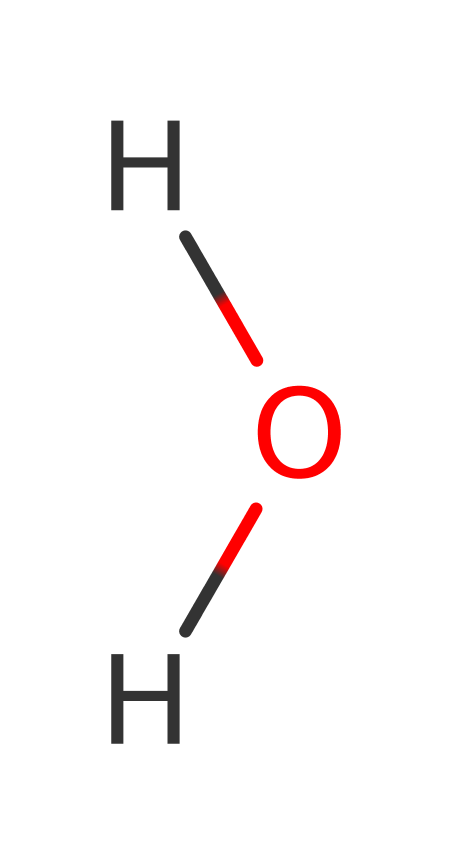
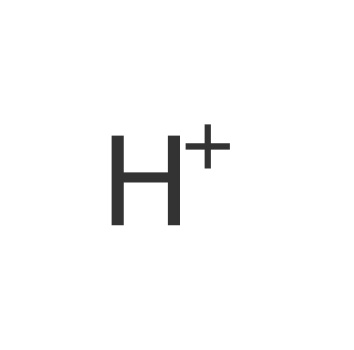
His 115 acts as a general base by deprotonating a water molecule, activating it for nucleophilic attack on the substrate ester carbonyl. His 134 acts as a 'proton shuttle' to take a proton away from His 115, thereby increasing its basicity. A negatively charged, tetrahedral intermediate is formed, which is stabilised by a positively charged Ca2+. As the carbonyl is reformed, the ester bond is broken, forming the products.
Catalytic Residues Roles
| UniProt | PDB* (1v04) | ||
| Glu53, Asn270, Asp269, Asn224, Asn168 | Glu53A, Asn270A, Asp269A, Asn224A, Asn168A | Coordinate the calcium ion | metal ligand |
| His115 | His115A | Acts as a general acid by deprotonating a water molecule, activating it for nucleophilic attack. | proton relay, increase nucleophilicity, proton acceptor, proton donor |
| His134 | His134A | Acts as a 'proton shuttle', moving protons away from His 115, thereby increasing the basicity of His 115. | increase basicity, proton acceptor, proton donor |
Chemical Components
overall reactant used, bimolecular nucleophilic addition, proton transfer, overall product formed, unimolecular elimination by the conjugate base, inferred reaction step, native state of enzyme regeneratedReferences
- Harel M et al. (2004), Nat Struct Mol Biol, 11, 412-419. Structure and evolution of the serum paraoxonase family of detoxifying and anti-atherosclerotic enzymes. DOI:10.1038/nsmb767. PMID:15098021.
- Ben-David M et al. (2013), J Mol Biol, 425, 1028-1038. Catalytic metal ion rearrangements underline promiscuity and evolvability of a metalloenzyme. DOI:10.1016/j.jmb.2013.01.009. PMID:23318950.

Step 1. His 115 acts as a general base by deprotonating a water molecule, activating it for nucleophilic attack on the substrate ester carbonyl. His 134 acts as a 'proton shuttle' to take a proton away from His 115, thereby increasing its basicity. A negatively charged, tetrahedral intermediate is formed, which is stabilised by a positively charged Ca2+.
Download: Image, Marvin FileCatalytic Residues Roles
| Residue | Roles |
|---|---|
| Glu53A | metal ligand |
| Asn168A | metal ligand |
| Asn224A | metal ligand |
| Asp269A | metal ligand |
| Asn270A | metal ligand |
| His134A | increase basicity |
| His115A | increase nucleophilicity |
| His115A | proton acceptor, proton donor |
| His134A | proton acceptor |
| His115A | proton relay |
Chemical Components
overall reactant used, ingold: bimolecular nucleophilic addition, proton transfer
Step 2. The carbonyl reforms and the ester bond is broken creating the products.
Download: Image, Marvin FileCatalytic Residues Roles
| Residue | Roles |
|---|---|
| Glu53A | metal ligand |
| Asn168A | metal ligand |
| Asn224A | metal ligand |
| Asp269A | metal ligand |
| Asn270A | metal ligand |
Chemical Components
overall product formed, ingold: unimolecular elimination by the conjugate base
Step 3. Inferred reaction step, restoring the enzyme to its native state.
Download: Image, Marvin FileCatalytic Residues Roles
| Residue | Roles |
|---|---|
| Glu53A | metal ligand |
| Asn168A | metal ligand |
| Asn224A | metal ligand |
| Asp269A | metal ligand |
| Asn270A | metal ligand |
| His115A | proton relay |
| His134A | proton donor |
| His115A | proton donor, proton acceptor |
 Download: