Ribonuclease 4
The RNase 4 family is unique among RNase enzymes, displaying the highest level of sequence similarity and encompassing the shortest polypeptide chain. It is the only one showing high specificity due to unique substrate interactions.
Reference Protein and Structure
- Sequence
-
P34096
 (3.1.27.-)
 (Sequence Homologues)
(PDB Homologues)
(Sequence Homologues)
(PDB Homologues)
- Biological species
-
Homo sapiens (Human)
- PDB
-
2rnf
- X-RAY CRYSTAL STRUCTURE OF HUMAN RIBONUCLEASE 4 IN COMPLEX WITH D(UP)
(2.4 Å)



- Catalytic CATH Domains
-
3.10.130.10
 (see all for 2rnf)
Enzyme Reaction (EC:4.6.1.18)




Enzyme Mechanism
Introduction
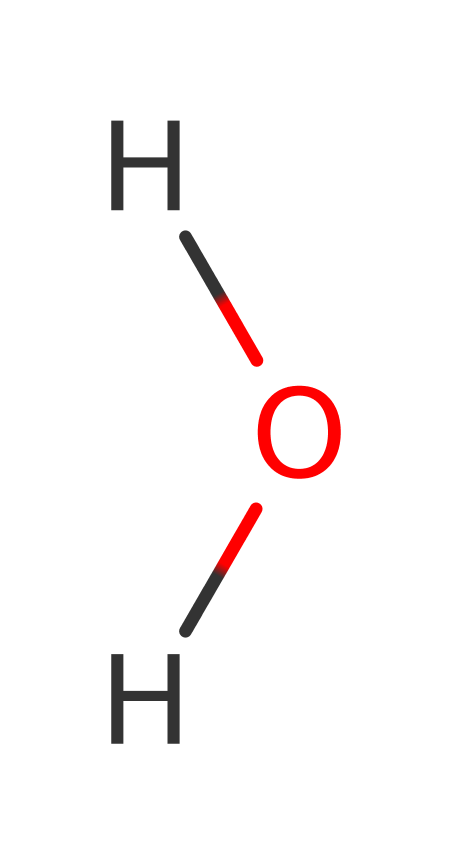
Rnase 4 uses an extended binding site to increase its specificity for hydrolysis at the phosphate on the 3' side of a uridine nucleotide. Initially His12 deprotonates the uridine 2'OH group which then attacks the 3'phosphate group to form a penta-coordinated intermediate, stabilised by Lys40. Collapse of this high energy intermediate occurs at the same time as the 5'OH group of the following nucleotide accepts a proton from His116, resulting in lysis of the phosphodiester bond. This half of the chain then leaves the active site. The five membered ring formed by the previous steps is opened by activated water to reform the 3' phosphate group. His116 acts as the general base deprotonating water which then attacks the phosphate group to form the high energy penta-coordinate intermediate. His12 then acts as a general acid, donating a proton to the 2' position group as the intermediate collapses forming the 2'OH group and 3' phosphate group. The enzyme is thus returned to its initial protonation state and the cleaved RNA chain leaves the active site.
Catalytic Residues Roles
| UniProt | PDB* (2rnf) | ||
| Lys68 | Lys40(41)A | Electrostatic stabilisation of the penta-coordinate intermediate. | electrostatic stabiliser |
| His40 | His12(13)A | Deprotonation of the 2'OH group causing nucleophilic attack. Protonation of the 2'OH group forming a good leaving group. | proton acceptor, proton donor |
| His144 | His116(117)A | Protonation of the 5'OH group forming a good leaving group. Deprotonation of water causing nucleophilic attack. | proton acceptor, proton donor |
Chemical Components
proton transfer, intramolecular nucleophilic addition, intermediate formation, overall reactant used, unimolecular elimination by the conjugate base, intermediate collapse, overall product formed, bimolecular nucleophilic addition, native state of enzyme regeneratedReferences
- Terzyan SS et al. (1999), J Mol Biol, 285, 205-214. The three-dimensional structure of human RNase 4, unliganded and complexed with d(up), reveals the basis for its uridine selectivity. DOI:10.1006/jmbi.1998.2288. PMID:9878400.
- Liang S et al. (2016), FEBS J, 283, 912-928. Structural basis of substrate specificity in porcine RNase 4. DOI:10.1111/febs.13646. PMID:26748441.
- Hsu C et al. (2003), J Mol Biol, 326, 1189-1201. Solution Structure of the Cytotoxic RNase 4 from Oocytes of Bullfrog Rana catesbeiana. DOI:10.1016/S0022-2836(02)01472-9.
- Esposito L et al. (2000), J Mol Biol, 297, 713-732. The ultrahigh resolution crystal structure of ribonuclease A containing an isoaspartyl residue: hydration and sterochemical analysis. DOI:10.1006/jmbi.2000.3597. PMID:10731423.
- Shapiro R et al. (1989), Biochemistry, 28, 7401-7408. Site-directed mutagenesis of histidine-13 and histidine-114 of human angiogenin. Alanine derivatives inhibit angiogenin-induced angiogenesis. DOI:10.1021/bi00444a038. PMID:2479414.

Step 1. His12 deprotonates the 2'OH which activates it to nucleophilically attack the 3' phosphate to form a penta-coordinated intermediate, stabilised by Lys40.
Download: Image, Marvin FileCatalytic Residues Roles
| Residue | Roles |
|---|---|
| Lys40(41)A | electrostatic stabiliser |
| His12(13)A | proton acceptor |
Chemical Components
proton transfer, ingold: intramolecular nucleophilic addition, intermediate formation, overall reactant used
Step 2. The simultaneous protonation of the 5' OH by His116 and the collapse of the oxyanion intermediate results in the cleavage of the phosphodiester bond.
Download: Image, Marvin FileCatalytic Residues Roles
| Residue | Roles |
|---|---|
| Lys40(41)A | electrostatic stabiliser |
| His116(117)A | proton donor |
Chemical Components
proton transfer, ingold: unimolecular elimination by the conjugate base, intermediate collapse, overall product formed
Step 3. His116 abstracts a proton from a water which activates it to attack the 3' phosphate.
Download: Image, Marvin FileCatalytic Residues Roles
| Residue | Roles |
|---|---|
| Lys40(41)A | electrostatic stabiliser |
| His116(117)A | proton acceptor |
Chemical Components
proton transfer, ingold: bimolecular nucleophilic addition, intermediate formation, overall reactant used
Step 4. His12 then acts as a general acid, donating a proton to the 2' position group as the intermediate collapses forming the 2'OH group and 3' phosphate group.
Download: Image, Marvin FileCatalytic Residues Roles
| Residue | Roles |
|---|---|
| Lys40(41)A | electrostatic stabiliser |
| His12(13)A | proton donor |
 Download: